Species · genus Dracaena · Asparagaceae
Snake Plant
Dracaena trifasciata (Prain) Mabb.
Also known as: Bowstring Hemp · Good Luck Plant · Mother-in-law's Nose · Mother-in-law's Tongue · Snake Sansevieria
Cultivars of D. trifasciata
The named forms growers keep — each with its own page, each honest about how much we know.
Guide
The species-level account. Cultivar pages build on this and say where they differ.
An Easygoing Rosette
Snake plant, botanically Dracaena trifasciata, is a stemless evergreen perennial grown for its stiff, upright, sword-shaped leaves. It is a fixture on beginner and low-maintenance plant lists, valued for tolerating conditions that would trouble fussier houseplants.
Source: Missouri Botanical Garden
Roots in West Africa
This species traces back to tropical western and central Africa, where its foliage can rise as tall as four feet in the wild, though indoor specimens usually stay closer to two feet. The genus name honors an eighteenth-century Italian patron of horticulture. It was long known as Sansevieria trifasciata before a 2017 reclassification moved it into Dracaena, a change many growers and garden centers have yet to fully adopt in common usage.
Source: Costa Farms
Light, Water, and Patience
Give this plant bright, indirect light for its best growth, though it settles for low light without complaint and needs protection from long stretches of hot direct sun. Water only once the top inch or two of the mix has dried out, since overwatering is far more likely to cause trouble than neglect, and ease off further from fall into late winter. Normal household humidity suits it fine, no misting or feeding is required, and if you do fertilize, a light half-strength dose in spring and summer is plenty.
Source: Costa Farms
Cuttings, Division, or Pups
Snake plants propagate readily by three routes: cutting a healthy leaf into sections and rooting them in soil or water, dividing the crown when a mature plant has outgrown its pot, or separating off the small pups it produces beside itself. After planting, keep the medium moist until roots take hold, then move to a warm, bright spot and hold off on fertilizer for a couple of months. Division and pup propagation are best paired with routine repotting since both involve loosening and separating the root mass anyway.
Source: Epic Gardening
Sword Leaves, Banded Markings
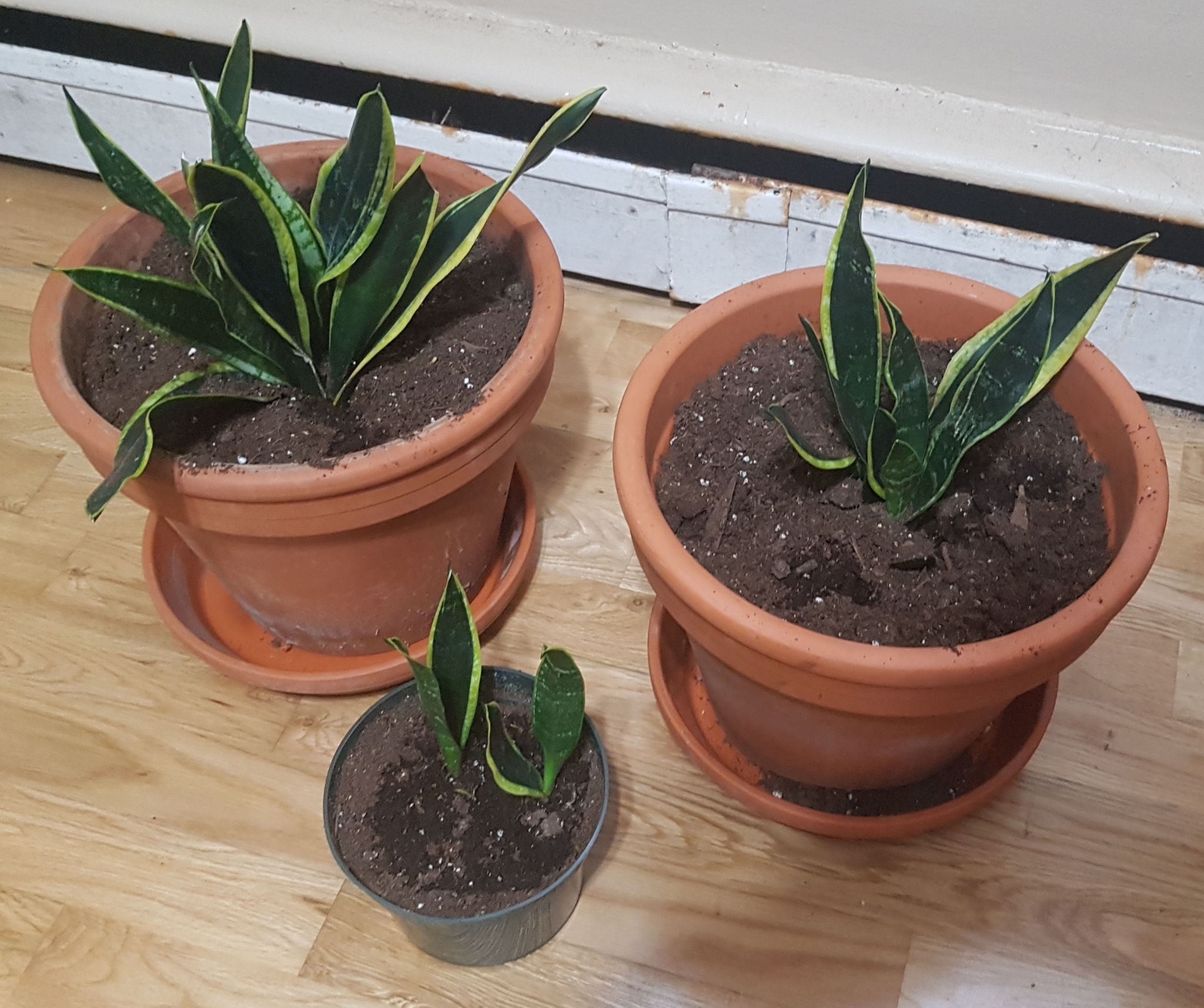
The plant's fleshy, sharply pointed leaves rise stiffly from a thick rhizome in a rosette, deep green and marked with light gray-green horizontal bands, though other varieties show edges or mottling of gray, silver, or gold. Mature plants occasionally send up small, fragrant, greenish-white flowers in spring followed by orange berries, though this is rare on indoor specimens. That architectural, upright habit is part of why it reads so well in modern interiors.
Source: Missouri Botanical Garden
Mealybugs and Spider Mites
Keep an eye out for mealybugs and spider mites, the two pests most commonly reported on this plant.
Source: Missouri Botanical Garden
Overwatering Is the Main Risk
The most common trouble is root rot from overwatering, and mushy leaves, especially at the base, are the tell. If caught early, repotting and removing the rotted tissue can save the plant, but if it is too far gone, taking healthy leaf cuttings lets you start over. Underwatering, by contrast, is rarely a real problem for this drought-tolerant plant.
Source: Epic Gardening
Little Fuss Required
This plant asks for almost nothing in the way of upkeep: it is a slow grower that won't turn unruly, so pruning is mainly a matter of snipping off a damaged or yellowing leaf at its base when needed. Wiping the leaves with a damp cloth every few weeks clears dust and keeps them making the most of available light. Beyond that, repotting only when the plant has outgrown its container is about the only maintenance to plan for.
Source: Costa Farms
Care recipe
The species record — the baseline every cultivar inherits unless it says otherwise.
Care notes are early — not yet verified
- Light
- ai:claude-opus-4-8
- Water
- ai:claude-opus-4-8 (range 14-28d)
- Humidity
- ai:claude-opus-4-8
- Soil
- ai:claude-fable-5
- Care
- ai:claude-fable-5
Bright, indirect
≈ every 28 days
Low — average room
15–29 °C
Free-draining, sandy cactus and succulent mix
Leaf cuttings or division of offsets
Light balanced feed once or twice in the growing season
Slow
Rarely flowers indoors
Toxic to cats & dogs
Saponins — vomiting (occasionally with blood), depression, anorexia, drooling. This is where toxicity lives: every cultivar of this species inherits it and none can override it.
Reference images
Every image credited. Licenses link to their deeds.
PrimarySources: ai:claude-opus-4-8 · ai:claude-opus-4-8 (range 14-28d) · ai:claude-fable-5 · ASPCA
Kept true by its growers
Every fact here carries its source. Grow Snake Plant yourself? What you’ve observed — how it drinks, how it holds its color, a name that’s off — and a clear photo of your plant are exactly what keep this page honest. Contributions are reviewed before anything changes.
Sign in to add what you know →