Species · genus Dracaena · Asparagaceae
Madagascar Dragon Tree
Dracaena marginata Lem.
Also known as: Red-Edged Dracaena · Dragon Tree · Marginata · Dragon Blood Tree
Cultivars of D. marginata
The named forms growers keep — each with its own page, each honest about how much we know.
No named cultivars catalogued under D. marginata yet. When growers document a stable, named form, it earns its own page here.
Guide
The species-level account. Cultivar pages build on this and say where they differ.
A Slender Dragon of a Houseplant
Dracaena, commonly grown as the Madagascar dragon tree among other forms, is an easy-going tropical houseplant grown for its fountain of narrow, glossy or striped leaves. Young plants sit as a leafy rosette, but with time a woody stem lifts the foliage skyward, giving the plant an almost palm-like silhouette.
Source: RHS
Roots in Madagascar and Beyond
Dracaena marginata hails from Madagascar and its neighbouring islands in the Indian Ocean, while the wider dracaena group traces back to tropical Africa, southern Asia, and Australia. The genus name comes from a Greek word for female dragon, a nod to the red, gum-like sap the stems release when cut, once prized in old alchemical and varnishing traditions.
Source: Epic Gardening
Light, Water, Warmth Together
Give this plant bright but indirect light, keeping it out of direct summer sun that can scorch the leaves, and hold it at a steady warm temperature between about 18 and 30°C, away from cold draughts and radiators. Water only once the top layer of compost has dried, using rainwater or filtered water where possible since fluoride and hard tap water can damage foliage, and feed with a general liquid houseplant fertiliser from April to October. A tray of moist gravel or grouping with other plants helps supply the humid air these tropical species appreciate.
Source: RHS
Cuttings Root Readily
Propagation is straightforward: cut a stem from a mature plant, trim away the lower leaves, let the cutting dry for about an hour, then set it in moist soil, where roots typically form within one to two weeks. This ease is why retail nurseries often propagate their own stock rather than reorder from wholesalers.
Source: Epic Gardening
Spiky Leaves, Woody Cane
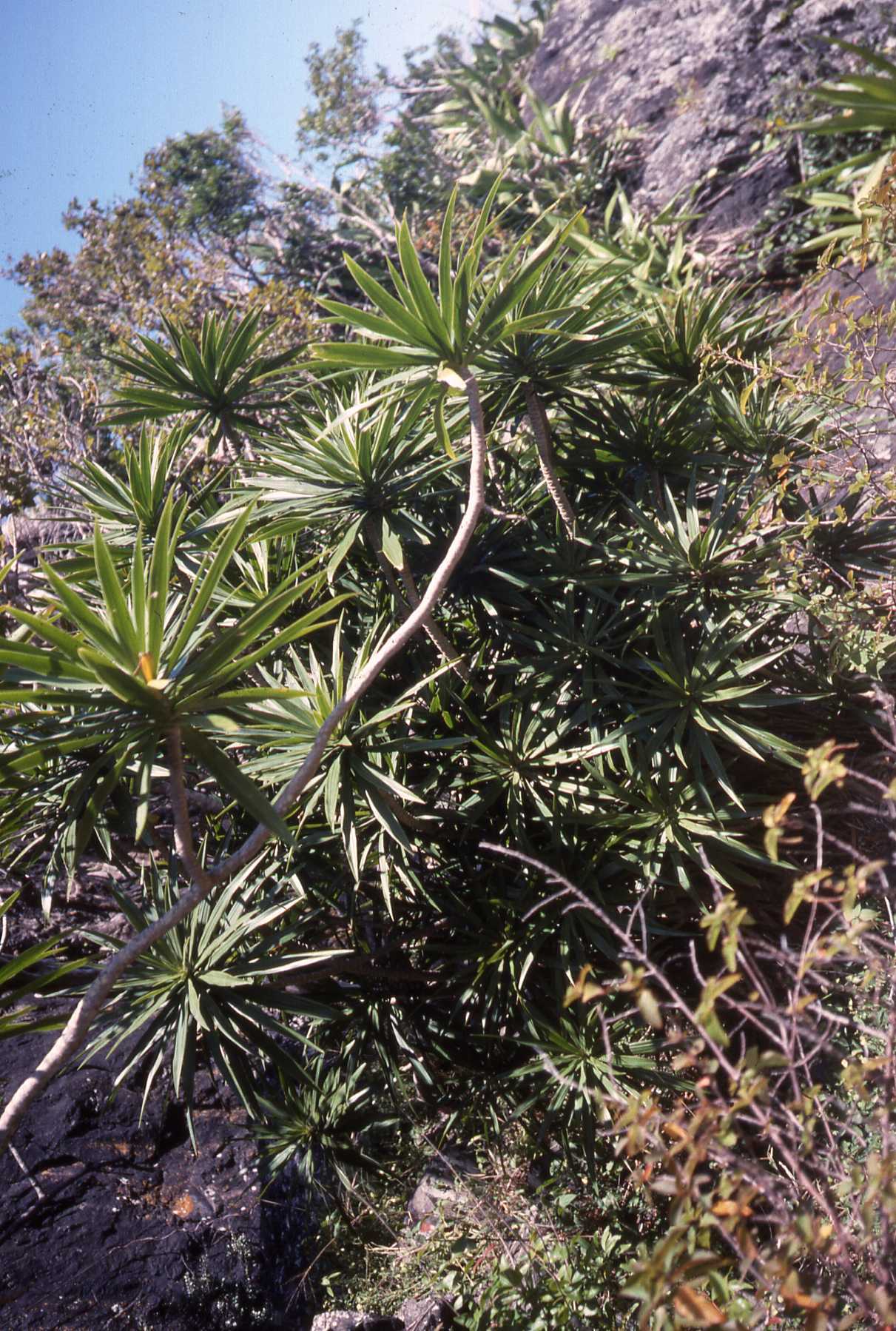
The dragon tree carries long, narrow, spiky leaves, typically dark green with reddish-purple edges, that can reach up to 16 inches. As the plant matures it sheds its lowest leaves, leaving tufts of foliage perched atop a bare woody cane, and named cultivars vary this look with extra colour bands or an unusually spiky, spherical habit.
Source: Epic Gardening
Watch for Sap-Suckers
Sap-sucking pests such as spider mites, mealybugs, and scale insects are the main concern, showing up as mottled leaves or poor growth. Regular misting helps deter them, and an established infestation can be tackled with insecticidal soap or by wiping off scale insects with a cotton swab dipped in dilute alcohol.
Source: Epic Gardening
Reading the Leaves
Dying leaves or browning tips usually point to overwatering, underwatering, fluoride from tap water, sun scorch, dry air, a cold draught, or nearby heat sources. Costa Farms notes that brown leaf tips are most often simply a sign of low humidity, addressed by grouping plants together, moving to a humid room, or standing the pot on a pebble tray above the waterline.
Source: RHS
Pruning and Repotting Rhythm
New plants can generally stay in their original pot for several years; once roots crowd it, repot in spring into a pot just one size larger, since oversized pots keep compost too wet and invite root rot. The plant responds well to pruning, sending out new shoots just below any cut, which makes it easy to control height or train into a free-form bush or a branching standard.
Source: RHS
Care recipe
The species record — the baseline every cultivar inherits unless it says otherwise.
Care notes are early — not yet verified
- Light
- ai:claude-opus-4-8
- Water
- ai:claude-opus-4-8 (range 10-18d)
- Humidity
- ai:claude-opus-4-8
- Soil
- ai:claude-fable-5
- Care
- ai:claude-fable-5
Bright, indirect
≈ every 18 days
Medium
16–27 °C
Well-draining peat-based mix with perlite
Cane or tip cuttings rooted in water or moist mix
Balanced liquid feed monthly in the growing season
Moderate
Rarely flowers indoors
Toxic to cats & dogs
Saponins — vomiting (occasionally with blood), depression, anorexia, drooling. This is where toxicity lives: every cultivar of this species inherits it and none can override it.
Reference images
Every image credited. Licenses link to their deeds.
PrimarySources: ai:claude-opus-4-8 · ai:claude-opus-4-8 (range 10-18d) · ai:claude-fable-5 · ASPCA
Kept true by its growers
Every fact here carries its source. Grow Madagascar Dragon Tree yourself? What you’ve observed — how it drinks, how it holds its color, a name that’s off — and a clear photo of your plant are exactly what keep this page honest. Contributions are reviewed before anything changes.
Sign in to add what you know →