Species · genus Dracaena · Asparagaceae
Iguanatail
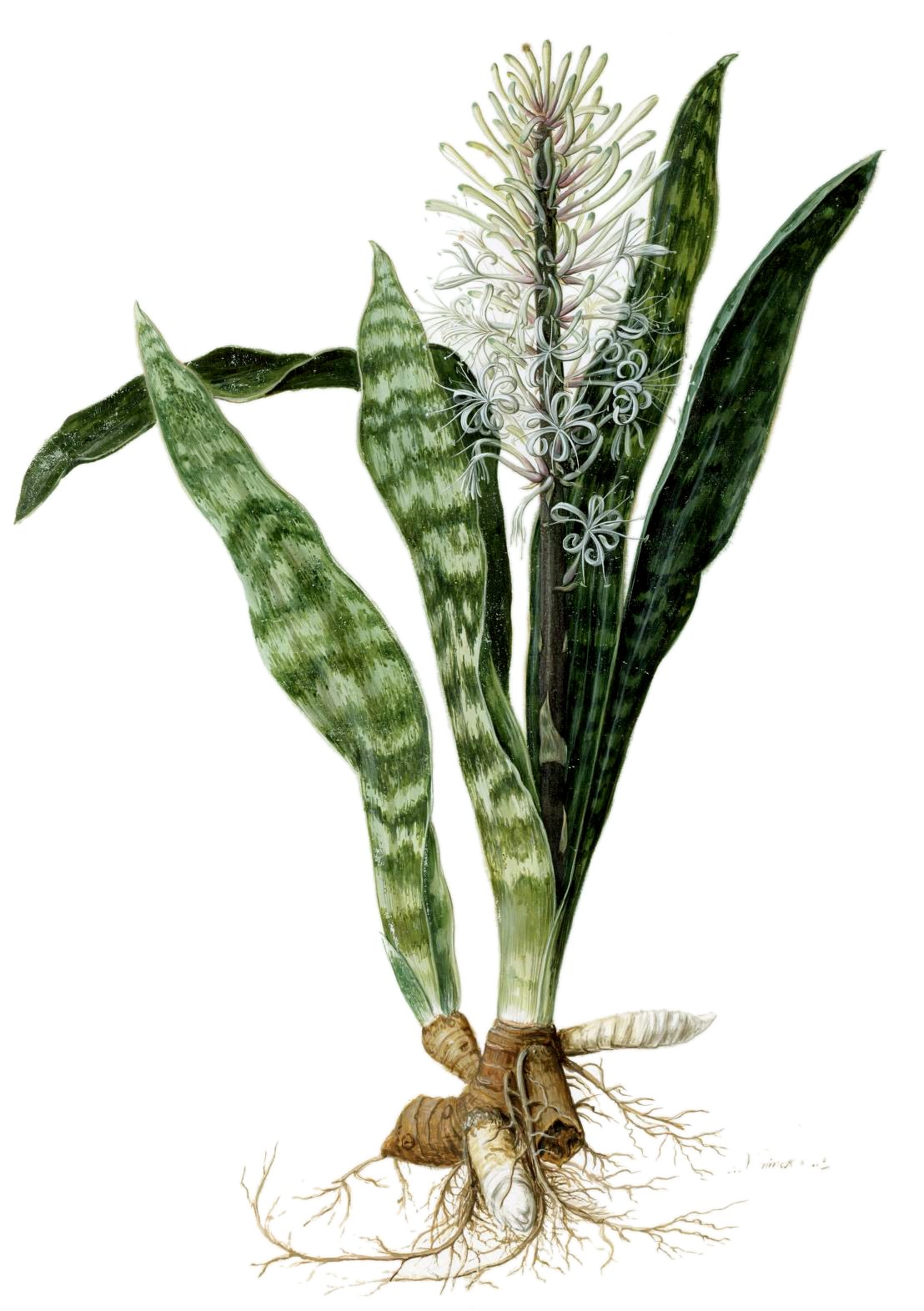
Sansevieria hyacinthoides (L.) Druce
Also known as: African Bowstring-hemp · Bowstring Hemp · Mother-in-law’s Tongue
Cultivars of S. hyacinthoides
The named forms growers keep — each with its own page, each honest about how much we know.
No named cultivars catalogued under S. hyacinthoides yet. When growers document a stable, named form, it earns its own page here.
Guide
The species-level account. Cultivar pages build on this and say where they differ.
African Bowstring Hemp
Sansevieria hyacinthoides, known as African bowstring hemp, is a stemless succulent perennial in the family Asparagaceae. It grows from a rhizome into an erect clump of tough, evergreen leaves.
Source: RHS
Marbled Strap Leaves
Like others in its genus, this plant carries leathery, ovate to strap-shaped leaves that are often attractively marbled. In season it sends up short spikes of small, fragrant, tubular flowers in a greenish-white shade.
Source: RHS
Care recipe
The species record — the baseline every cultivar inherits unless it says otherwise.
Care notes are early — not yet verified
- Light
- ai:claude-opus-4-8
- Water
- ai:claude-opus-4-8 (range 14-28d)
- Humidity
- ai:claude-opus-4-8
- Soil
- ai:claude-fable-5
- Care
- ai:claude-fable-5
Bright, indirect
≈ every 28 days
Low — average room
15–29 °C
Free-draining sandy or succulent mix
Division of rhizomes or offsets
Light succulent feed once or twice in the growing season
Moderate
Occasionally sends up small fragrant blooms
Toxic to cats & dogs
Snake plant — saponins; nausea, vomiting, drooling. This is where toxicity lives: every cultivar of this species inherits it and none can override it.
Reference images
Every image credited. Licenses link to their deeds.
Sources: ai:claude-opus-4-8 · ai:claude-opus-4-8 (range 14-28d) · ai:claude-fable-5 · ASPCA
Kept true by its growers
Every fact here carries its source. Grow Iguanatail yourself? What you’ve observed — how it drinks, how it holds its color, a name that’s off — and a clear photo of your plant are exactly what keep this page honest. Contributions are reviewed before anything changes.
Sign in to add what you know →