Species · genus Dracaena · Asparagaceae
Dragon Tree
Dracaena draco (L.) L.
Also known as: Dragontree · Canary Island Dragon Tree · Canary Islands Dragon Tree
Cultivars of D. draco
The named forms growers keep — each with its own page, each honest about how much we know.
No named cultivars catalogued under D. draco yet. When growers document a stable, named form, it earns its own page here.
Guide
The species-level account. Cultivar pages build on this and say where they differ.
The Dragon Tree
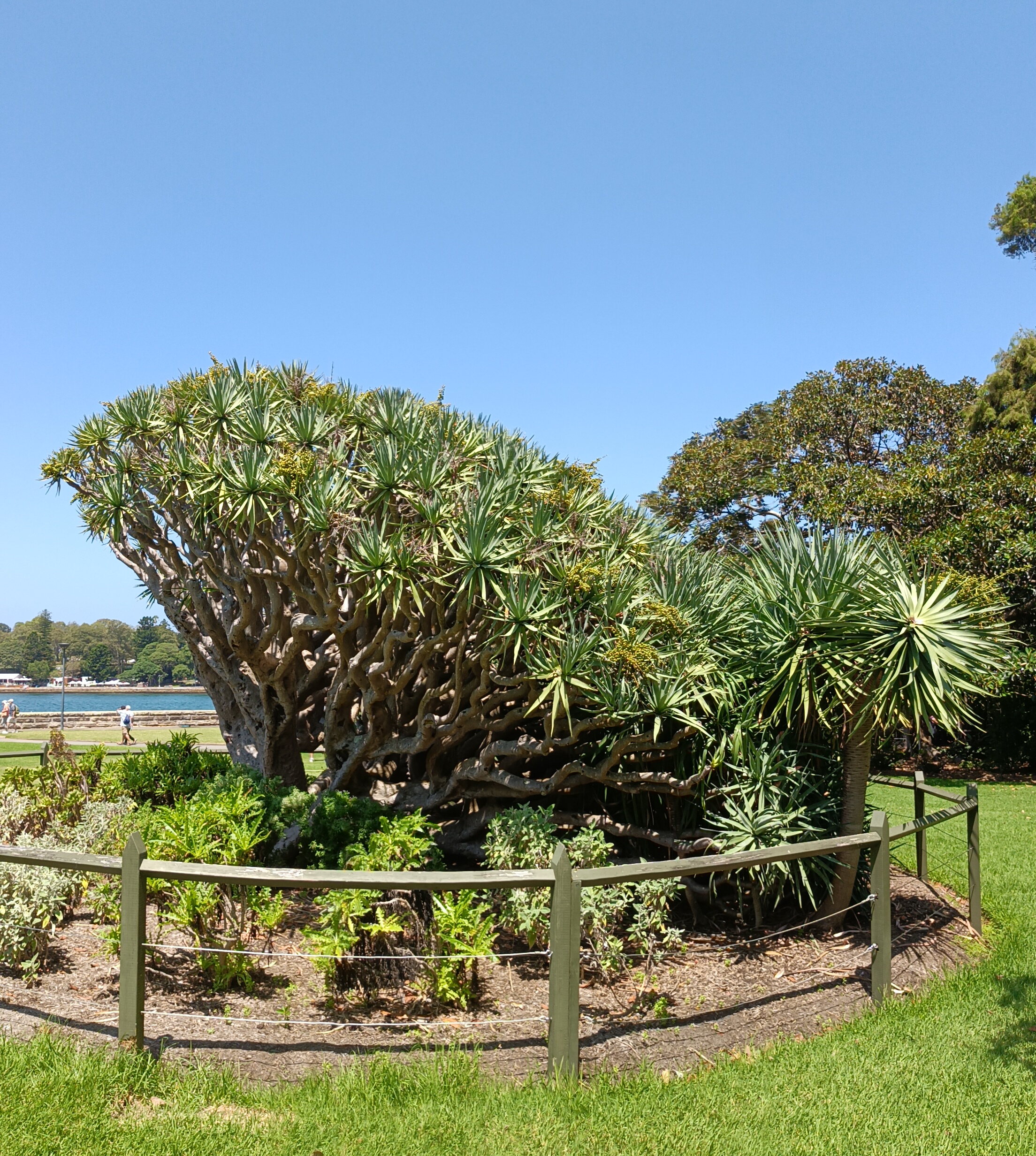
Dracaena draco, the dragon tree, is a slow-growing evergreen that in time becomes a sparsely branched small tree, each branch tip carrying a rosette of long, sword-shaped leaves. Only mature specimens go on to produce panicles of greenish-white flowers in summer, followed by orange-red fruits. It has earned the RHS Award of Garden Merit as a conservatory or greenhouse tree.
Source: RHS
A Macaronesian Native
This species comes from Macaronesia and Morocco, a native range that explains its taste for bright light and its tolerance of heat once established. Its name traces back to the Greek drakaina, meaning female dragon, and the plant is famous for the red sap it bleeds, long known as dragon's blood.
Source: RHS
Warmth, Light, Restraint
Given full light with some shade from the hottest sun, moderate humidity, and a peat-free, loam-based compost, this dragon tree asks for little else. Water freely through the growing season and feed monthly with a balanced liquid fertiliser from spring to autumn, then let the compost run just moist over winter. Indoors it will tolerate lower light than its full-sun preference suggests, and it is untroubled by most soil types provided drainage is good.
Source: RHS
Seed, Cuttings, Bottom Heat
Propagate by sowing seed at 18 to 21°C in spring, or by rooting semi-hardwood cuttings and leafless stem sections in spring with the help of bottom heat.
Source: RHS
Leaves, Habit, Bloodred Sap
The habit is bushy and evergreen, with terminal rosettes of sword-shaped leaves reaching up to 60cm, held on a trunk that branches sparingly as the tree ages. Left to mature over decades, it can reach four to eight metres in height with a spread of two-and-a-half to four metres, a size and slowness that mark it out as a long-term subject rather than a quick houseplant.
Source: RHS
Red Spider Mite and Scale
Under glass this dragon tree may be troubled by glasshouse red spider mite and scale insects, though it is otherwise generally disease-free.
Source: RHS
Little Pruning Needed
No routine pruning is required, though a weak or leggy plant can be cut back hard, to within 15cm of the base, in spring to encourage fresh growth.
Source: RHS
Care recipe
The species record — the baseline every cultivar inherits unless it says otherwise.
Care notes are early — not yet verified
- Light
- ai:claude-opus-4-8
- Water
- ai:claude-opus-4-8 (range 10-21d)
- Humidity
- ai:claude-opus-4-8
- Soil
- ai:claude-fable-5
- Care
- ai:claude-fable-5
Bright, indirect
≈ every 21 days
Low — average room
10–29 °C
Sharp, sandy cactus-style mix that drains fast
Semi-hardwood cuttings or seed; slow to root
Dilute balanced feed a few times over spring and summer
Slow
Almost never flowers indoors
Toxic to cats & dogs
Saponins — vomiting (occasionally with blood), depression, anorexia, drooling. This is where toxicity lives: every cultivar of this species inherits it and none can override it.
Reference images
Every image credited. Licenses link to their deeds.
PrimarySources: ai:claude-opus-4-8 · ai:claude-opus-4-8 (range 10-21d) · ai:claude-fable-5 · ASPCA
Kept true by its growers
Every fact here carries its source. Grow Dragon Tree yourself? What you’ve observed — how it drinks, how it holds its color, a name that’s off — and a clear photo of your plant are exactly what keep this page honest. Contributions are reviewed before anything changes.
Sign in to add what you know →