Species · genus Dracaena · Asparagaceae
African Bowstring Hemp
Sansevieria cylindrica Bojer ex Hook.
Cultivars of S. cylindrica
The named forms growers keep — each with its own page, each honest about how much we know.
No named cultivars catalogued under S. cylindrica yet. When growers document a stable, named form, it earns its own page here.
Guide
The species-level account. Cultivar pages build on this and say where they differ.
The African Spear Plant
Sansevieria cylindrica, now botanically renamed Dracaena angolensis, is an evergreen succulent grown for its smooth, upright, cylindrical leaves. Nurseries still sell it under its old Sansevieria name, and it goes by common names like African spear plant, cylindrical snake plant, and elephant's toothpick.
Source: Epic Gardening
Rooted in Southern Africa
This plant is native to Angola, Zambia, and Zimbabwe, where it spreads by creeping rhizomes and often forms dense stands in the wild. That background of adaptability and neglect-tolerance is exactly what makes it forgiving as a houseplant.
Source: Epic Gardening
Light, Water, and Feeding
This succulent prefers plenty of sun or bright light, though it tolerates low light and simply grows more slowly there. Water sparingly, roughly once a week in summer and once a month in winter, letting the well-draining sandy or cactus soil dry out fully between waterings, since soggy soil is the main threat to this plant. It isn't fussy about humidity and prefers good air movement, and it only needs feeding once a month from spring through fall with a succulent fertilizer diluted to half strength, since overfeeding can harm it. Cold is another stressor to avoid, as temperatures below 50°F (10°C) can cause damage.
Source: Epic Gardening
By Rhizome or Leaf Cutting
Because it grows from rhizomes, this plant can be propagated by separating the runners or offshoots it sends out, using a sharp knife once the stalks reach at least six inches tall, then potting the divisions individually. It can also be propagated from leaf cuttings: remove a cluster rosette of leaves, shake off the old soil, and plant cuttings of two to four inches upright in fresh soil.
Source: Epic Gardening
Cylindrical, Architectural Leaves
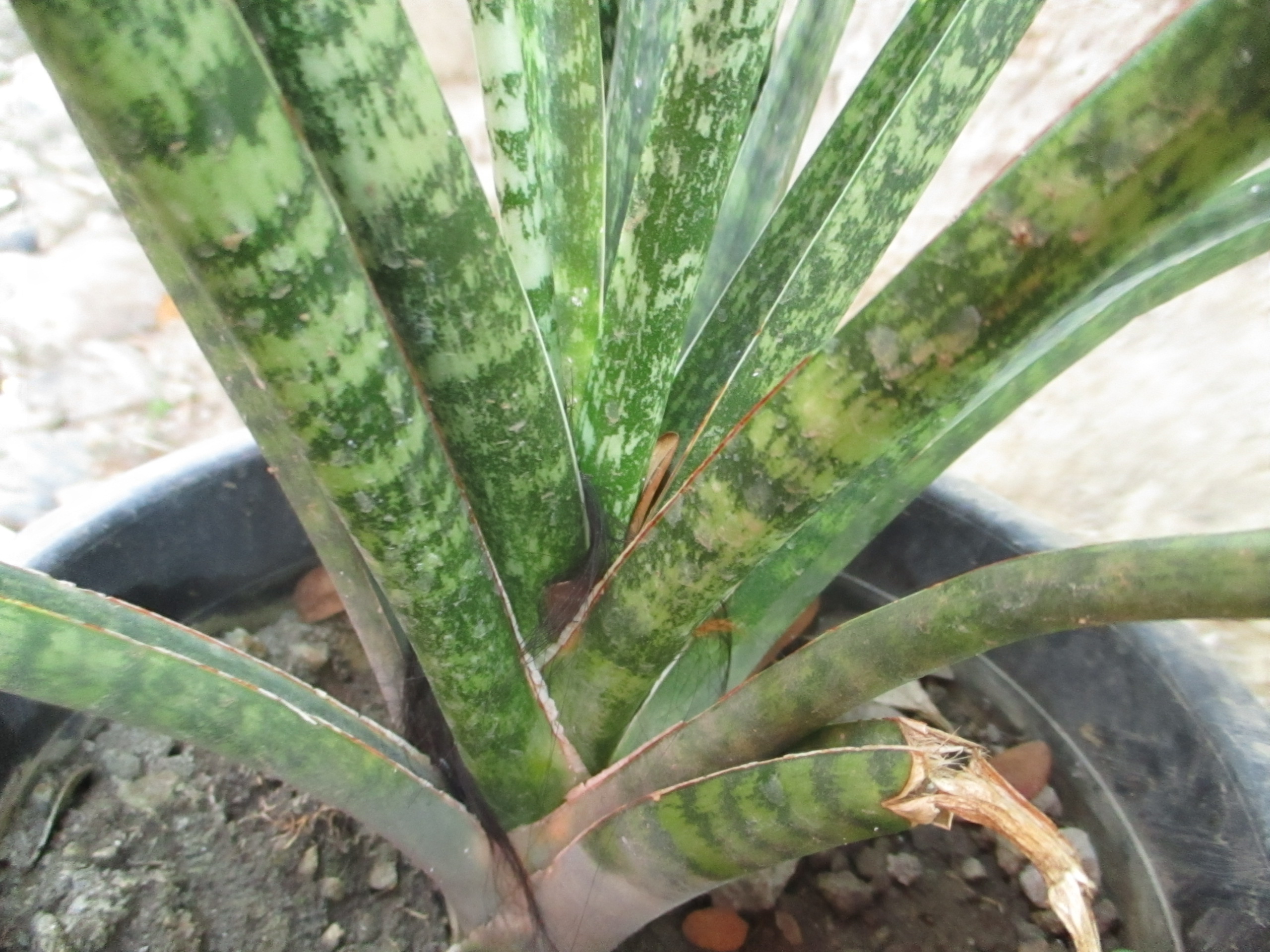
The hallmark of this plant is its tubular, smooth, dark green leaves, sometimes marked with green-grey variegation, growing upright like spears. Mature plants can send up cream-white, lightly fragrant flower spikes, though the show is subtle rather than showy. Young leaves are pliable enough that growers sometimes braid them for a distinctive look.
Source: Epic Gardening
Watch for Vine Weevils
Vine weevils are the main pest concern, chewing the edges of leaves and causing damage that doesn't heal. If an adult weevil turns up, drench the potting mix with neem oil or a suitable pesticide promptly, though a plant with badly damaged roots may be past saving.
Source: Epic Gardening
Overwatering Is the Usual Culprit
Most growth problems trace back to too much water: soggy soil, cold exposure, or too little light can lead to root rot, with yellowing leaves and mushy stem bases as the telltale sign. If that happens, cut away the healthy portion of the plant and repot it in fresh, well-draining mix. Leggy growth usually points to insufficient light, while curling leaves are typically a sign of underwatering during the growing season.
Source: Epic Gardening
Slow Growth, Occasional Repotting
This is a slow grower, especially in low light, so it goes years without needing a new pot. When it does outgrow its container or becomes crowded, repot in spring into a container just one size larger, choosing a wide pot since the plant grows top-heavy, and water sparingly while it settles in. Pruning is rarely necessary beyond cosmetic trims or cutting away a yellowing leaf at its base.
Source: Epic Gardening
Care recipe
The species record — the baseline every cultivar inherits unless it says otherwise.
Care notes are early — not yet verified
- Light
- ai:claude-opus-4-8
- Water
- ai:claude-opus-4-8 (range 14-28d)
- Humidity
- ai:claude-opus-4-8
- Soil
- ai:claude-fable-5
- Care
- ai:claude-fable-5
Bright, indirect
≈ every 28 days
Low — average room
15–29 °C
Fast-draining sandy cactus or succulent mix
Division or rooting whole leaf sections
Dilute succulent feed once or twice in spring and summer
Slow
Rarely flowers indoors
Toxic to cats & dogs
Snake plant — saponins; nausea, vomiting, drooling. This is where toxicity lives: every cultivar of this species inherits it and none can override it.
Reference images
Every image credited. Licenses link to their deeds.
PrimarySources: ai:claude-opus-4-8 · ai:claude-opus-4-8 (range 14-28d) · ai:claude-fable-5 · ASPCA
Kept true by its growers
Every fact here carries its source. Grow African Bowstring Hemp yourself? What you’ve observed — how it drinks, how it holds its color, a name that’s off — and a clear photo of your plant are exactly what keep this page honest. Contributions are reviewed before anything changes.
Sign in to add what you know →