Species · genus Dracaena · Asparagaceae
Suji
Dracaena angustifolia (Medik.) Roxb.
Cultivars of D. angustifolia
The named forms growers keep — each with its own page, each honest about how much we know.
No named cultivars catalogued under D. angustifolia yet. When growers document a stable, named form, it earns its own page here.
Guide
The species-level account. Cultivar pages build on this and say where they differ.
A resilient tropical favourite
Dracaena is a popular and widely grown houseplant, valued for its easy-going nature and tropical presence. It grows rosettes of long, narrow, glossy leaves from the top of a woody stem, and that stem gains height as the plant ages, eventually making a fine focal point in a room.
Source: RHS
A name born of dragon's blood
The genus name Dracaena comes from the ancient Greek drakaina, meaning female dragon, a nod to the red sap that Dracaena draco produces, once called dragon's blood. The Madagascar dragon tree itself hails from Madagascar and its neighbouring islands, where that same reddish sap was historically used in alchemy and later found more practical use in varnish and photo engraving. Recent DNA work has also folded the once-separate Sansevieria, or snake plant, into this genus, though its care needs remain distinct enough to warrant separate guidance.
Source: Epic Gardening
Warmth, bright shade, restraint with water
As tropical plants, dracaenas want warmth of at least 18°C, high humidity, and bright but indirect light rather than direct sun. Water is best given as rainwater or filtered tap water, since hard tap water lowers the acidity of the compost and its fluoride can mark the foliage, and the compost itself should never be kept so wet that roots sit in it. When repotting, an ericaceous, peat-free mix suits their preference for slightly acidic conditions, and cold spells below 5°C, or a spot too close to a radiator, will both cause damage.
Source: RHS
Stem cuttings root readily
Propagation is straightforward enough that even retail nurseries do it themselves rather than reorder stock. A stem is cut from a mature plant, the lower leaves trimmed away, and the cutting left to dry for about an hour before going into wet soil, where rooting begins within one to two weeks.
Source: Epic Gardening
Strap leaves on a woody cane
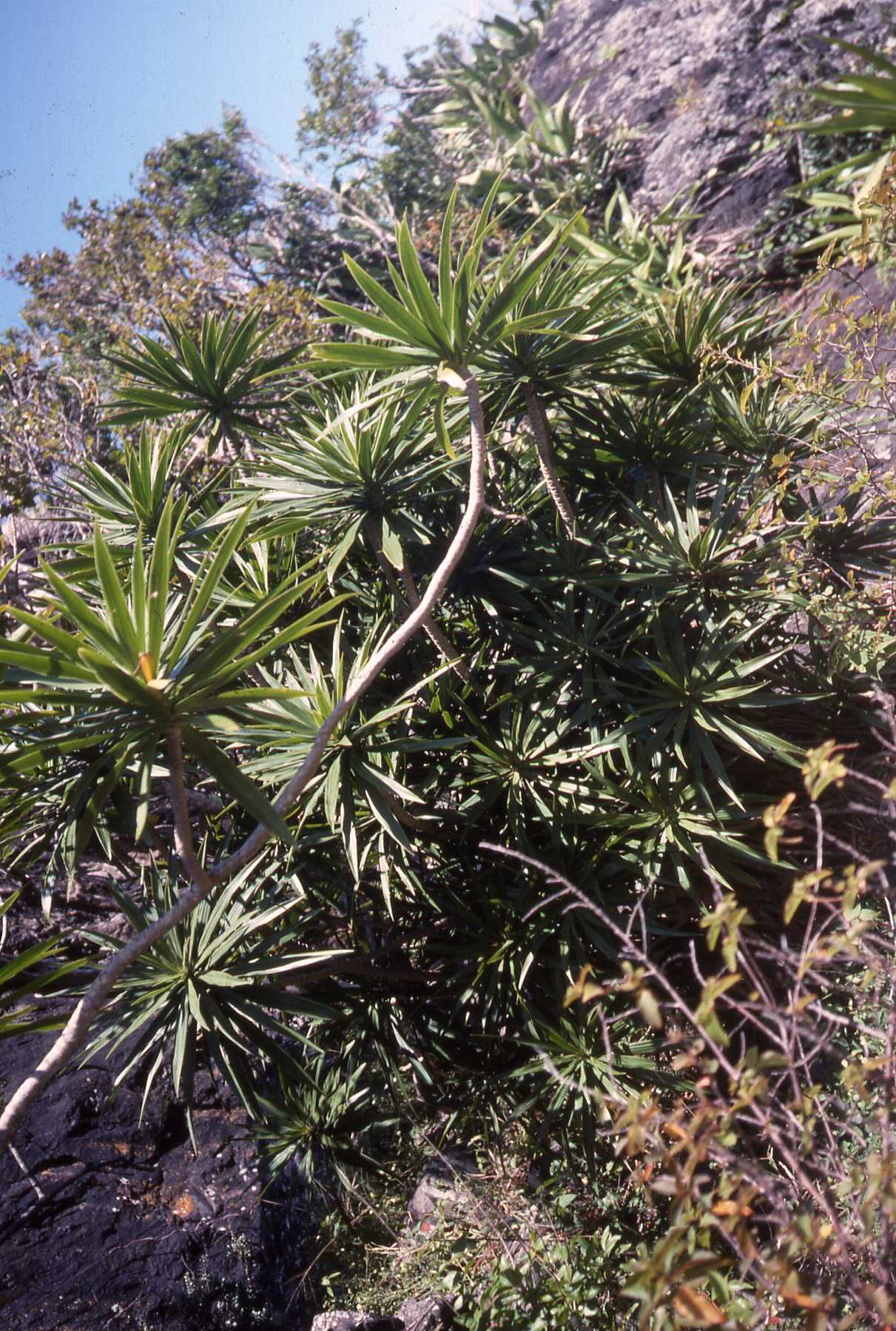
The typical form is one or more sturdy woody canes topped with a fountain of long, strap-shaped leaves, often boldly striped or variegated. Occasionally a plant will surprise its keeper with clusters of small, intensely fragrant white flowers that emerge pink in bud. On Dracaena marginata specifically, the narrow leaves carry reddish-purple edges, and as the plant matures it sheds its lowest leaves, leaving bare cane beneath fresh tufts of foliage.
Source: RHS
Watch for sap-sucking hitchhikers
Spider mites, scale insects, and mealybugs are the pests most likely to trouble a dragon tree. Regular misting helps discourage them before they settle in, and if an infestation does appear, insecticidal soap in the misting water, or a cotton swab of dilute alcohol for scale, will usually deal with it.
Source: Epic Gardening
Leaves that tell a story
Brown leaf tips are the plant's way of signalling underwatering, while yellowing and leaf drop more often point to soil kept too wet for too long, since overwatering remains the most common way these plants are lost. A layer of dust on the leaves can quietly starve the plant by blocking the light it needs for photosynthesis, so a monthly wipe with a soft cloth is worth the effort.
Source: Costa Farms
Tidy, trim, and let it rebranch
Dead leaves and browning tips can simply be snipped away with scissors to keep the plant looking fresh, and any stem that has grown out of proportion can be cut back, which also encourages fuller new growth. On caned types such as this, cutting a stem prompts new foliage to sprout just below the cut, a handy way to keep a plant at a chosen height and bushier in habit.
Source: Costa Farms
Care recipe
The species record — the baseline every cultivar inherits unless it says otherwise.
Care notes are early — not yet verified
- Light
- ai:claude-opus-4-8
- Water
- ai:claude-opus-4-8 (range 7-14d)
- Humidity
- ai:claude-opus-4-8
- Soil
- ai:claude-fable-5
- Care
- ai:claude-fable-5
Bright, indirect
≈ every 14 days
Medium
16–29 °C
Loose, well-draining potting mix with added perlite
Stem or cane cuttings rooted in water or moist mix
Balanced liquid feed monthly in spring and summer
Moderate
Rarely flowers indoors
Toxic to cats & dogs
Saponins — vomiting (occasionally with blood), depression, anorexia, drooling. This is where toxicity lives: every cultivar of this species inherits it and none can override it.
Reference images
Every image credited. Licenses link to their deeds.
PrimarySources: ai:claude-opus-4-8 · ai:claude-opus-4-8 (range 7-14d) · ai:claude-fable-5 · ASPCA
Kept true by its growers
Every fact here carries its source. Grow Suji yourself? What you’ve observed — how it drinks, how it holds its color, a name that’s off — and a clear photo of your plant are exactly what keep this page honest. Contributions are reviewed before anything changes.
Sign in to add what you know →