Species · genus Dendrobium · Orchidaceae
Rock-lily
Dendrobium speciosum Sm.
Also known as: Wood-lily · Rock Orchid
Cultivars of D. speciosum
The named forms growers keep — each with its own page, each honest about how much we know.
No named cultivars catalogued under D. speciosum yet. When growers document a stable, named form, it earns its own page here.
Guide
The species-level account. Cultivar pages build on this and say where they differ.
The Rock Lily
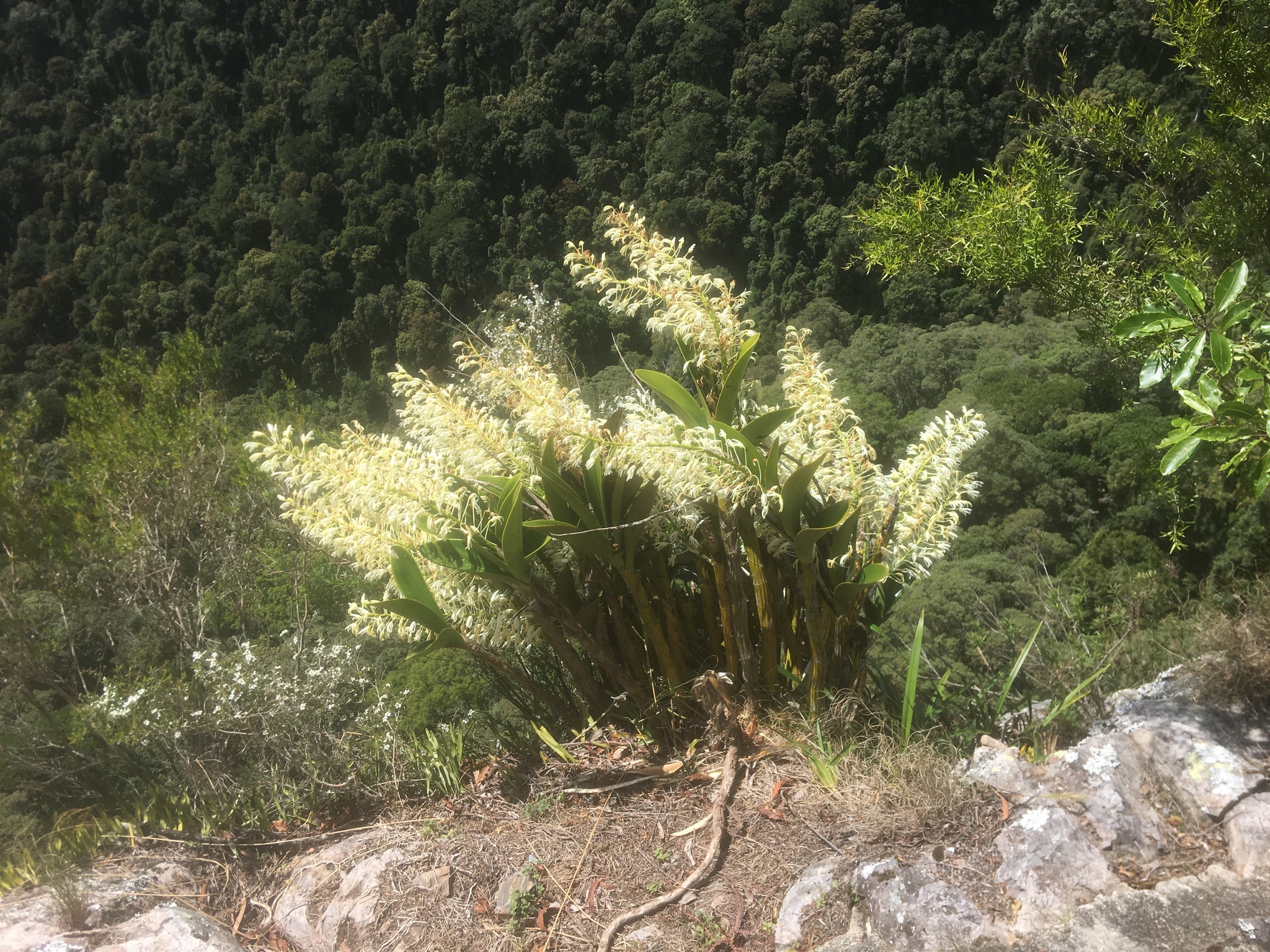
Dendrobium speciosum, known as the New South Wales rock lily, is a medium-sized evergreen orchid. It grows as a clump-forming plant with thick, upright pseudobulbs and produces long clusters of small, fragrant flowers in late winter and spring.
Source: RHS
An Australian Native
This orchid's natural range covers eastern and south-eastern Australia, in New South Wales, Queensland and Victoria, and it has also become established in New Caledonia. In the wild it lives as a lithophyte on rocks or as an epiphyte on large trees, mostly within a subtropical setting. It was first described by Smith in 1804.
Source: Kew
A Seasonal Rhythm
Grow this orchid in a bark-based, epiphytic potting mix, kept slightly root-restricted rather than over-potted. Offer dappled shade and higher humidity through spring and summer, then shift the plant to a bright, cooler spot for autumn and winter, easing off on water and feed until warmth returns to trigger new growth and flowers in spring. Good drainage and a neutral, sheltered position suit it best, whether in full sun or partial shade.
Source: RHS
Division and Keiki
Seed propagation only succeeds under laboratory conditions, so home growers rely on other means. Mature plants that have outgrown their pot can be divided, and older canes sometimes produce sideshoots, or keiki, which can be removed and potted into sphagnum moss once their new roots reach at least 2cm.
Source: RHS
Pseudobulbs and Flower Clusters
Each pseudobulb can reach up to 45cm, typically broader at the base and topped with two to five firm, oval evergreen leaves. From these stems come long racemes bearing as many as 100 small, fragrant flowers, making for a striking late-winter to spring display.
Source: RHS
Watch For These
This orchid can attract scale insects, aphids, mealybugs and red spider mite. Otherwise it tends to be free of disease.
Source: RHS
Light Pruning Only
Little pruning is needed beyond removing spent flowers as they finish. Avoid cutting whole canes unless they are fully shrivelled, and when thinning, remove only the oldest canes while keeping enough younger, thick, leaf-bearing ones on the plant.
Source: RHS
Care recipe
The species record — the baseline every cultivar inherits unless it says otherwise.
Care notes are early — not yet verified
- Light
- ai:claude-opus-4-8
- Water
- ai:claude-opus-4-8 (range 7-14d)
- Humidity
- ai:claude-opus-4-8
- Soil
- ai:claude-fable-5
- Care
- ai:claude-fable-5
Bright, indirect
≈ every 14 days
Medium
8–30 °C
Coarse bark in a large, stable pot
Division of large clumps
Dilute orchid feed in the growing season
Slow
Arching sprays of fragrant cream flowers in spring
Not yet documented
This is where toxicity lives — every cultivar of this species inherits it and none can override it.
Reference images
Every image credited. Licenses link to their deeds.
PrimarySources: ai:claude-opus-4-8 · ai:claude-opus-4-8 (range 7-14d) · ai:claude-fable-5
Kept true by its growers
Every fact here carries its source. Grow Rock-lily yourself? What you’ve observed — how it drinks, how it holds its color, a name that’s off — and a clear photo of your plant are exactly what keep this page honest. Contributions are reviewed before anything changes.
Sign in to add what you know →