Species · genus Dendrobium · Orchidaceae
Pink Rock Orchid
Dendrobium kingianum Bidwill ex Lindl.
Cultivars of D. kingianum
The named forms growers keep — each with its own page, each honest about how much we know.
No named cultivars catalogued under D. kingianum yet. When growers document a stable, named form, it earns its own page here.
Guide
The species-level account. Cultivar pages build on this and say where they differ.
Pink Rock Orchid
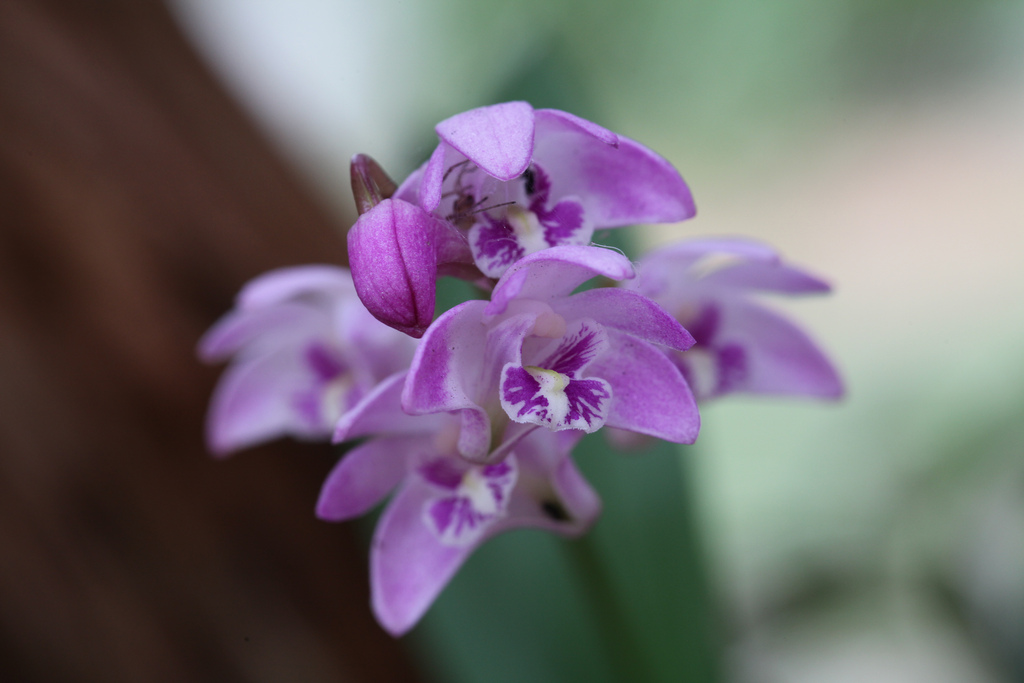
Dendrobium kingianum is the pink rock orchid, an epiphytic orchid with narrowly conical pseudobulbs and upright stems. It carries fragrant pink, purple or white flowers, each with a crimson or purple veined lip, in racemes from the pseudobulb tips in early spring. It has earned the RHS Award of Garden Merit.
Source: RHS
An Australian Native
This species comes from Australia, part of a genus of epiphytic and terrestrial orchids that spans East Asia, the Pacific, Australia and New Zealand. It belongs to the cool-growing camp of dendrobiums, alongside D. nobile, which flower in winter and spring and want a distinct seasonal rhythm rather than year-round warmth.
Source: RHS
A Cool-Growing Rhythm
Give it good light, fresh air and humidity, in an open, bark-based medium, with a spot in partial shade and shelter from harsh sun. Water as the compost starts to dry through spring and summer, then ease off in winter and allow about four weeks of daytime temperatures near 8°C, which is what coaxes it into flower. Feed regularly while it is in active growth, and hold back once growth slows.
Source: RHS
Division And Keikis
New plants come from dividing established clumps or from potting up keikis, the small plantlets that form on older stems. Wait until a keiki's roots reach about 2cm long before potting it on its own.
Source: RHS
Watch For Common Pests
Aphids, glasshouse red spider mite and mealybugs are the pests most likely to trouble this orchid. Otherwise it is generally free of disease.
Source: RHS
When It Won't Reflower
Some plants of this kind are reluctant to reflower and put out new plantlets instead, often because they were watered in autumn just when flower buds should be forming. Cutting back on watering and misting, keeping the plant cool with lower humidity, and avoiding high-nitrogen feed after midsummer can help. Moving it outdoors for summer, with a clear day-night temperature difference and reduced humidity, also encourages bud formation, provided it is hardened off gradually first.
Source: RHS
Little Pruning Needed
This orchid asks for almost no pruning; simply remove spent flowers as they fade. Leave the pseudobulbs in place unless they have fully shrivelled and turned pale brown.
Source: RHS
Care recipe
The species record — the baseline every cultivar inherits unless it says otherwise.
Care notes are early — not yet verified
- Light
- ai:claude-opus-4-8
- Water
- ai:claude-opus-4-8 (range 7-14d)
- Humidity
- ai:claude-opus-4-8
- Soil
- ai:claude-fable-5
- Care
- ai:claude-fable-5
Bright, indirect
≈ every 14 days
Medium
8–28 °C
Fine to medium bark, fast-draining
Keikis, which root readily, or division
Dilute orchid feed while growing, ease off in winter
Moderate
Fragrant pink-white spring sprays; cool nights aid budding
Not yet documented
This is where toxicity lives — every cultivar of this species inherits it and none can override it.
Reference images
Every image credited. Licenses link to their deeds.
Sources: ai:claude-opus-4-8 · ai:claude-opus-4-8 (range 7-14d) · ai:claude-fable-5
Kept true by its growers
Every fact here carries its source. Grow Pink Rock Orchid yourself? What you’ve observed — how it drinks, how it holds its color, a name that’s off — and a clear photo of your plant are exactly what keep this page honest. Contributions are reviewed before anything changes.
Sign in to add what you know →