Species · genus Dendrobium · Orchidaceae
Honohono Orchid
Dendrobium anosmum Lindl.
Also known as: Sanggumay · Unscented Dendrobium
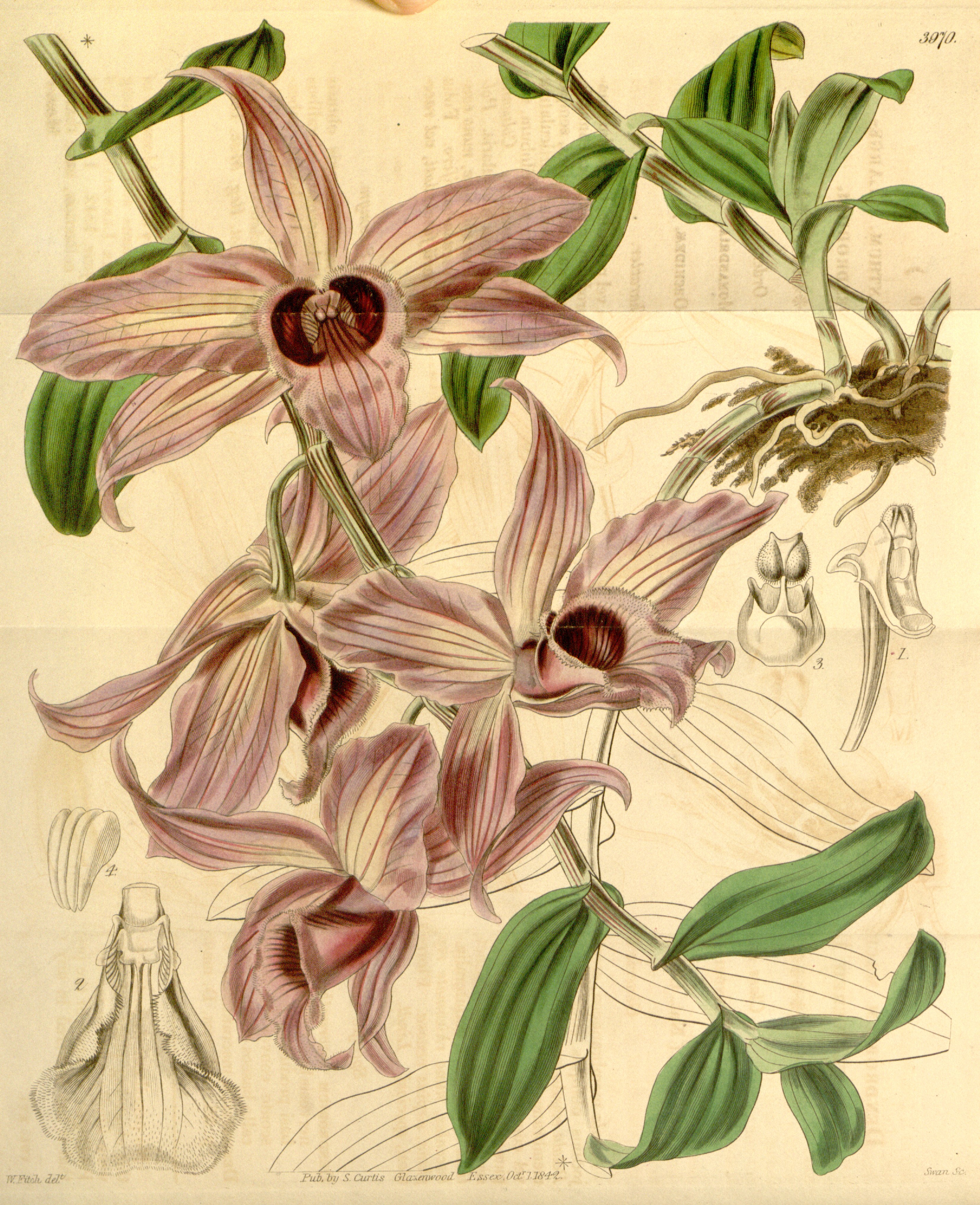
Cultivars of D. anosmum
The named forms growers keep — each with its own page, each honest about how much we know.
No named cultivars catalogued under D. anosmum yet. When growers document a stable, named form, it earns its own page here.
Guide
The species-level account. Cultivar pages build on this and say where they differ.
A pendulous, fragrant dendrobium
This is Dendrobium anosmum, a large epiphytic orchid grown for its long, cane-like hanging stems and its spring flush of pale pink blooms. Despite the species name, which suggests no scent, it is in fact a fragrant orchid within the vast Dendrobium genus.
Source: RHS
Native to South and Southeast Asia
Its natural range stretches from Sri Lanka and Bangladesh across to New Guinea, taking in Myanmar, Thailand, Vietnam, Laos, Malaya, the Philippines, and much of the Indonesian archipelago. In the wild it lives as a pseudobulbous epiphyte or lithophyte, rooted on trees or rocks within the wet tropical belt.
Source: Kew
Warmth, light and a dry winter rest
Give this orchid bright, filtered light year-round and warm days of roughly 25-30°C with cooler nights of 16-20°C, since that day-to-night swing helps drive flowering. Water and feed generously through the growing season, but from October cut both back and let the plant rest through winter until warmth returns and triggers new growth. It prefers a bark-based, well-drained epiphytic mix and, like most orchids, resents having its roots disturbed or overpotted.
Source: RHS
Division or keiki cuttings
Mature plants can be divided once they have outgrown their pot. Sideshoots, known as keikis, sometimes form on older canes; once these have roots at least 2cm long they can be removed and potted into sphagnum moss. Raising this orchid from seed is only realistic in a controlled laboratory setting, not at home.
Source: RHS
Cane stems, one flower per node
Stems reach around 120cm, jointed and pendulous, each new one wrapped in leaf-sheaths bearing a single glossy, deciduous leaf. Short flower stalks emerge from the nodes of mature, leafless canes in spring, each carrying one large bloom around 7cm across, usually pale pink but ranging from whitish to dark pink. The lip is densely hairy, which is the most telling feature of the species.
Source: RHS
Watch for common orchid pests
This species can attract scale insects, aphids, mealybugs, and red spider mite, so it is worth checking new growth and leaf undersides regularly. Otherwise it is generally free of disease.
Source: RHS
Light-touch pruning
No routine pruning is needed. Spent flowers can be removed as they fade, but leave the cane itself alone unless it has fully shrivelled after some years of growth. Older canes may eventually be cut away, provided enough younger ones remain to support the plant.
Source: RHS
Care recipe
The species record — the baseline every cultivar inherits unless it says otherwise.
Care notes are early — not yet verified
- Light
- ai:claude-opus-4-8
- Water
- ai:claude-opus-4-8 (range 5-10d)
- Humidity
- ai:claude-opus-4-8
- Soil
- ai:claude-fable-5
- Care
- ai:claude-fable-5
Bright, indirect
≈ every 10 days
High
15–30 °C
Coarse bark or basket mount for orchids
Keikis and cane division
Dilute orchid feed weekly while growing, none when dormant
Moderate
Large fragrant spring blooms after a cool dry winter rest
Not yet documented
This is where toxicity lives — every cultivar of this species inherits it and none can override it.
Reference images
Every image credited. Licenses link to their deeds.
Sources: ai:claude-opus-4-8 · ai:claude-opus-4-8 (range 5-10d) · ai:claude-fable-5
Kept true by its growers
Every fact here carries its source. Grow Honohono Orchid yourself? What you’ve observed — how it drinks, how it holds its color, a name that’s off — and a clear photo of your plant are exactly what keep this page honest. Contributions are reviewed before anything changes.
Sign in to add what you know →