Species · genus Cyrtomium · Dryopteridaceae
House Holly Fern
Cyrtomium falcatum (L.fil.) C.Presl
Also known as: Japanese Netvein Hollyfern · Holly Fern · Japanese Holly Fern · Asian Hollyfern
Cultivars of C. falcatum
The named forms growers keep — each with its own page, each honest about how much we know.
No named cultivars catalogued under C. falcatum yet. When growers document a stable, named form, it earns its own page here.
Guide
The species-level account. Cultivar pages build on this and say where they differ.
A Rugged Shade Fern
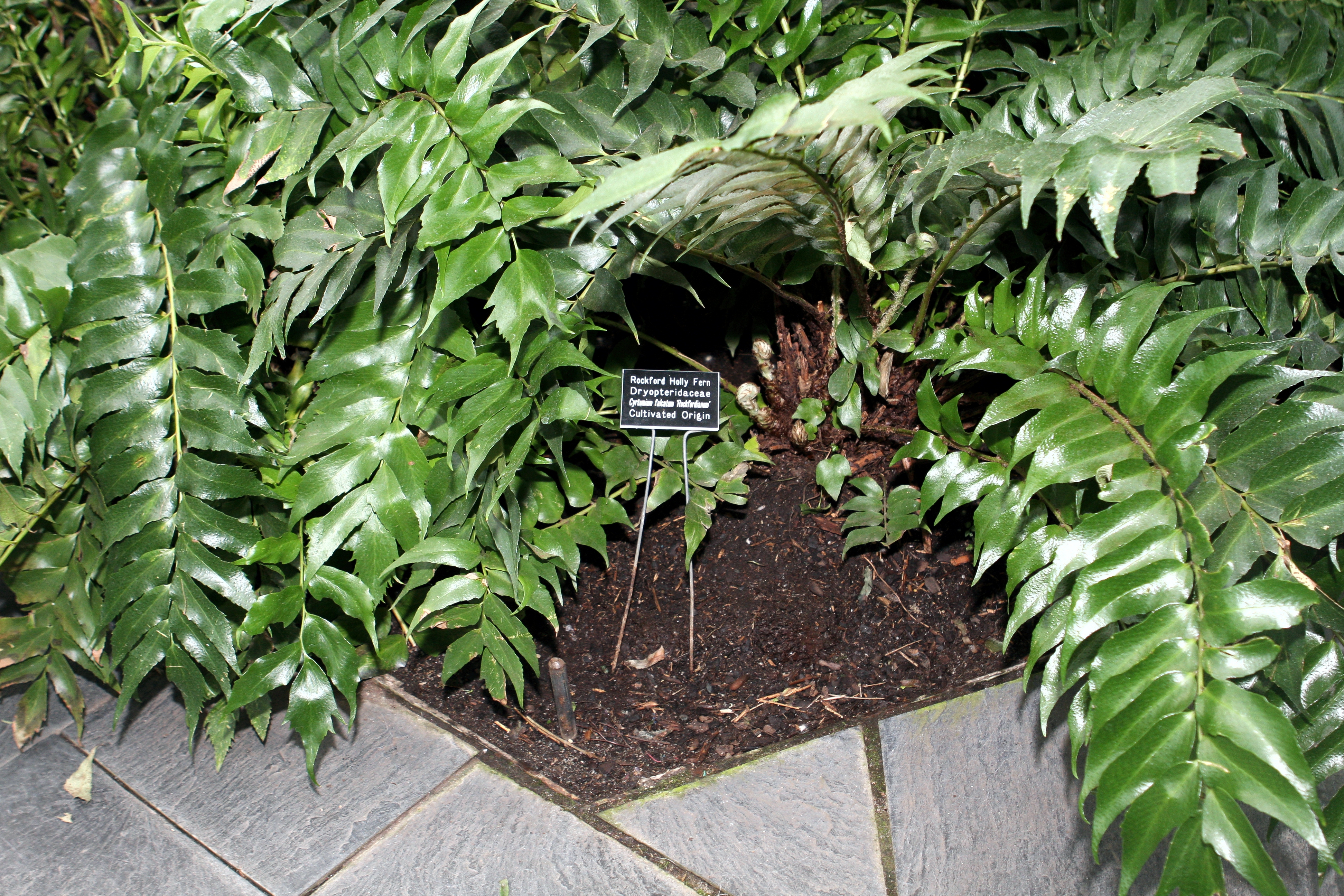
Japanese holly fern is an evergreen perennial fern, known botanically as Cyrtomium falcatum, that carries shiny, leathery, dark green fronds. It brings texture and color to shaded corners of the garden or landscape, and settles just as comfortably into a container.
Source: Costa Farms
Native to East Asia
This fern's natural range lies in East Asia, and it belongs to the fern family Dryopteridaceae, in the genus Cyrtomium, whose members typically carry simply pinnate leaves made up of sickle-shaped leaflets.
Source: RHS
Shade, Moisture, and Shelter
Japanese holly fern prefers full or partial shade and moist, well-drained soil enriched with organic matter. It grows in chalk, clay, loam, or sandy soils across acid, alkaline, or neutral pH, and does best with some shelter from exposure. In its coldest hardiness range it appreciates a protected planting spot so winter winds do not damage the foliage.
Source: RHS
Grown From Spores
This fern is propagated by sowing its spores at around 16°C in late summer.
Source: RHS
Leathery, Sickle-Shaped Fronds
The fern forms a tufted clump of leathery, pinnate fronds that can reach up to 70cm long, each made up of dark glossy green leaflets curved into a broad sickle shape. The foliage holds its form even after heavy rain, and the plant is considered relatively resistant to deer. In milder parts of its range it stays evergreen through winter, while in colder spots it behaves as deciduous. A mature plant reaches roughly 2 feet tall and wide, or by RHS measure, half a metre to a metre in height and spread.
Source: Costa Farms
Largely Trouble-Free
Japanese holly fern is generally free of both pests and disease.
Source: RHS
Minimal Upkeep Needed
No routine pruning is required, though any fronds damaged by frost can be trimmed away in spring. The plant reaches maturity in about two to five years.
Source: RHS
Care recipe
The species record — the baseline every cultivar inherits unless it says otherwise.
Care notes are early — not yet verified
- Light
- ai:claude-opus-4-8
- Water
- ai:claude-opus-4-8 (range 5-10d)
- Humidity
- ai:claude-opus-4-8
- Soil
- ai:claude-fable-5
- Care
- ai:claude-fable-5
Medium light
≈ every 10 days
Medium
10–24 °C
Loose, humus-rich, well-draining mix
Division of the rhizome, or spores
Diluted feed monthly spring through summer
Slow
Non-flowering fern; spores form beneath the fronds
Not yet documented
This is where toxicity lives — every cultivar of this species inherits it and none can override it.
Reference images
Every image credited. Licenses link to their deeds.
PrimarySources: ai:claude-opus-4-8 · ai:claude-opus-4-8 (range 5-10d) · ai:claude-fable-5
Kept true by its growers
Every fact here carries its source. Grow House Holly Fern yourself? What you’ve observed — how it drinks, how it holds its color, a name that’s off — and a clear photo of your plant are exactly what keep this page honest. Contributions are reviewed before anything changes.
Sign in to add what you know →