Species · genus Cyperus · Cyperaceae
Umbrella Sedge
Cyperus alternifolius L.
Also known as: Umbrella Grass · Umbrella Palm · Umbrella Papyrus · Umbrella Plant
Cultivars of C. alternifolius
The named forms growers keep — each with its own page, each honest about how much we know.
No named cultivars catalogued under C. alternifolius yet. When growers document a stable, named form, it earns its own page here.
Guide
The species-level account. Cultivar pages build on this and say where they differ.
The Umbrella Plant
Cyperus alternifolius, commonly known as umbrella plant or umbrella palm, is a tufted, clump-forming sedge rather than a true grass, grown for its stems topped with whorls of arching bracts. It stays fairly compact for the genus, generally reaching a metre or so in height, and is equally at home as a houseplant, patio container plant, or water garden feature.
Source: RHS
A Nile Relative
This species belongs to the same Cyperus family as papyrus, the sedge Egyptians drew on for paper, boats, and clothing millennia ago, and its wild relatives trace back to the marshes and streambanks of Africa. The straight Cyperus papyrus itself grows along the White Nile and has since spread to warm regions worldwide, with alternifolius among the more modest, garden-friendly members of that lineage.
Source: Epic Gardening
Wet Feet, Filtered Light
Grow this sedge in a pot of loam-based compost, set outdoors or in bright filtered light, and stand the container in a shallow tray of water so it never runs dry. A monthly balanced liquid feed through the growing season is enough to keep it going. The variegated form prefers part to full shade, since its leaves can scorch in full sun or hot, drying wind.
Source: RHS
Division or Water Rooting
The plant can be propagated by division of the clump, or by cutting a stem and inverting its umbrella top into water, which prompts plantlets to form at the submerged crown.
Source: RHS
Umbrella-Spoke Bracts
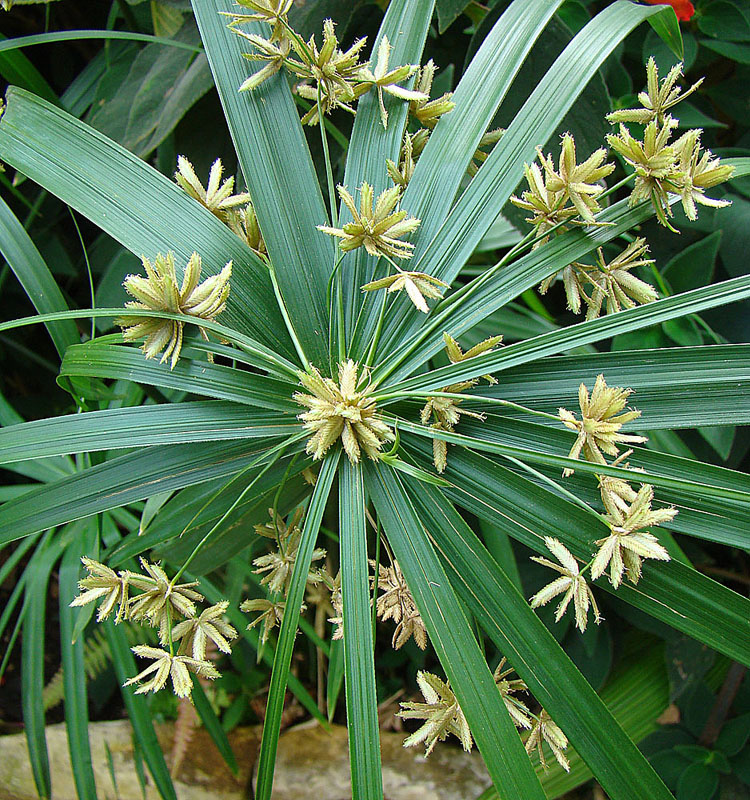
Numerous dark green, triangular stems rise in a dense clump, each crowned with a whorl of ten to twenty-five leaf-like bracts that arch outward like the ribs of an umbrella. From summer into autumn these tops carry small clusters of greenish-brown flowers held in the bract axils. The variegated form carries the same umbrella habit but with stems and bracts mottled and striped white, though this patterning can fade back to green with time.
Source: Missouri Botanical Garden
Largely Trouble-Free
This is a generally pest-free and disease-free plant to grow.
Source: RHS
Trim and Overwinter
Keep the plant tidy by trimming off dead or dying stems as they occur. It is only hardy to about USDA zone 9, so where winters bring frost it needs to come indoors or be treated as a tender perennial, potted up before the first frost and brought inside until warmth returns.
Source: Missouri Botanical Garden
Care recipe
The species record — the baseline every cultivar inherits unless it says otherwise.
Care notes are early — not yet verified
- Light
- ai:claude-opus-4-8
- Water
- ai:claude-opus-4-8 (range 2-5d)
- Humidity
- ai:claude-opus-4-8
- Soil
- ai:claude-fable-5
- Care
- ai:claude-fable-5
Bright, indirect
≈ every 5 days
High
16–27 °C
Rich, water-retentive mix kept constantly wet
Division of clumps, or umbel cuttings floated in water
Balanced liquid feed monthly in the growing season
Fast
Airy brown flower clusters atop the umbels
Not yet documented
This is where toxicity lives — every cultivar of this species inherits it and none can override it.
Reference images
Every image credited. Licenses link to their deeds.
Sources: ai:claude-opus-4-8 · ai:claude-opus-4-8 (range 2-5d) · ai:claude-fable-5
Kept true by its growers
Every fact here carries its source. Grow Umbrella Sedge yourself? What you’ve observed — how it drinks, how it holds its color, a name that’s off — and a clear photo of your plant are exactly what keep this page honest. Contributions are reviewed before anything changes.
Sign in to add what you know →