Species · genus Cycas · Cycadaceae
Sago Palm
Cycas revoluta Thunb.
Also known as: Fern Palm · Sago Cycas · Sotesu-nut · Japanese Sago Palm · King Sago
Cultivars of C. revoluta
The named forms growers keep — each with its own page, each honest about how much we know.
No named cultivars catalogued under C. revoluta yet. When growers document a stable, named form, it earns its own page here.
Guide
The species-level account. Cultivar pages build on this and say where they differ.
An Ancient Cycad
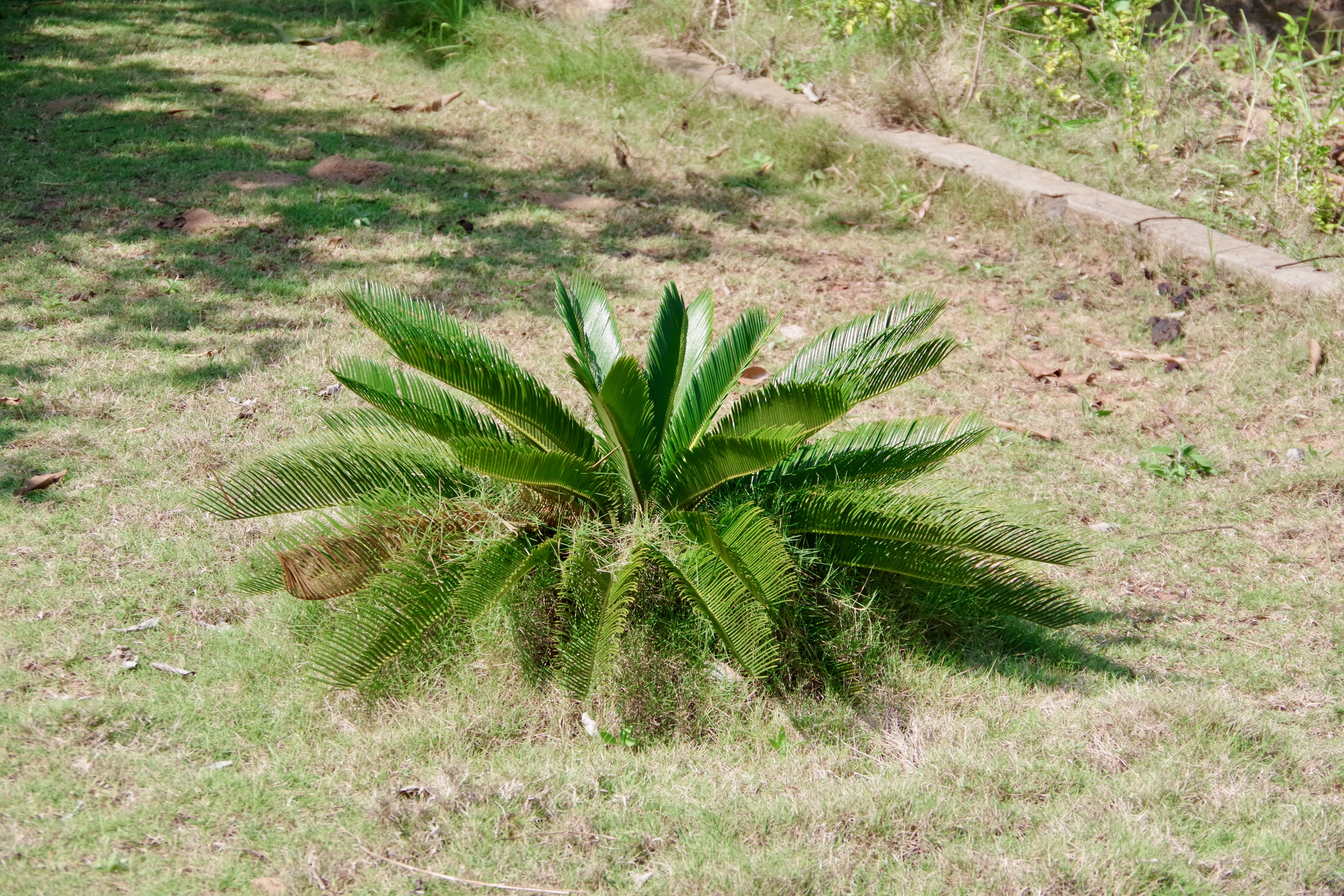
Cycas revoluta, the Japanese sago palm, is a slow-growing evergreen perennial with a stout woody trunk and a crown of arching, feathery leaves. Despite its common name it is not a true palm at all but a cycad, a group more closely related to pines and spruces than to palms.
Source: Epic Gardening
From Japan's Islands
This cycad comes from the subtropical southern islands of Japan, a humid, sunny landscape shaped by rainy seasons and typhoons, with warm summers and cool, moist winters. It belongs to the ancient family Cycadaceae, a lineage that predates the dinosaurs and once served them as a food source. In the wild it is native to the Far East, and it has earned the RHS Award of Garden Merit for its steady, all-season presence.
Source: Epic Gardening
Light, Water, Warmth
Grow this cycad under glass in a peat-free, loam-based mix enriched with leaf mould and grit, giving full light but shading it from hot sun, along with moderate humidity. Water moderately while it is actively growing and sparingly the rest of the year; where frost is not a concern, it can instead sit in moist but well-drained soil in bright light with some shelter from full sun. Indoors, aim for four to six hours of filtered light, water thoroughly once the top inch of the medium dries, and keep humidity in the modest range of 30 to 50 percent, using a pebble tray if indoor air runs dry.
Source: Epic Gardening
Seed or Suckers
This plant is propagated by seed or by removing the suckers it produces at the base.
Source: RHS
Slow, Sculptural Growth
The sago palm carries large, leathery, pinnate leaves up to 1.5 metres long in a terminal rosette, reaching an ultimate height of around 1 to 1.5 metres over a span of 20 to 50 years. It is dioecious, with male plants forming large cone-like inflorescences and females bearing smaller, modified leaf structures, though flowering golden-brown inflorescences are seen only on mature specimens. Some individuals are known to live over 200 years, a testament to how unhurried this plant's whole life cycle is.
Source: RHS
Scale, Mites, Mealybugs
Outdoors this cycad is largely untroubled by pests, though under glass it can draw glasshouse red spider mite. As a houseplant it may also attract cycad scale, recognisable by waxy white armor and yellow blotching on leaves, along with mealybugs and spider mites, both of which bring yellowing, stunted growth, and fine webbing or cottony residue. A stream of water, a cotton swab dipped in alcohol, or a horticultural oil such as neem can knock back these populations.
Source: Epic Gardening
Reading Yellow Leaves
Yellowing is this plant's main way of signalling stress, and it has several usual sources: too much manganese-poor or alkaline soil, harsh direct afternoon sun, or watering that swings between too much and too little. Overwatering harms the roots' ability to take up nutrients, while underwatering makes the plant hoard moisture for its core, and either can trigger discoloration. Cold below about 15°F (-9°C) can scorch tips and stems yellow or brown, and low indoor humidity tends to leave leaves patchy and brown rather than yellow. Some lower-frond yellowing is simply normal aging, so it is worth leaving those fronds in place until they fully brown, since they keep feeding the plant as they fade.
Source: Epic Gardening
Little Pruning Needed
This cycad asks for no routine pruning, and it is generally free of disease. It grows slowly enough that it rarely needs repotting, being content to stay somewhat root-bound; refresh the potting mix every few years and size up only when roots crowd the drainage holes or surface.
Source: RHS
Care recipe
The species record — the baseline every cultivar inherits unless it says otherwise.
Care notes are early — not yet verified
- Light
- ai:claude-opus-4-8
- Water
- ai:claude-opus-4-8 (range 10-21d)
- Humidity
- ai:claude-opus-4-8
- Soil
- ai:claude-fable-5
- Care
- ai:claude-fable-5
Bright, indirect
≈ every 21 days
Medium
15–27 °C
Well-draining, sandy mix with some grit
Offset pups removed from the base, or seed (very slow)
Dilute balanced feed once or twice in the growing season
Slow
Rarely flowers indoors; a slow, ancient cycad
Toxic to cats & dogs & humans
Cycadaceae contain cycasin and related toxins; all parts, especially the seeds, are dangerous if ingested. This is where toxicity lives: every cultivar of this species inherits it and none can override it.
Reference images
Every image credited. Licenses link to their deeds.
PrimarySources: ai:claude-opus-4-8 · ai:claude-opus-4-8 (range 10-21d) · ai:claude-fable-5 · ai:claude-opus-4-8 (family inference)
Kept true by its growers
Every fact here carries its source. Grow Sago Palm yourself? What you’ve observed — how it drinks, how it holds its color, a name that’s off — and a clear photo of your plant are exactly what keep this page honest. Contributions are reviewed before anything changes.
Sign in to add what you know →