Species · genus Curio · Asteraceae
String of Pearls
Curio rowleyanus (H.Jacobsen) P.V.Heath
Also known as: String-of-beads · String-Of-Beads Senecio
Cultivars of C. rowleyanus
The named forms growers keep — each with its own page, each honest about how much we know.
No named cultivars catalogued under C. rowleyanus yet. When growers document a stable, named form, it earns its own page here.
Guide
The species-level account. Cultivar pages build on this and say where they differ.
String of Beads, Explained
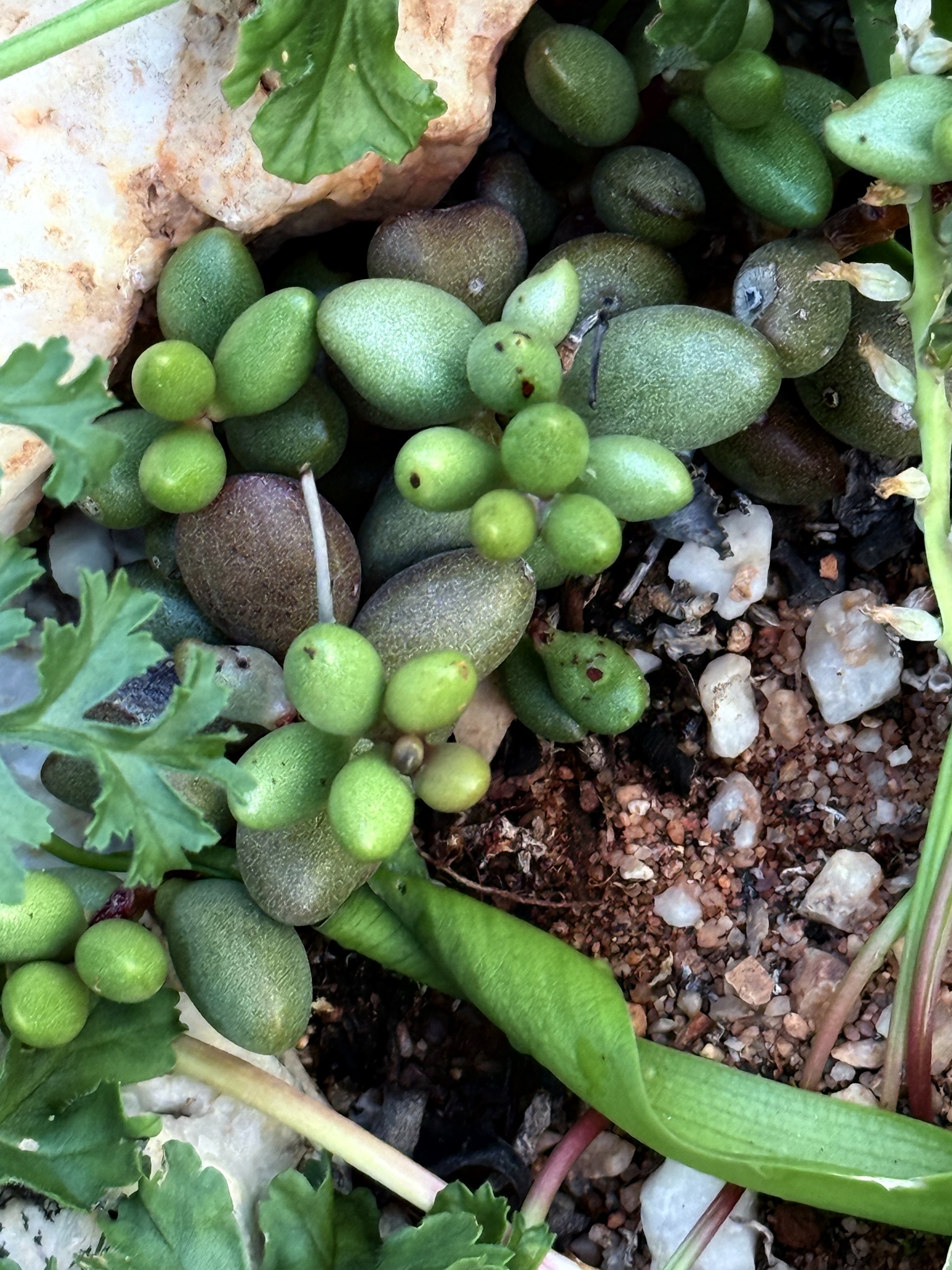
Curio rowleyanus, better known as string of beads or string of pearls, is a tender evergreen succulent grown for its long trailing stems set with round, pea-like leaves. In summer it can produce small paintbrush-shaped, cream-white flowers with a noticeable fragrance.
Source: RHS
Roots in Arid Africa
The plant belongs to the genus Curio, a group of succulents native to South Africa's Cape Province mountains, and this particular species has a range extending into south-west Africa and Namibia. Its fleshy, water-storing leaves are an inheritance from growing in arid terrain, where such reserves carry the plant through dry spells.
Source: RHS
Bright Light, Sparing Water
Give it a bright spot with several hours of direct sun, though avoid the harshest midday sun through summer since it can scorch the leaves. Room temperatures suit it fine, roughly 21-27°C in summer and cooler, 13-16°C in winter, when watering should also drop right back. Through the growing season let the compost dry out between waterings, feed lightly at most once a month, and never mist, since these succulents dislike humidity.
Source: RHS
Easy From Cuttings
Propagation is straightforward and can be done by softwood cuttings, internodal cuttings, division, or by layering a stem across compost until it roots. Spring and summer are the times to do it, and stem cuttings typically root within about a month.
Source: RHS
Beads on a Trailing Stem
The defining trait is those spherical, mid-green leaves strung along thin cascading stems, which in this species can trail 90cm or more given the room. It stays low, rarely reaching above 10cm in height, and its habit is entirely trailing rather than upright. A variegated form exists too, with pea-like leaves marked in green and cream.
Source: RHS
Sap-Sucking Visitors
Whitefly, aphids, and glasshouse red spider mite are the pests most likely to trouble this plant, alongside mealybugs. Otherwise it is generally free of disease.
Source: RHS
Overwatering Is the Usual Culprit
Stem rot and shrivelling leaves nearly always trace back to overwatering, so let the compost dry out between waterings and go easy in winter. Scorched leaves come from too much hot, direct sun, a risk the variegated forms feel more keenly. Too little light, meanwhile, produces weak, straggly growth with leaves that stay undersized.
Source: RHS
Trim and Repot Rarely
Trim back weak or straggly stems to the base to encourage fresh growth, and a plant left to trail can simply be cut back with scissors if it outgrows its spot. New purchases can usually stay put for at least a year before repotting is needed, and when the time comes choose a pot only slightly larger than the last, with good drainage, to avoid overpotting and root rot.
Source: RHS
Care recipe
The species record — the baseline every cultivar inherits unless it says otherwise.
Care notes are early — not yet verified
- Light
- ai:claude-opus-4-8
- Water
- ai:claude-opus-4-8 (range 14-21d)
- Humidity
- ai:claude-opus-4-8
- Soil
- ai:claude-fable-5
- Care
- ai:claude-fable-5
Bright, indirect
≈ every 21 days
Low — average room
10–27 °C
Gritty, fast-draining cactus and succulent mix
Trailing stem cuttings laid on the soil surface to root
Dilute succulent feed once or twice in the growing season
Moderate
Small white brush-like flowers with a cinnamon scent
Toxic to cats & dogs
String-of-pearls / string-of-bananas (succulent senecio) — stomach upset, vomiting, lethargy. This is where toxicity lives: every cultivar of this species inherits it and none can override it.
Reference images
Every image credited. Licenses link to their deeds.
Sources: ai:claude-opus-4-8 · ai:claude-opus-4-8 (range 14-21d) · ai:claude-fable-5 · ASPCA
Kept true by its growers
Every fact here carries its source. Grow String of Pearls yourself? What you’ve observed — how it drinks, how it holds its color, a name that’s off — and a clear photo of your plant are exactly what keep this page honest. Contributions are reviewed before anything changes.
Sign in to add what you know →