Species · genus Curio · Asteraceae
Creeping Berry
Curio radicans (L.) P.V.Heath
Also known as: String Of Bananas · String Of Fishhooks · Baboon Toes · Banana Vine · Necklace Plant
Cultivars of C. radicans
The named forms growers keep — each with its own page, each honest about how much we know.
No named cultivars catalogued under C. radicans yet. When growers document a stable, named form, it earns its own page here.
Guide
The species-level account. Cultivar pages build on this and say where they differ.
String of bananas
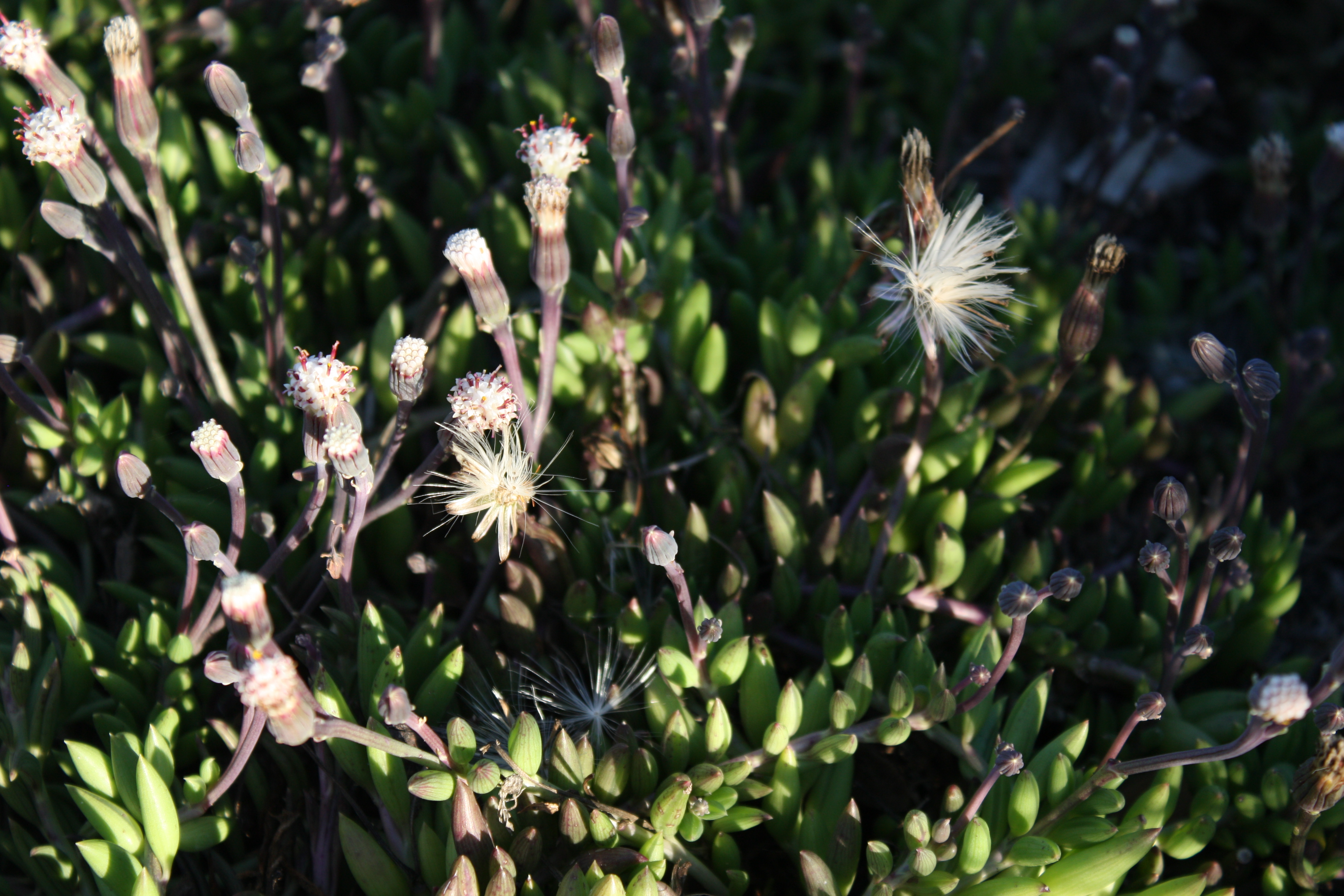
Curio radicans, still often sold under its older name Senecio radicans, is an evergreen trailing succulent grown for the curious banana-shaped leaves strung along its cascading stems. It belongs to the daisy family, and though its flowers are small and unremarkable to look at, they carry a curious cinnamon scent.
Source: RHS
A Cape Province native
This plant's roots lie in South Africa, where the genus Curio grows wild in the mountains of the Cape Province among other flowering succulents suited to arid ground. It reaches us today as one of several 'string of' succulents from that region, most of which entered cultivation under the old genus name Senecio before being reclassified.
Source: Kew
Bright light, careful water
Give this plant full light with good ventilation, and pot it in a gritty mix of loam-based compost with leaf mould and grit so water passes through freely. Water moderately while it is in growth, and feed monthly with a half-strength balanced liquid feed; ease right off in the cooler months. Coming from an arid corner of South Africa, it stores enough moisture in its leaves to tolerate a missed watering better than an excess one.
Source: RHS
Division or stem cuttings
New plants come readily from division, or simply by removing a stem section and letting it root. It is an easy, forgiving process well suited to building up more plants from one.
Source: RHS
Curved, fleshy foliage
The defining feature here is the foliage: thick, fleshy, banana-curved leaves lining slender hanging stems that can trail up to 90cm. It keeps a pendulous, weeping habit year round as an evergreen, and in late winter to early spring produces small white flowers with an unexpected cinnamon fragrance.
Source: RHS
Sap-feeding troublemakers
Keep an eye out for aphids, glasshouse red spider mite, and glasshouse whitefly, all of which take advantage of the soft new growth on this succulent.
Source: RHS
Watch the watering
The main risk to this plant is stem rot, and it comes almost entirely from overwatering. Keep the growing mix on the dry side and err toward underwatering rather than over.
Source: RHS
Little upkeep needed
This is a low-fuss plant that asks for no routine pruning. Left to its own devices in the right conditions, it simply gets on with trailing.
Source: RHS
Care recipe
The species record — the baseline every cultivar inherits unless it says otherwise.
Care notes are early — not yet verified
- Light
- ai:claude-opus-4-8
- Water
- ai:claude-opus-4-8 (range 10-21d)
- Humidity
- ai:claude-opus-4-8
- Soil
- ai:claude-fable-5
- Care
- ai:claude-fable-5
Bright, indirect
≈ every 21 days
Low — average room
10–27 °C
Gritty, fast-draining cactus and succulent mix
Trailing stem cuttings laid on or rooted in dry mix
Dilute succulent feed once or twice in spring and summer
Fast
Small white flowers with a cinnamon scent, occasional
Toxic to cats & dogs
String-of-pearls / string-of-bananas (succulent senecio) — stomach upset, vomiting, lethargy. This is where toxicity lives: every cultivar of this species inherits it and none can override it.
Reference images
Every image credited. Licenses link to their deeds.
PrimarySources: ai:claude-opus-4-8 · ai:claude-opus-4-8 (range 10-21d) · ai:claude-fable-5 · ASPCA
Kept true by its growers
Every fact here carries its source. Grow Creeping Berry yourself? What you’ve observed — how it drinks, how it holds its color, a name that’s off — and a clear photo of your plant are exactly what keep this page honest. Contributions are reviewed before anything changes.
Sign in to add what you know →