Species · genus Ctenanthe · Marantaceae
Fishbone Prayer Plant
Ctenanthe burle-marxii H.Kenn.
Cultivars of C. burle-marxii
The named forms growers keep — each with its own page, each honest about how much we know.
No named cultivars catalogued under C. burle-marxii yet. When growers document a stable, named form, it earns its own page here.
Guide
The species-level account. Cultivar pages build on this and say where they differ.
The Fishbone Plant
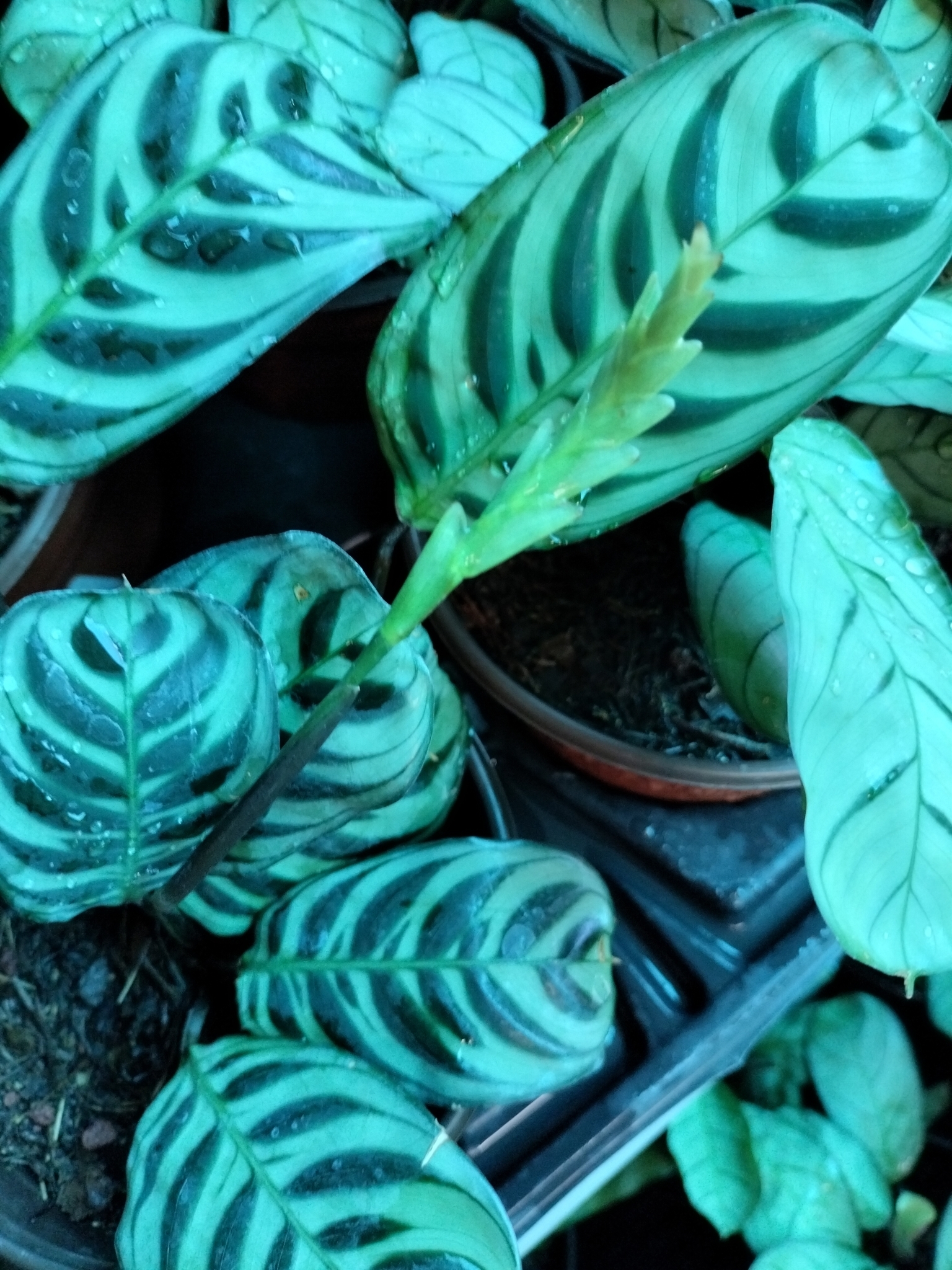
Ctenanthe burle-marxii is a tender, evergreen perennial from the arrowroot family, grown chiefly for its patterned foliage. It forms a bushy clump reaching around 60cm, with softly hairy, purple-tinged stems and pale green leaves marked in dark green bands.
Source: RHS
A Brazilian Native
This plant's natural range lies in Brazil, and it belongs to the genus Ctenanthe, a group of bushy evergreen perennials prized for strikingly patterned leaves. It is also known by the synonym Calathea stromata, a naming echo of its close kinship with the calatheas.
Source: RHS
Bright Shade, Steady Moisture
Grow this plant indoors in a peat-free, loam-based compost, set in bright but indirect light, as it prefers partial shade rather than direct sun. Water freely through the growing season and feed monthly with a general liquid fertiliser from spring to summer, easing back to just keeping the compost moist over winter. High humidity suits it well, achieved simply by standing the pot on a tray of moist gravel, and it does best kept away from draughts at a steady temperature.
Source: RHS
Division or Seed
Propagation is by seed or by division, the latter carried out in spring.
Source: RHS
Fishbone Foliage
The oblong to ovate leaves are pale green, banded with dark green in a pattern that reads like a fishbone, and coloured purple beneath. Small clusters of white flowers may appear intermittently through the year, held at the ends of long stems, though the display is a secondary interest next to the foliage itself.
Source: RHS
Watch for Mealybugs
This plant may be susceptible to mealybugs, though it is otherwise generally free of disease.
Source: RHS
Annual Repotting, No Pruning
Repot annually, in late spring or early summer, to keep the plant growing steadily. No pruning is required.
Source: RHS
Care recipe
The species record — the baseline every cultivar inherits unless it says otherwise.
Care notes are early — not yet verified
- Light
- ai:claude-opus-4-8
- Water
- ai:claude-opus-4-8 (range 5-10d)
- Humidity
- ai:claude-opus-4-8
- Soil
- ai:claude-fable-5
- Care
- ai:claude-fable-5
Bright, indirect
≈ every 10 days
High
16–27 °C
Light, moisture-retentive mix with peat and perlite
Division of the rhizome at repotting
Diluted balanced feed monthly in spring and summer
Moderate
Rarely flowers indoors; grown for patterned foliage
Not yet documented
This is where toxicity lives — every cultivar of this species inherits it and none can override it.
Reference images
Every image credited. Licenses link to their deeds.
PrimarySources: ai:claude-opus-4-8 · ai:claude-opus-4-8 (range 5-10d) · ai:claude-fable-5
Kept true by its growers
Every fact here carries its source. Grow Fishbone Prayer Plant yourself? What you’ve observed — how it drinks, how it holds its color, a name that’s off — and a clear photo of your plant are exactly what keep this page honest. Contributions are reviewed before anything changes.
Sign in to add what you know →