Species · genus Crassula · Crassulaceae
Baby Pine Of China
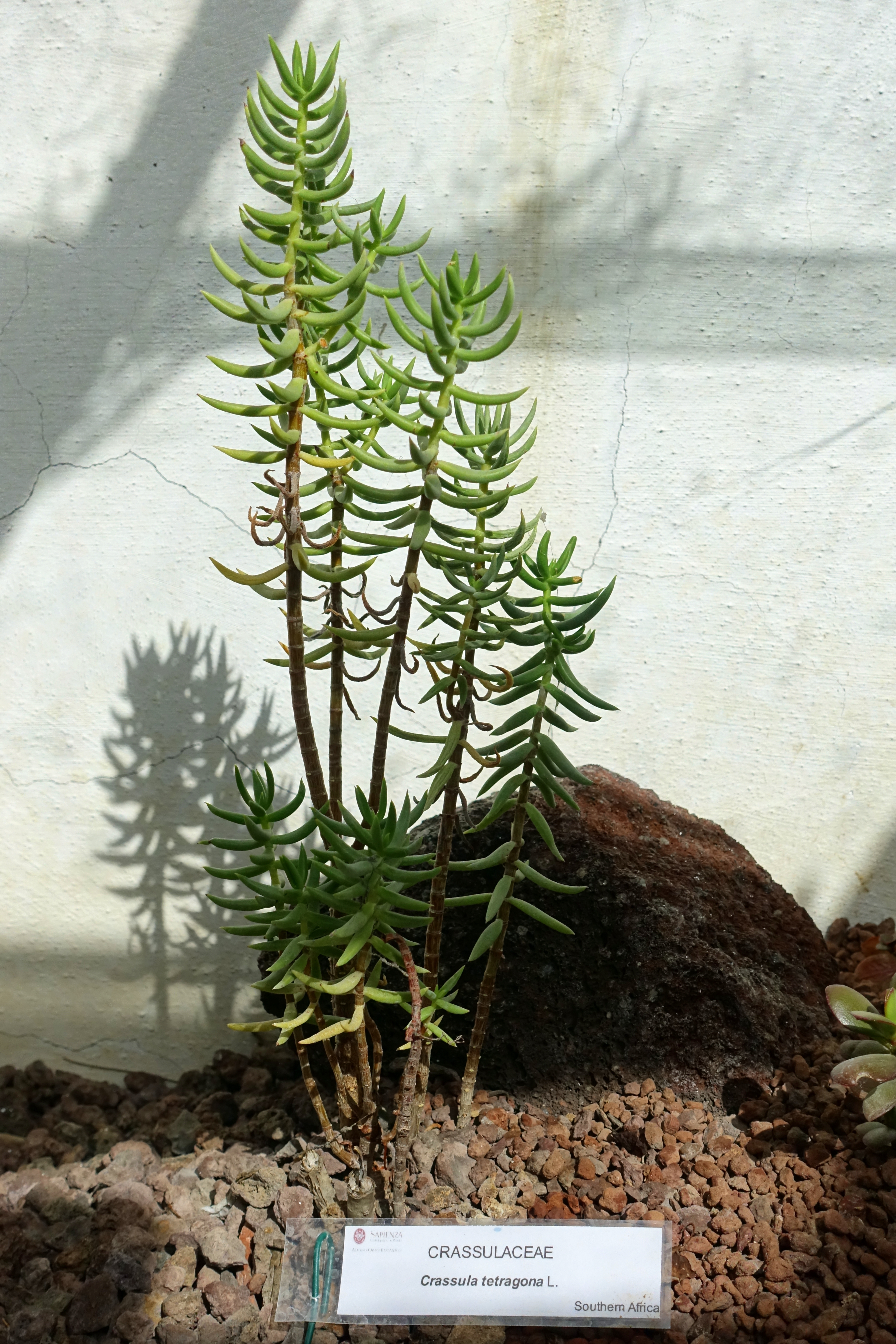
Crassula tetragona L.
Also known as: Karkai · Kerkei · Pygmyweed
Cultivars of C. tetragona
The named forms growers keep — each with its own page, each honest about how much we know.
No named cultivars catalogued under C. tetragona yet. When growers document a stable, named form, it earns its own page here.
Guide
The species-level account. Cultivar pages build on this and say where they differ.
A Vast Succulent Genus
Crassula is a sprawling genus of succulent plants, with at least 200 named species and countless cultivars beyond that. Jade plant, the genus's most familiar face, belongs here, but the family stretches into forms as varied as miniature pine trees and trailing button chains. All members share the same succulent constitution: thick, water-storing leaves and stems built for dry conditions.
Source: Epic Gardening
Rooted in Dry Africa
Many Crassula varieties trace their origins to Africa, though some hail from other warm, arid corners of the world. This desert heritage explains their thrifty relationship with water and their fondness for bright, sunny conditions.
Source: Epic Gardening
Light, Then Neglect
Crassulas want full sun to part shade and soil that drains fast, ideally a mix built for cacti and succulents in a pot with real drainage holes. Water only once the soil has dried out completely, since these plants store their own reserves and resent being pampered. Indoors, a bright window suits most varieties best, though a few will tolerate a dimmer spot without complaint. Feeding can be light too, as most crassulas grow slowly and need only occasional fertilizing in spring or summer with a general-purpose feed, never beyond label rates.
Source: Costa Farms
Easy From a Leaf
Crassulas are generally simple to propagate from leaf and stem cuttings. For many species, this is as unfussy as laying a leaf or a broken stem section on top of some soil and waiting for it to root and sprout on its own.
Source: Epic Gardening
One Genus, Many Faces
The diversity within Crassula is considerable, spanning low-growing groundcovers, upright treelike jades, and needle-leaved forms that resemble miniature pine trees. Leaf color and texture vary widely too, from silvery, hairy surfaces to smooth fleshy blades that blush red or pink under strong light. Many species flower with small star- or funnel-shaped blooms gathered into a cluster at the stem tips.
Source: RHS
Too Much Water Undoes Them
The single greatest threat to a Crassula's wellbeing is overwatering. These succulents store ample moisture in their leaves and stems already, and a potting mix kept too wet will quickly lead to rot. It is far safer to err toward underwatering than to keep the soil consistently damp.
Source: Costa Farms
Care recipe
The species record — the baseline every cultivar inherits unless it says otherwise.
Care notes are early — not yet verified
- Light
- ai:claude-opus-4-8
- Water
- ai:claude-opus-4-8 (range 14-28d)
- Humidity
- ai:claude-opus-4-8
- Soil
- ai:claude-fable-5
- Care
- ai:claude-fable-5
Direct sun
≈ every 28 days
Low — average room
10–27 °C
Gritty, fast-draining cactus and succulent mix
Stem or tip cuttings left to callus, then rooted in dry mix
Dilute succulent feed once or twice in spring and summer
Moderate
Small white-cream star flowers, occasional indoors
Not yet documented
This is where toxicity lives — every cultivar of this species inherits it and none can override it.
Reference images
Every image credited. Licenses link to their deeds.
PrimarySources: ai:claude-opus-4-8 · ai:claude-opus-4-8 (range 14-28d) · ai:claude-fable-5
Kept true by its growers
Every fact here carries its source. Grow Baby Pine Of China yourself? What you’ve observed — how it drinks, how it holds its color, a name that’s off — and a clear photo of your plant are exactly what keep this page honest. Contributions are reviewed before anything changes.
Sign in to add what you know →