Species · genus Crassula · Crassulaceae
Concertina Bush
Crassula rupestris Thunb.
Also known as: Concertina Stonecrop · Kebab Bush · Rosary Vine · Sosatiebush
Cultivars of C. rupestris
The named forms growers keep — each with its own page, each honest about how much we know.
No named cultivars catalogued under C. rupestris yet. When growers document a stable, named form, it earns its own page here.
Guide
The species-level account. Cultivar pages build on this and say where they differ.
A stacked succulent
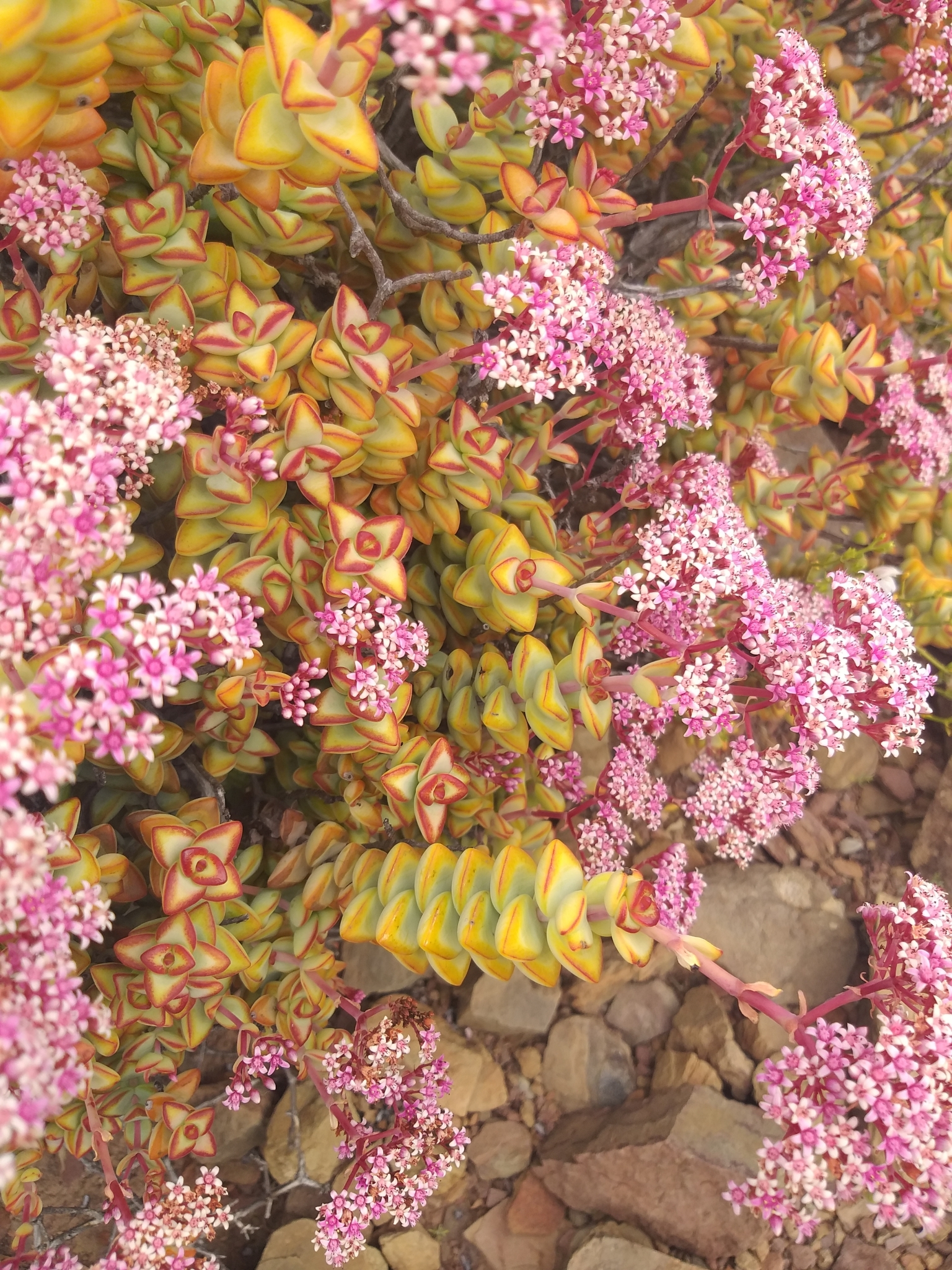
Crassula rupestris, known as buttons on a string, is a bushy, spreading evergreen succulent that grows to about 45cm, with thick, ovate leaves often edged in red and small star-shaped white or pink flowers held in clusters. It belongs to the Crassulaceae family alongside other fleshy-leaved South African succulents.
Source: RHS
South African rock dweller
This species comes from South Africa and Namibia, part of a genus of succulent annuals, perennials, and evergreen shrubs adapted to fleshy-leaved life. The RHS has recognised it with an Award of Garden Merit, and it has been in RHS records since 1965.
Source: RHS
Sun, sparing water
Grow this plant under glass or indoors in a standard cactus compost, giving it bright filtered light or full sun. Water moderately through spring and autumn and cut right back in winter, feeding every two to three weeks with a balanced liquid feed while it is actively growing. The marnieriana subspecies follows a similar rhythm, though feeding is monthly and water should be kept off the leaves.
Source: RHS
Seed or cuttings
Propagate from seed sown at 15-18°C in early spring, or take stem or leaf cuttings in spring or early summer. The marnieriana subspecies is propagated the same way, by softwood or leaf cuttings taken in spring or summer.
Source: RHS
Beads along the stem
The defining trait is the stacked, button-like arrangement of thick leaves along trailing or upright stems, sometimes tinted red at the edges. A related subspecies, marnieriana, takes this further, with paired grey-green leaves fused at the base so tightly they wrap the stem and hide it almost entirely, occasionally flushing reddish. Both forms flower, though the small white blooms of marnieriana are rarely seen indoors.
Source: RHS
Mealybugs and aphids
Watch for mealybugs, vine weevil, and aphids, the usual troublemakers on this succulent. Otherwise it is generally free of disease.
Source: RHS
Little upkeep needed
No pruning is required for this plant, and it takes some five to ten years to reach full maturity. It suits a pot on a patio or in a conservatory, and its hardiness rating of H2 means it tolerates cool conditions but not freezing.
Source: RHS
Care recipe
The species record — the baseline every cultivar inherits unless it says otherwise.
Care notes are early — not yet verified
- Light
- ai:claude-opus-4-8
- Water
- ai:claude-opus-4-8 (range 14-28d)
- Humidity
- ai:claude-opus-4-8
- Soil
- ai:claude-fable-5
- Care
- ai:claude-fable-5
Direct sun
≈ every 28 days
Low — average room
10–27 °C
Gritty, fast-draining cactus and succulent mix
Stem cuttings root easily from the beaded segments
Dilute succulent feed once or twice in the growing season
Moderate
Clusters of small white to pink flowers in spring
Not yet documented
This is where toxicity lives — every cultivar of this species inherits it and none can override it.
Reference images
Every image credited. Licenses link to their deeds.
PrimarySources: ai:claude-opus-4-8 · ai:claude-opus-4-8 (range 14-28d) · ai:claude-fable-5
Kept true by its growers
Every fact here carries its source. Grow Concertina Bush yourself? What you’ve observed — how it drinks, how it holds its color, a name that’s off — and a clear photo of your plant are exactly what keep this page honest. Contributions are reviewed before anything changes.
Sign in to add what you know →