Species · genus Crassula · Crassulaceae
String of Buttons
Crassula perforata Thunb.
Also known as: Necklace Vine · Pagoda Plant · Buttons on a String
Cultivars of C. perforata
The named forms growers keep — each with its own page, each honest about how much we know.
No named cultivars catalogued under C. perforata yet. When growers document a stable, named form, it earns its own page here.
Guide
The species-level account. Cultivar pages build on this and say where they differ.
A Stacked Little Succulent
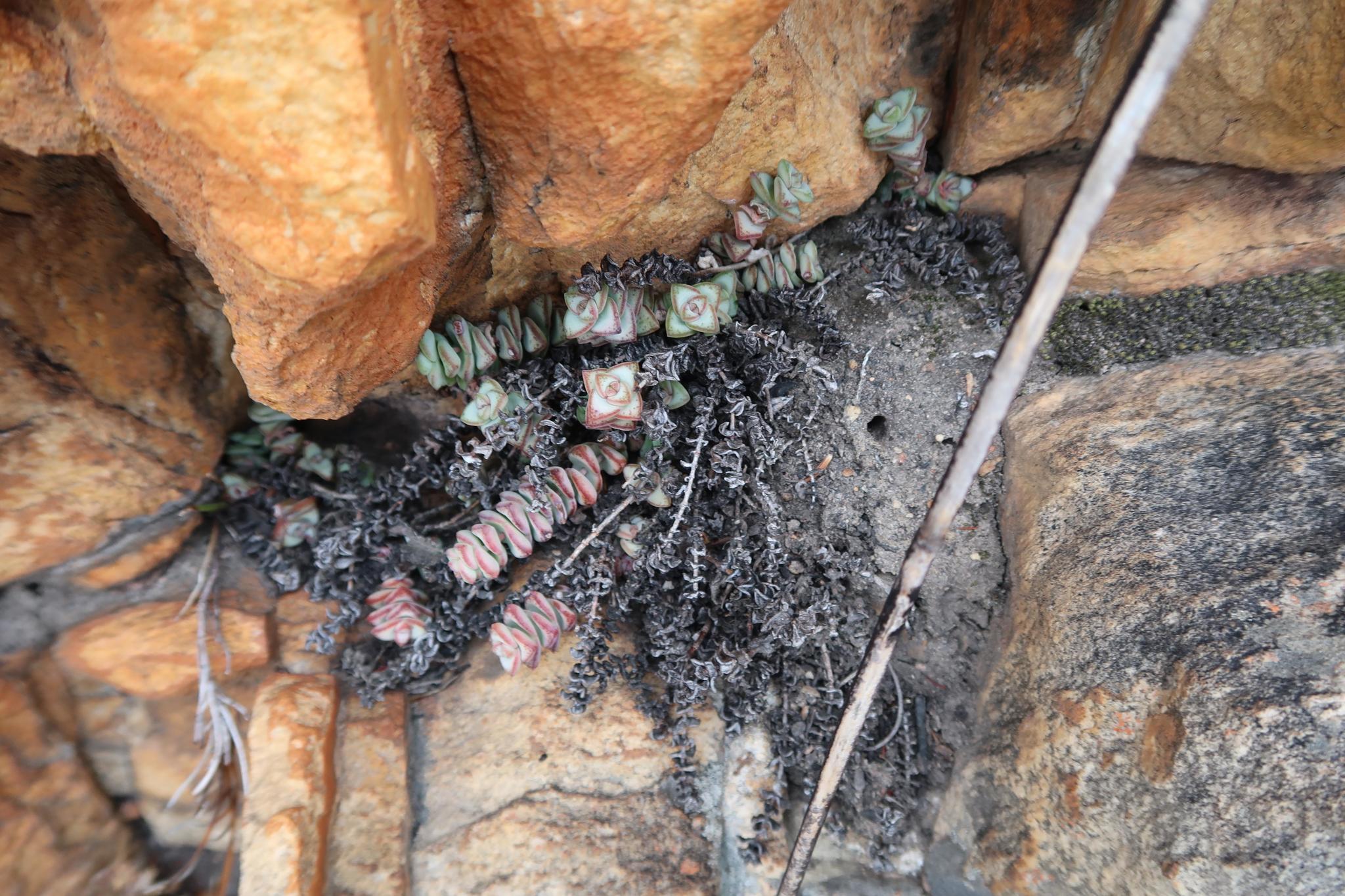
String of buttons is Crassula perforata, a compact succulent whose chunky triangular leaves clasp the stem in stacked pairs, spiraling upward like beads on a thread. It suits beginners well, tolerating life indoors, outdoors, in terrariums, or spilling from a hanging basket. The color runs from green through grey, blue, and pink depending on light and variety.
Source: Epic Gardening
Out of South Africa
This Crassula hails from the Cape and Natal regions of South Africa, part of a genus of roughly 200 succulent species. Because it comes from a warm climate, it grows outdoors year-round only in USDA Zones 9-11, and needs container life or indoor shelter anywhere colder. Left to its own habits, it clumps and sprawls, growing up and over neighboring plants and shrubs.
Source: Epic Gardening
Sun, Sparing Water, Grit
Give this plant four to six hours of direct sun, easing it into brighter spots gradually since sudden changes and harsh afternoon sun can scorch the leaves. Water only once the soil has dried out completely, since the leaves already store moisture and overwatering turns them soft and mushy. Plant in a well-draining succulent or cactus mix, and feed sparingly, a half-strength liquid fertilizer monthly through the growing season, or a single dose of controlled-release fertilizer at spring's start.
Source: Epic Gardening
Cuttings, Offsets, Division
String of buttons roots readily from stem or leaf cuttings, from the small rosette offsets it sends out on thin stems, or by dividing an overgrown clump by hand. Let any cut or broken surface callous over for a day or two before setting it into well-draining soil, then keep it out of direct sun and lightly misted until it roots. Established divisions or cuttings should be watered normally, at least weekly, as they mature.
Source: Epic Gardening
Buttons, Blooms, and Variants
The leaves are fleshy and triangular, wrapping the stem in opposite pairs so they look threaded on like beads, sometimes taking on a pinkish or reddish edge. In spring, mature plants can send up small star-shaped flowers in pale yellow, white, or pink. A patterned form, 'Variegata', carries grey-green leaves with broad creamy yellow margins, while the wild type keeps a bushier, more sprawling habit than the upright, columnar variegated cultivar.
Source: RHS
Aphids and Company
Watch for aphids clustering on leaf undersides, mealybugs draining sap from the stem, and vine weevils leaving c-shaped holes and wilted yellow leaves. Both RHS and grower experience flag these three as the main recurring pests on this species. Aphids and mealybugs can be managed with insecticidal soap, while vine weevils are best removed by hand at night since they resist most sprays.
Source: RHS
Stretching, Scorch, Rot
A plant reaching for more light will stretch and lose its compact form, a sign to move it gradually into brighter conditions or prune back the leggy stems. Brown spots in summer usually mean sunburn from too much direct heat, while shriveled, drooping leaves point to underwatering and mushy, translucent ones point to overwatering. Root rot is the most common serious threat, starting at the roots when soil stays too wet; rescue involves cutting away the affected tissue, letting wounds callous, and repotting into fresh, well-draining soil.
Source: Epic Gardening
Little Pruning, Occasional Repotting
This succulent asks for no routine pruning, though spent flower stems and overly long growth can be trimmed away with clean, sterile tools for tidiness. Repotting is only needed once the plant outgrows its container, best done in warm weather at the start of spring, and any rotted roots found at that time should be trimmed and dried before replanting in fresh, better-draining soil.
Source: Epic Gardening
Care recipe
The species record — the baseline every cultivar inherits unless it says otherwise.
Care notes are early — not yet verified
- Light
- ai:claude-opus-4-8
- Water
- ai:claude-opus-4-8 (range 14-28d)
- Humidity
- ai:claude-opus-4-8
- Soil
- ai:claude-fable-5
- Care
- ai:claude-fable-5
Direct sun
≈ every 28 days
Low — average room
10–27 °C
Gritty, fast-draining cactus and succulent mix
Stem cuttings root easily from the stacked segments
Dilute succulent feed once or twice in the growing season
Moderate
Small pale-yellow flowers at the stem tips, infrequent indoors
Not yet documented
This is where toxicity lives — every cultivar of this species inherits it and none can override it.
Reference images
Every image credited. Licenses link to their deeds.
PrimarySources: ai:claude-opus-4-8 · ai:claude-opus-4-8 (range 14-28d) · ai:claude-fable-5
Kept true by its growers
Every fact here carries its source. Grow String of Buttons yourself? What you’ve observed — how it drinks, how it holds its color, a name that’s off — and a clear photo of your plant are exactly what keep this page honest. Contributions are reviewed before anything changes.
Sign in to add what you know →