Species · genus Crassula · Crassulaceae
Propeller Plant
Crassula perfoliata L.
Also known as: Airplane Plant · Sickle Plant
Cultivars of C. perfoliata
The named forms growers keep — each with its own page, each honest about how much we know.
No named cultivars catalogued under C. perfoliata yet. When growers document a stable, named form, it earns its own page here.
Guide
The species-level account. Cultivar pages build on this and say where they differ.
Airplane Plant Basics
Crassula perfoliata var. falcata, known as the airplane plant or propeller plant, is a succulent evergreen subshrub grown for its striking foliage and summer flowers. It belongs to the Crassulaceae family and carries the RHS Award of Garden Merit.
Source: RHS
A South African Native
This plant's natural range is South Africa, and it grows as a bushy, evergreen succulent subshrub in the wild. Its common names, including airplane propellers, propeller plant, scarlet paint brush, and sickle plant, reflect the shape of its leaves.
Source: RHS
Sun, Cactus Mix, Restraint
Grow it under glass in a standard cactus compost, in bright filtered light or full sun, with well-drained loam or sandy soil. Water moderately from spring through autumn and sparingly the rest of the year, feeding every two to three weeks with a balanced liquid feed while it is actively growing.
Source: RHS
Seed Or Cuttings
New plants can be raised from seed sown at 15 to 18°C in early spring, or from stem or leaf cuttings taken in spring or early summer.
Source: RHS
Sickle Leaves, Scarlet Blooms
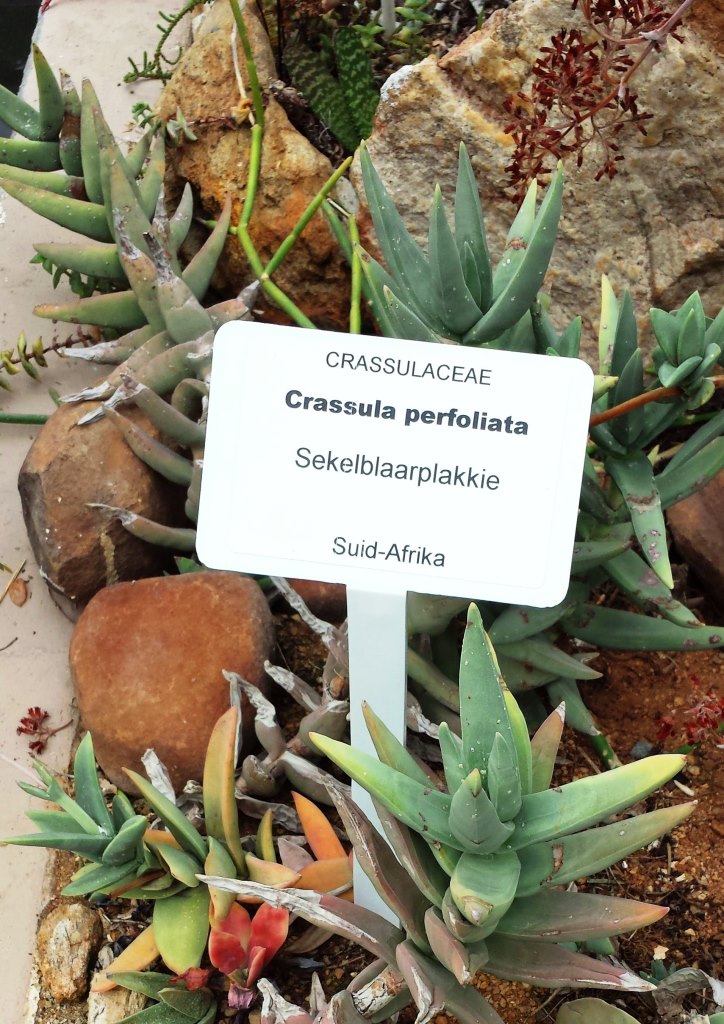
The plant reaches up to a metre in height, with sickle-shaped, bright grey-green leaves growing to 10cm long, their blades held vertically rather than flat. In late summer it produces small, fragrant, scarlet flowers gathered into flat clusters.
Source: RHS
Mealybugs, Weevils, Aphids
Watch for mealybugs, vine weevil, and aphids, which are the pests most likely to trouble this plant. It is otherwise generally free of disease.
Source: RHS
Little Pruning Needed
No pruning is required for this subshrub. It suits patio and container growing, and given its South African origins it is only tolerant of low temperatures rather than hardy, so it needs a sheltered, frost-free spot such as a greenhouse or conservatory.
Source: RHS
Care recipe
The species record — the baseline every cultivar inherits unless it says otherwise.
Care notes are early — not yet verified
- Light
- ai:claude-opus-4-8
- Water
- ai:claude-opus-4-8 (range 14-28d)
- Humidity
- ai:claude-opus-4-8
- Soil
- ai:claude-fable-5
- Care
- ai:claude-fable-5
Direct sun
≈ every 28 days
Low — average room
10–27 °C
Gritty, fast-draining cactus and succulent mix
Stem cuttings or offsets left to callus, then rooted
Dilute succulent feed once or twice in the growing season
Slow
Dense heads of small white to red flowers in summer
Not yet documented
This is where toxicity lives — every cultivar of this species inherits it and none can override it.
Reference images
Every image credited. Licenses link to their deeds.
PrimarySources: ai:claude-opus-4-8 · ai:claude-opus-4-8 (range 14-28d) · ai:claude-fable-5
Kept true by its growers
Every fact here carries its source. Grow Propeller Plant yourself? What you’ve observed — how it drinks, how it holds its color, a name that’s off — and a clear photo of your plant are exactly what keep this page honest. Contributions are reviewed before anything changes.
Sign in to add what you know →