Species · genus Crassula · Crassulaceae
Jade Plant
Crassula ovata (Mill.) Druce
Also known as: Baby Jade · Cauliflower-ears · Dollarplant · Jadeplant · Jadetree
Cultivars of C. ovata
The named forms growers keep — each with its own page, each honest about how much we know.
No named cultivars catalogued under C. ovata yet. When growers document a stable, named form, it earns its own page here.
Guide
The species-level account. Cultivar pages build on this and say where they differ.
The Jade Plant
Crassula ovata, known as the jade plant, is a bushy evergreen succulent sub-shrub that grows slowly into a small tree-like form over years rather than seasons. It carries rounded, fleshy dark green leaves, sometimes edged red, and in late summer can produce flat clusters of small white or pale pink starry flowers.
Source: RHS
A Cape Native
This plant is native to South Africa, where it grows as a branched succulent shrub capable of reaching some six feet in height. Its genus name comes from the Latin crassus, meaning thick, a nod to those fleshy leaves, while the species name ovata simply describes their egg shape.
Source: Missouri Botanical Garden
A Steady Rhythm
Grow it as a houseplant or conservatory specimen in cactus compost, set in full light, ideally a west or south-facing spot. Keep the soil lightly moist through spring and summer growth, then water only very sparingly once it settles into winter dormancy. A general liquid feed once a month between spring and summer is enough to support it.
Source: RHS
Cuttings and Offsets
Jade plants can be raised from seed sown as soon as it is ripe, or more commonly from offsets, or from root, stem, and leaf cuttings taken in spring.
Source: RHS
A Tree in Miniature
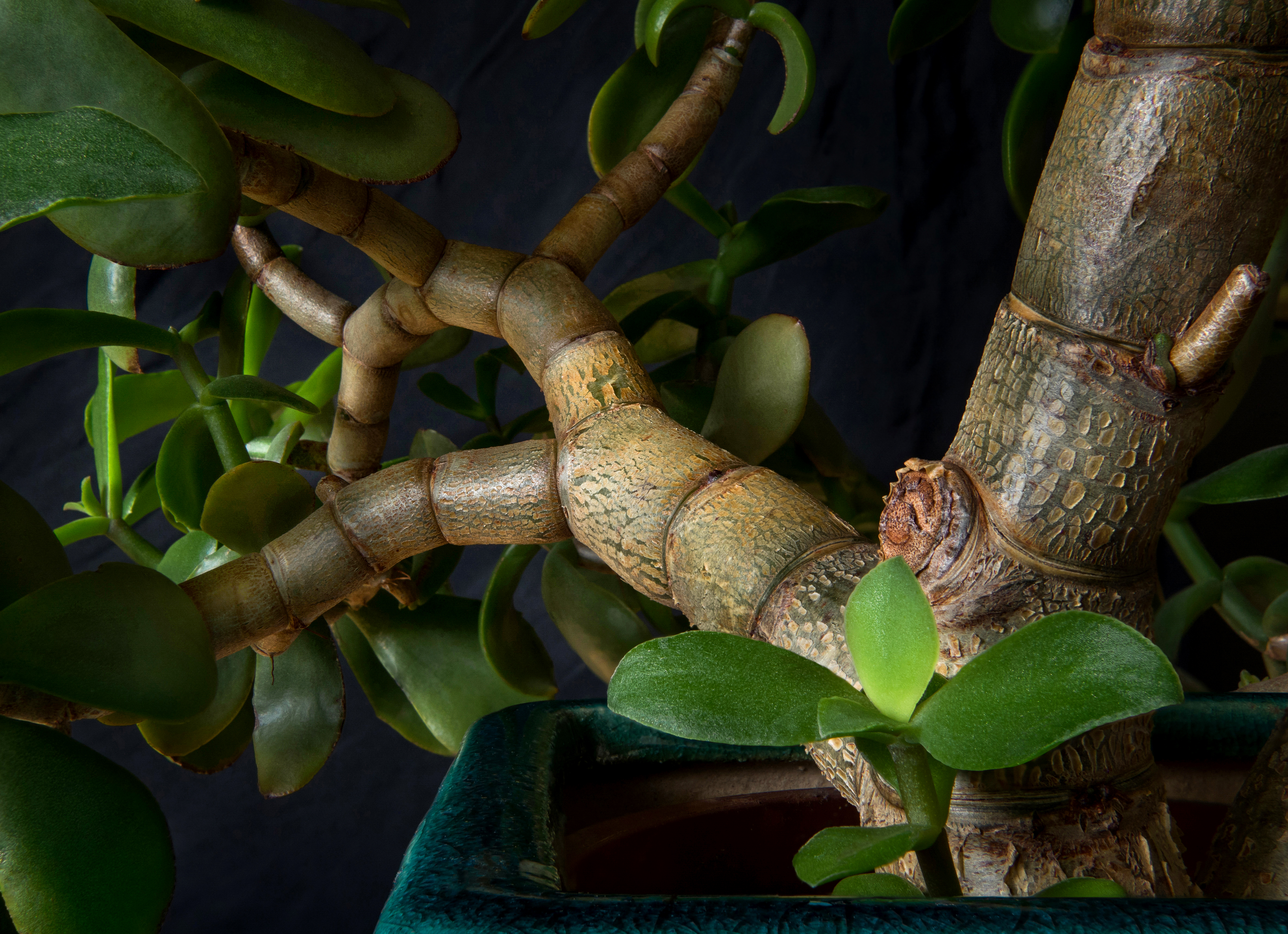
As it matures, the succulent stems of a jade plant thicken and take on the look of a miniature tree trunk. The oblong, glossy, fleshy leaves can reach up to two inches long and will pick up red tints when the plant sits in direct sun. Flowering is tiny and seasonal, but rarely appears on plants kept indoors.
Source: Missouri Botanical Garden
Watch For These
Mealybugs, vine weevils, and aphids are the pests most likely to trouble a jade plant, though the RHS notes it is otherwise generally free of disease.
Source: RHS
Pruning for Shape
Although jade plants can go untrimmed, pruning during the active growing season, best begun in early spring, encourages branching and a fuller, bushier form, and it is the main way to control size and shape indoors. Removing stretched, leggy growth caused by low light will not restore those stems to normal, but cutting them back just above the rings in the stem prompts fresh growth, and it is wise to avoid removing more than a third of the plant at once. Damaged or diseased leaves and branches are best cut away as soon as they are noticed, both to stop any problem spreading and to redirect the plant's energy toward new growth.
Source: Epic Gardening
Care recipe
The species record — the baseline every cultivar inherits unless it says otherwise.
Care notes are early — not yet verified
- Light
- ai:claude-opus-4-8
- Water
- ai:claude-opus-4-8 (range 14-28d)
- Humidity
- ai:claude-opus-4-8
- Soil
- ai:claude-fable-5
- Care
- ai:claude-fable-5
Direct sun
≈ every 28 days
Low — average room
10–27 °C
Gritty, fast-draining cactus and succulent mix
Leaf or stem cuttings left to callus, then rooted
Dilute succulent feed once or twice in the growing season
Slow
Star-shaped white to pink clusters on mature plants in winter
Toxic to cats & dogs
Jade plant — vomiting, depression, incoordination (ASPCA: principle unknown). This is where toxicity lives: every cultivar of this species inherits it and none can override it.
Reference images
Every image credited. Licenses link to their deeds.
PrimarySources: ai:claude-opus-4-8 · ai:claude-opus-4-8 (range 14-28d) · ai:claude-fable-5 · ASPCA
Kept true by its growers
Every fact here carries its source. Grow Jade Plant yourself? What you’ve observed — how it drinks, how it holds its color, a name that’s off — and a clear photo of your plant are exactly what keep this page honest. Contributions are reviewed before anything changes.
Sign in to add what you know →