Species · genus Crassula · Crassulaceae
Toy-cypress
Crassula muscosa L.
Also known as: Watch-chain
Cultivars of C. muscosa
The named forms growers keep — each with its own page, each honest about how much we know.
No named cultivars catalogued under C. muscosa yet. When growers document a stable, named form, it earns its own page here.
Guide
The species-level account. Cultivar pages build on this and say where they differ.
A curious little succulent
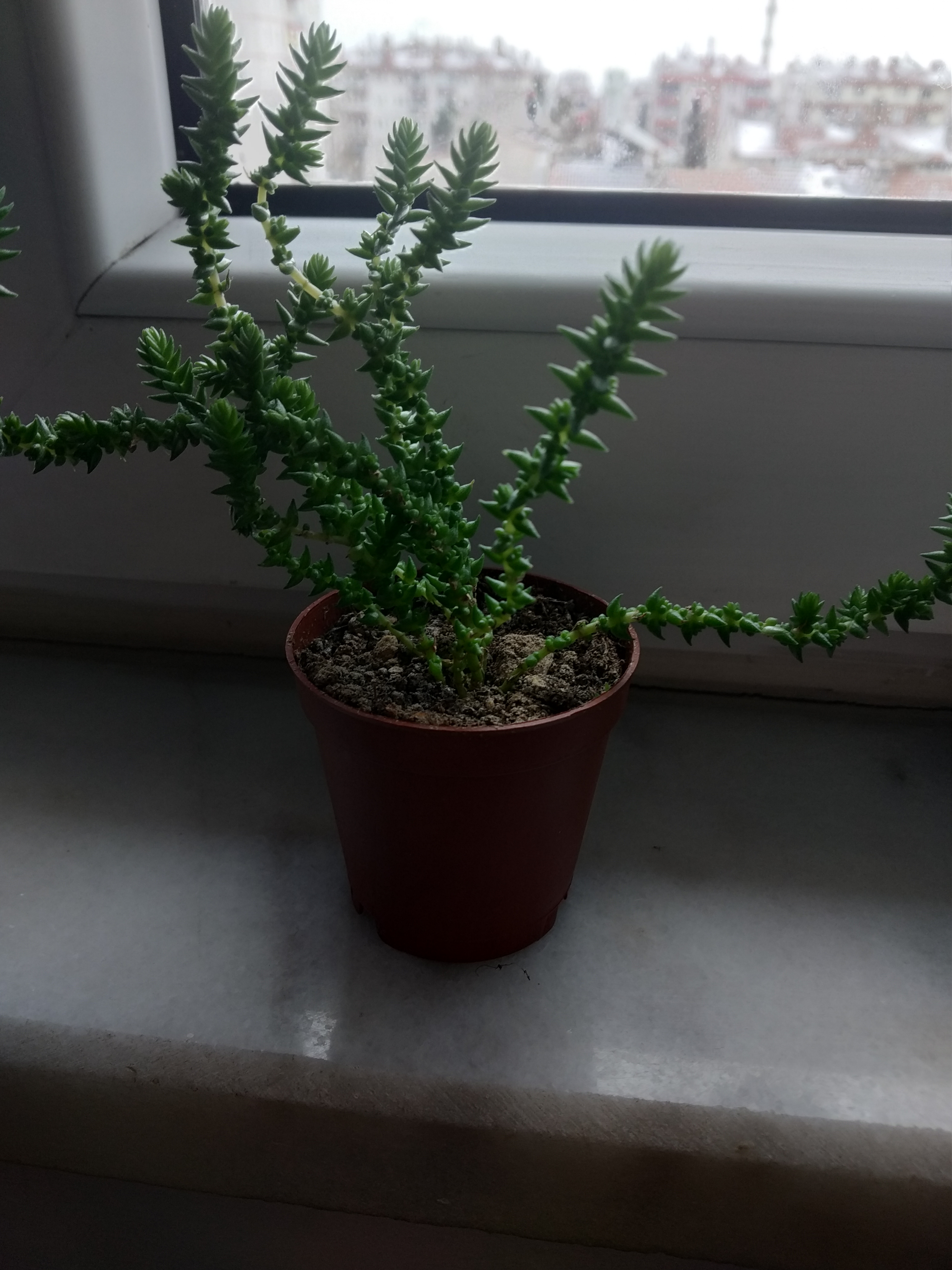
Crassula muscosa, known as rat tail cypress, is a spreading perennial succulent that forms a dense bush of branching stems clad in tightly overlapping scale-like leaves. In spring it carries tiny, tubular yellow-green flowers tucked along those stems. It goes by several other common names too, including moss cypress, princess pine, toy cypress and watch-chain cypress.
Source: RHS
Southern African roots
This species comes from South Africa and Namibia, part of the large and varied Crassula genus, which spans succulent annuals, perennials and evergreen shrubs with fleshy leaves and small star- or funnel-shaped flowers.
Source: RHS
Sun, sparing water, occasional feed
Grow it in full sun, ideally under glass, in a standard cactus potting mix that drains well. Water moderately while it is actively growing and cut right back to sparing amounts once it goes dormant, and feed with a balanced liquid fertiliser two or three times over the growing season.
Source: RHS
Seed or simple cuttings
New plants can be raised from seed sown in early spring at around 15 to 18°C, or more simply from softwood or leaf cuttings taken in spring or summer.
Source: RHS
Scale-like, cord-like stems
What sets this plant apart is its habit: scrambling branches entirely wrapped in neat ranks of minute, scale-like leaves, giving each stem the look of a braided cord or a miniature conifer. It stays compact, generally reaching no more than about 25 to 30cm high and spreading a similar width, and it keeps its leaves year-round.
Source: RHS
Watch for common suspects
This crassula may draw the usual houseplant nuisances: aphids, mealybugs and vine weevil. Otherwise it is generally free of disease.
Source: RHS
No pruning needed
There is no pruning required for this plant, and it suits a low-maintenance spot such as a windowsill, conservatory or greenhouse. It is only tolerant of low temperatures down to about 1 to 5°C and will not survive being frozen, so it needs a sheltered, frost-free position.
Source: RHS
Care recipe
The species record — the baseline every cultivar inherits unless it says otherwise.
Care notes are early — not yet verified
- Light
- ai:claude-opus-4-8
- Water
- ai:claude-opus-4-8 (range 10-21d)
- Humidity
- ai:claude-opus-4-8
- Soil
- ai:claude-fable-5
- Care
- ai:claude-fable-5
Direct sun
≈ every 21 days
Low — average room
10–27 °C
Gritty, fast-draining cactus and succulent mix
Stem cuttings left to callus, then rooted
Dilute succulent feed once or twice in the growing season
Moderate
Tiny yellow-green flowers along the stems, rarely showy
Not yet documented
This is where toxicity lives — every cultivar of this species inherits it and none can override it.
Reference images
Every image credited. Licenses link to their deeds.
PrimarySources: ai:claude-opus-4-8 · ai:claude-opus-4-8 (range 10-21d) · ai:claude-fable-5
Kept true by its growers
Every fact here carries its source. Grow Toy-cypress yourself? What you’ve observed — how it drinks, how it holds its color, a name that’s off — and a clear photo of your plant are exactly what keep this page honest. Contributions are reviewed before anything changes.
Sign in to add what you know →