Species · genus Crassula · Crassulaceae
Cape Province Pygmyweed
Crassula multicava Lem.
Also known as: Fairy Crassula · Fairy Stonecrop
Cultivars of C. multicava
The named forms growers keep — each with its own page, each honest about how much we know.
No named cultivars catalogued under C. multicava yet. When growers document a stable, named form, it earns its own page here.
Guide
The species-level account. Cultivar pages build on this and say where they differ.
A spotted trailing succulent
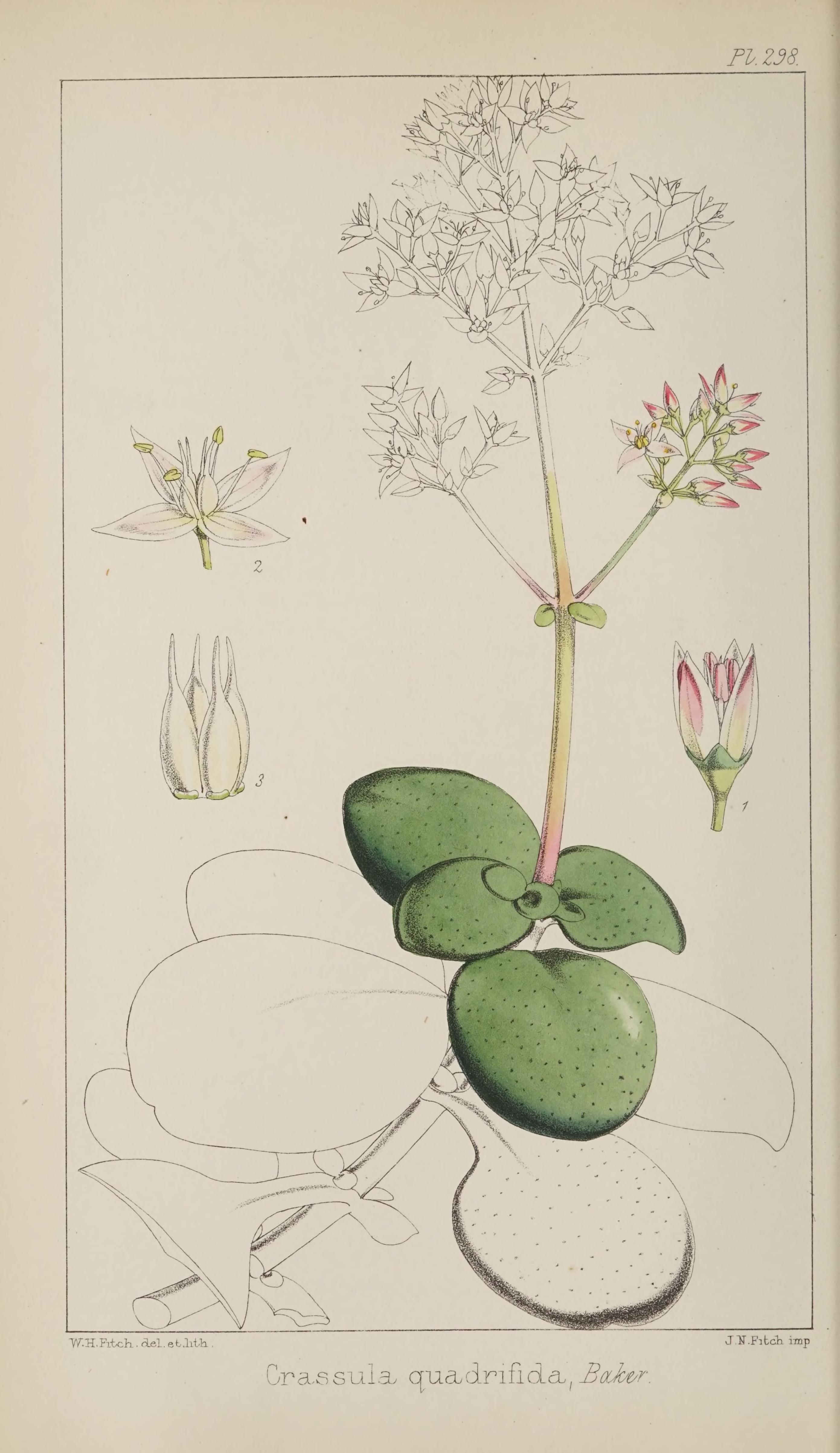
Crassula multicava, sometimes called grandfather's watch chain, is a bushy or sprawling succulent perennial grown for its rounded, pitted leaves. In spring it sends up sprays of small, star-shaped pinkish-white flowers held above the foliage. It generally stays modest in size, reaching around 10-20cm overall.
Source: RHS
South African roots
This Crassula belongs to the family Crassulaceae and its natural range is South Africa. It is not native to Britain or Ireland, and in UK conditions it is grown under glass or as a houseplant rather than left outdoors year-round.
Source: RHS
Sun, sand, and shelter
Give this plant full sun, ideally a south- or west-facing spot with some shelter, and well-drained, neutral soil such as cactus compost or sand. It suits life as a houseplant or in a heated greenhouse, and it is only hardy to about H2, meaning it tolerates low temperatures but not a hard freeze. Left to its own devices it grows slowly, taking some five to ten years to reach maturity.
Source: RHS
Seed or cuttings
Propagate from seed in early spring, or take cuttings in spring or summer.
Source: RHS
Pitted, spotted foliage
The leaves are slightly rounded and carry distinctive pitted, dark green spots, giving the foliage a marked, textured look. Its habit is bushy to trailing, and it stays evergreen through the year. The genus itself is known for fleshy leaves and small star- or funnel-shaped flowers clustered at the stem tips.
Source: RHS
Watch for common sap-suckers
This Crassula may be susceptible to mealybugs, vine weevils, and aphids. On the plus side, it is generally free of disease.
Source: RHS
Little upkeep needed
No pruning is required for this plant, which suits its relaxed, sprawling habit. It works well as a patio or container plant where its slow, steady growth can be left largely undisturbed.
Source: RHS
Care recipe
The species record — the baseline every cultivar inherits unless it says otherwise.
Care notes are early — not yet verified
- Light
- ai:claude-opus-4-8
- Water
- ai:claude-opus-4-8 (range 10-21d)
- Humidity
- ai:claude-opus-4-8
- Soil
- ai:claude-fable-5
- Care
- ai:claude-fable-5
Bright, indirect
≈ every 21 days
Low — average room
10–27 °C
Gritty, fast-draining cactus and succulent mix
Stem cuttings or plantlets rooted readily
Dilute succulent feed once or twice in the growing season
Fast
Airy sprays of small pink-white flowers in spring
Not yet documented
This is where toxicity lives — every cultivar of this species inherits it and none can override it.
Reference images
Every image credited. Licenses link to their deeds.
Sources: ai:claude-opus-4-8 · ai:claude-opus-4-8 (range 10-21d) · ai:claude-fable-5
Kept true by its growers
Every fact here carries its source. Grow Cape Province Pygmyweed yourself? What you’ve observed — how it drinks, how it holds its color, a name that’s off — and a clear photo of your plant are exactly what keep this page honest. Contributions are reviewed before anything changes.
Sign in to add what you know →