Species · genus Crassula · Crassulaceae
Redspot Stonecrop
Crassula capitella Thunb.
Cultivars of C. capitella
The named forms growers keep — each with its own page, each honest about how much we know.
No named cultivars catalogued under C. capitella yet. When growers document a stable, named form, it earns its own page here.
Guide
The species-level account. Cultivar pages build on this and say where they differ.
A Pagoda in Miniature
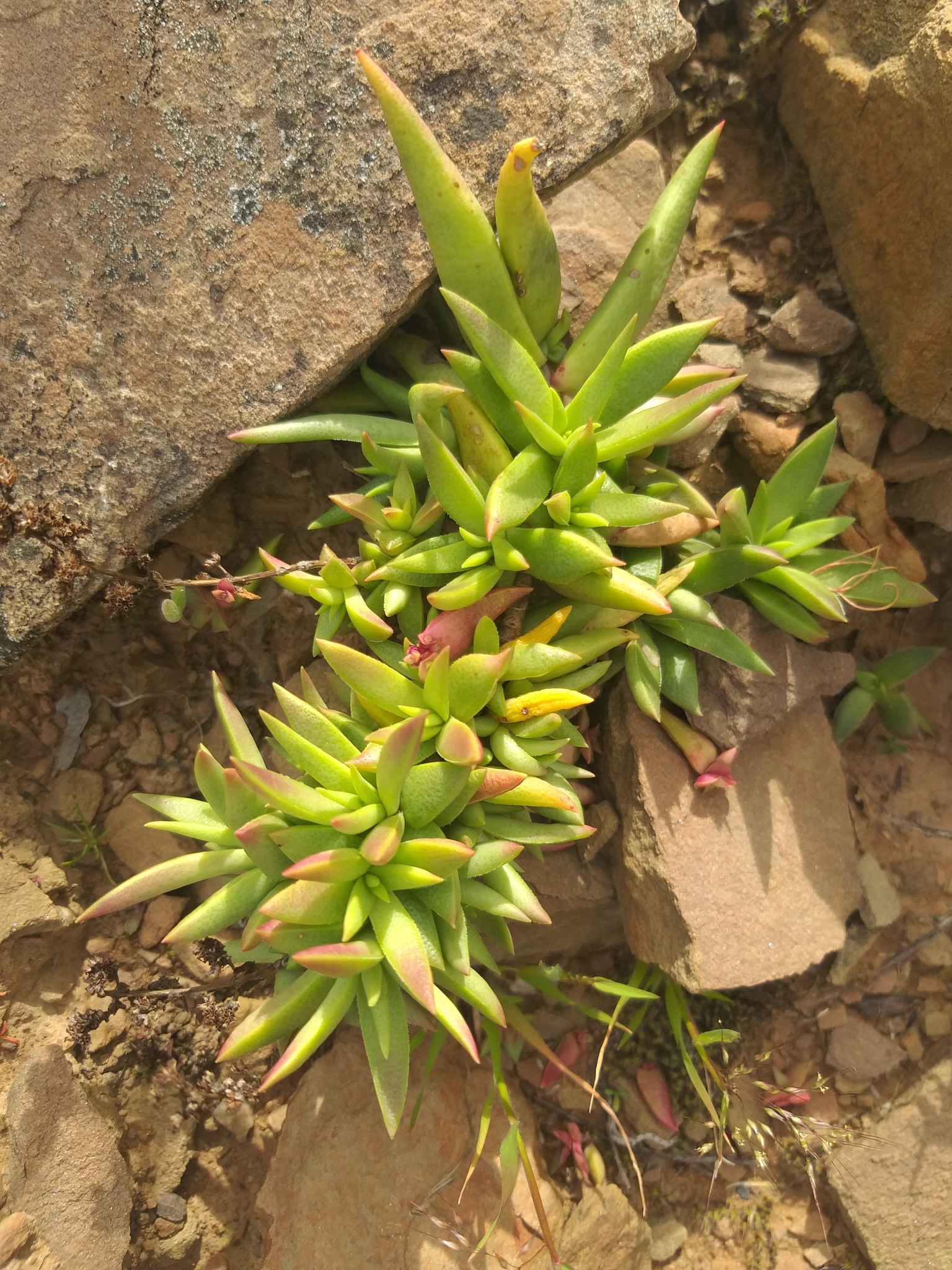
Crassula capitella subsp. thyrsiflora, sold as red pagoda, campfire plant or red flames, is a low-growing succulent perennial with fleshy, pointed leaves arranged in spiralling ranks. In autumn its flowering stems stretch upward to about 30cm, carrying tiny white flowers tucked into the leaf axils.
Source: RHS
Southern African Roots
This plant traces back to Crassula capitella, first described by Thunberg in 1778, a species native to Namibia and South Africa's Cape Provinces, Free State and KwaZulu-Natal, as well as Lesotho. It grows there as a biennial or subshrub within the subtropical biome, and thyrsiflora is one of three recognised subspecies.
Source: Kew
Sun, Sparingly Watered
Grow this succulent in standard cactus compost in full light, ideally a south or west-facing spot, as strong sun is what coaxes out the best colour. Through spring and autumn water moderately while keeping the foliage dry, and feed monthly with a balanced liquid fertiliser; through winter, water only sparingly.
Source: RHS
Cuttings or Division
New plants can be started from stem or leaf cuttings, taken in spring and summer for best results. Established clumps can also be divided.
Source: RHS
Colour Under Pressure
The leaves emerge light green and take on their fiery colour under stress from heat and dryness, with the tips ageing toward bright red in cultivars such as Campfire. Left in cooler, shadier spots the plant stays greener, so its signature flush is really a response to sun and drought rather than a fixed trait.
Source: RHS
Watch for Mealybugs
Mealybugs are the pest most likely to trouble this plant, and related forms may also draw vine weevil or aphids. The species itself is generally free of disease.
Source: RHS
Little Intervention Needed
No pruning is required for this low, clump-forming succulent, which suits pots, patios, conservatories and other low-maintenance settings. It is only hardy to about 1 to 5 degrees C, so in the UK it needs to be kept under glass or brought indoors through winter.
Source: RHS
Care recipe
The species record — the baseline every cultivar inherits unless it says otherwise.
Care notes are early — not yet verified
- Light
- ai:claude-opus-4-8
- Water
- ai:claude-opus-4-8 (range 12-21d)
- Humidity
- ai:claude-opus-4-8
- Soil
- ai:claude-fable-5
- Care
- ai:claude-fable-5
Direct sun
≈ every 21 days
Low — average room
10–27 °C
Gritty, fast-draining cactus and succulent mix
Stem cuttings or offsets left to callus, then rooted
Dilute succulent feed once or twice in the growing season
Moderate
Small white flowers on slender stalks; colours red in sun
Not yet documented
This is where toxicity lives — every cultivar of this species inherits it and none can override it.
Reference images
Every image credited. Licenses link to their deeds.
PrimarySources: ai:claude-opus-4-8 · ai:claude-opus-4-8 (range 12-21d) · ai:claude-fable-5
Kept true by its growers
Every fact here carries its source. Grow Redspot Stonecrop yourself? What you’ve observed — how it drinks, how it holds its color, a name that’s off — and a clear photo of your plant are exactly what keep this page honest. Contributions are reviewed before anything changes.
Sign in to add what you know →