Species · genus Cotyledon · Crassulaceae
Bear-paws
Cotyledon tomentosa Harv.
Also known as: Fuzzy Pigsears
Cultivars of C. tomentosa
The named forms growers keep — each with its own page, each honest about how much we know.
No named cultivars catalogued under C. tomentosa yet. When growers document a stable, named form, it earns its own page here.
Guide
The species-level account. Cultivar pages build on this and say where they differ.
A furry succulent shrub
Cotyledon tomentosa is an evergreen succulent shrub in the Crassulaceae family, grown for its chunky, downy leaves and its small bell-shaped flowers. Two subspecies are commonly seen, tomentosa and ladismithensis, differing mainly in size and habit.
Source: RHS
A Cape native
This species is native to the Cape Provinces of South Africa, where it grows as a succulent subshrub in the subtropical biome. Its accepted infraspecifics, subsp. tomentosa and subsp. ladismithiensis, both trace back to that same Cape origin.
Source: Kew
Full light, careful watering
Grow this plant under glass or as a houseplant in a standard cactus compost, in full light, with low humidity, and shade from the hottest sun for subsp. ladismithensis. Water freely while in growth but keep just moist otherwise, letting subsp. tomentosa run almost dry over winter, and feed fortnightly with a dilute low-nitrogen fertiliser in late spring and summer, or monthly for subsp. ladismithensis. Both prefer well-drained loam or sandy mixes and a sheltered, south- or west-facing spot, and can be stood outside over summer.
Source: RHS
Seed or cuttings
This plant can be propagated by seed, and also by leaf cuttings for subsp. tomentosa or stem cuttings for subsp. ladismithensis.
Source: RHS
Toothed, hairy leaves
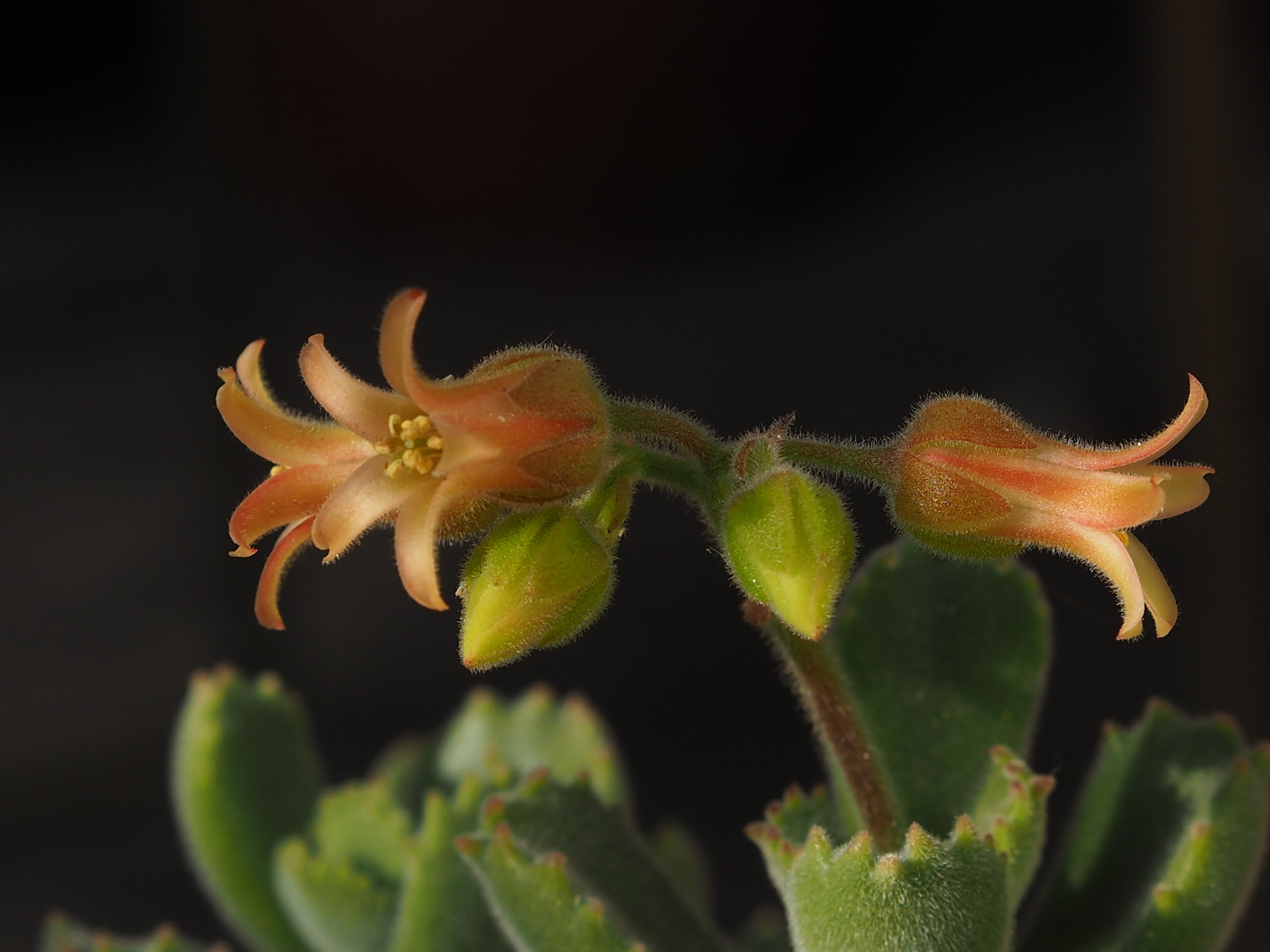
The leaves of subsp. tomentosa are chunky, up to 3.5cm long, covered in a fine down of hairs, and tipped with 3 to 10 prominent dark-red teeth. Small, bell-shaped orange-yellow flowers appear on short stems in summer, and the plant forms a bushy, evergreen shrub reaching around 70cm. Subsp. ladismithensis, by contrast, stays compact and rounded at around 15cm, with softly hairy leaves and pendulous orange flowers from late summer into autumn.
Source: RHS
Watch for sap-suckers
Mealybugs, aphids, and scale insects are the pests most likely to trouble this plant.
Source: RHS
Overwatering brings rot
Subsp. ladismithensis is generally disease-free but may develop stem rots if overwatered, so it pays to keep watering moderate and avoid wetting the foliage.
Source: RHS
Little pruning needed
No pruning is required for this plant, and it is considered low maintenance, suited to pots and patio display.
Source: RHS
Care recipe
The species record — the baseline every cultivar inherits unless it says otherwise.
Care notes are early — not yet verified
- Light
- ai:claude-opus-4-8
- Water
- ai:claude-opus-4-8 (range 14-28d)
- Humidity
- ai:claude-opus-4-8
- Soil
- ai:claude-fable-5
- Care
- ai:claude-fable-5
Direct sun
≈ every 28 days
Low — average room
10–27 °C
Gritty, fast-draining cactus and succulent mix
Leaf or stem cuttings left to callus, then rooted
Dilute succulent feed once or twice in the growing season
Slow
Occasional bell-shaped red-orange flowers in spring
Toxic to cats & dogs & humans
Cotyledon species in the Crassulaceae contain bufadienolide cardiac glycosides, which can be toxic if ingested. This is where toxicity lives: every cultivar of this species inherits it and none can override it.
Reference images
Every image credited. Licenses link to their deeds.
PrimarySources: ai:claude-opus-4-8 · ai:claude-opus-4-8 (range 14-28d) · ai:claude-fable-5 · ai:claude-opus-4-8 (family inference)
Kept true by its growers
Every fact here carries its source. Grow Bear-paws yourself? What you’ve observed — how it drinks, how it holds its color, a name that’s off — and a clear photo of your plant are exactly what keep this page honest. Contributions are reviewed before anything changes.
Sign in to add what you know →