Species · genus Cordyline · Asparagaceae
Narrow-leaf Palm-lily
Cordyline stricta (Sims) Endl.
Cultivars of C. stricta
The named forms growers keep — each with its own page, each honest about how much we know.
No named cultivars catalogued under C. stricta yet. When growers document a stable, named form, it earns its own page here.
Guide
The species-level account. Cultivar pages build on this and say where they differ.
A Bold Architectural Palm
Cordyline is an evergreen shrub or palm-like tree grown for its fountain of sword-shaped leaves, which in youth forms a low rosette before rising on a sturdy stem. It is prized as a houseplant, in summer bedding, and as a focal point for tropical or Mediterranean-style plantings.
Source: RHS
From New Zealand's Shrublands
Cordylines, also called cabbage palms, are evergreen shrubs or palm-like trees native to New Zealand. Mature plants can climb from 3 to 10 metres tall, taking on the look of an exotic palm even though they are not true palms at all.
Source: RHS
Sun, Steady Water, Light Feeding
Cordyline wants a warm, sheltered position with full sun for green-leaved forms, though those with colourful or variegated leaves prefer light shade so their hues do not fade. In containers it needs regular water and feeding through the growing season but should be kept fairly dry over winter, while plants in the ground establish with regular watering at first and then become largely drought tolerant. A balanced liquid fertiliser from spring to late summer suits container-grown plants, while those in open ground generally need no feeding at all.
Source: RHS
Cuttings, Suckers, or Seed
New plants can be raised from seed, cuttings, or suckers, ideally between April and June. Terminal cuttings of 10 to 15cm can be taken from the shoot tip with only the terminal tuft of leaves left on, while stem sections of 5 to 7.5cm with a bud can be laid horizontally in compost with the bud just showing. Rooted suckers can be severed from the base in spring and potted individually, and any seed collected from summer fruit is sown in spring at around 16°C.
Source: RHS
Foliage in Many Hues
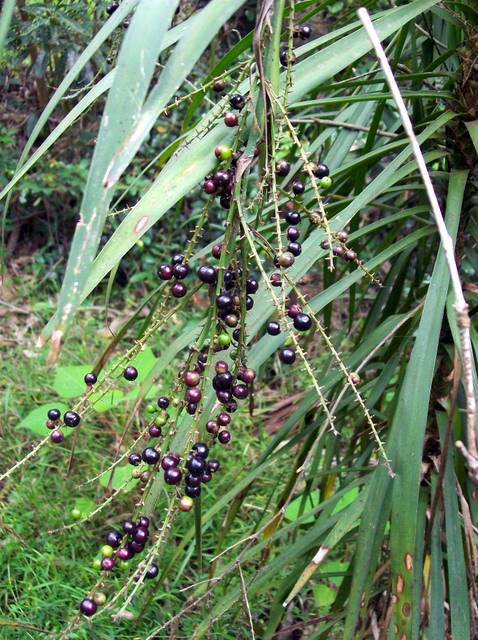
Beyond the familiar green form, cordyline has been selected into cultivars with dark red or purple foliage, and others striped with yellow, pink or white. In warm summers, established plants may send up frothy spikes of small white flowers, later forming red or purple berry-like fruits if left in place.
Source: RHS
Cold and Damp Take a Toll
Cordyline suffers few pests or diseases, but winter cold and wet are its main adversaries. Leaf spotting often follows physical stress such as cold wind, hail, or winter wet, while yellowing, browning, or excess leaf drop can trace back to cold, wet winters or drought and heat stress in summer. Dieback of the crown usually signals winter damage and can be pruned out to allow re-sprouting, and frost-damaged bark after a hard winter can leave plants open to an infection called cordyline slime flux.
Source: RHS
Tidying and Cutting Back
Cordyline needs little routine pruning beyond removing the older leaves it naturally sheds. If a plant outgrows its space, the main stem can be sawn through in mid-spring, just above a sideshoot or at ground level, after which new sprouts should follow, and a balanced fertiliser afterward encourages fresh growth. Winter-damaged growth is best cut out in spring above a sideshoot or sound point on the trunk, and removing the growing point before spring growth begins will encourage a multi-stemmed habit. For long-term container specimens, top-dressing in spring by replacing the top 5cm of compost keeps the plant in good order.
Source: RHS
Care recipe
The species record — the baseline every cultivar inherits unless it says otherwise.
Care notes are early — not yet verified
- Light
- ai:claude-opus-4-8
- Water
- ai:claude-opus-4-8 (range 7-14d)
- Humidity
- ai:claude-opus-4-8
- Soil
- ai:claude-fable-5
- Care
- ai:claude-fable-5
Bright, indirect
≈ every 14 days
Medium
13–27 °C
Rich, well-draining potting mix with added grit
Stem or cane cuttings rooted in moist mix
Balanced liquid feed monthly through spring and summer
Moderate
Rarely flowers indoors; small lilac blooms outdoors
Not yet documented
This is where toxicity lives — every cultivar of this species inherits it and none can override it.
Reference images
Every image credited. Licenses link to their deeds.
PrimarySources: ai:claude-opus-4-8 · ai:claude-opus-4-8 (range 7-14d) · ai:claude-fable-5
Kept true by its growers
Every fact here carries its source. Grow Narrow-leaf Palm-lily yourself? What you’ve observed — how it drinks, how it holds its color, a name that’s off — and a clear photo of your plant are exactly what keep this page honest. Contributions are reviewed before anything changes.
Sign in to add what you know →