Species · genus Cordyline · Asparagaceae
Good Luck Plant
Cordyline fruticosa (L.) A.Chev.
Also known as: Palm Lily · Broadleaf Palm-lily · Ti · Tiplant · Tree-of-kings
Cultivars of C. fruticosa
The named forms growers keep — each with its own page, each honest about how much we know.
No named cultivars catalogued under C. fruticosa yet. When growers document a stable, named form, it earns its own page here.
Guide
The species-level account. Cultivar pages build on this and say where they differ.
A Colorful Tropical Icon
The Hawaiian ti plant, Cordyline fruticosa, is a vibrant tropical evergreen prized for its long, lance-shaped leaves in shades running from green to red, pink, and purple. It is grown both as a garden shrub in warm climates and as a houseplant elsewhere, and it carries the nickname "good luck plant."
Source: Epic Gardening
From Pacific Shores to Homes
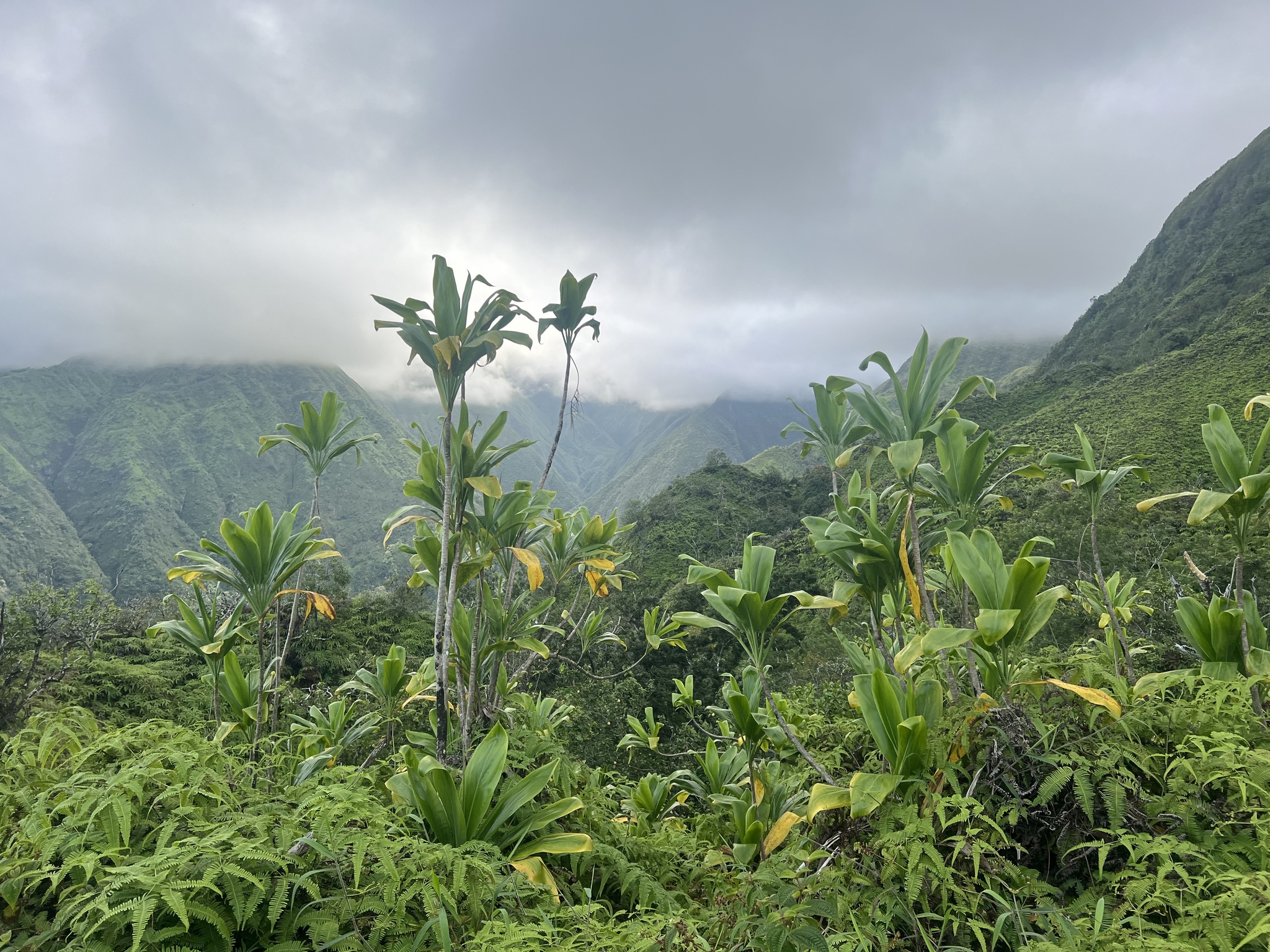
This evergreen traces back to tropical Southeast Asia and Pacific wetlands, and it was carried to Hawaii by early Polynesian settlers. There, its leaves found countless practical uses, from thatching roofs to wrapping food to making sandals, and the plant itself was planted around homes for protection and prosperity. It held spiritual significance too, associated with the god Lono and the goddess Laka, and still appears in ceremonies today.
Source: Epic Gardening
A Bright, Humid Rhythm
Indoors, ti plant wants a high-light spot and, per Costa Farms, can even take some direct sun through a window; too little light dulls its variegation back toward plain green. Water when the top inch or two of soil has dried, since the plant is fairly drought tolerant but will brown at the leaf tips if left dry too long. It appreciates the higher humidity of its native range, tolerates typical home air reasonably well, and benefits from a boost in humidity when conditions are dry.
Source: Costa Farms
Cuttings and Suckers
The RHS recommends propagating cordylines from seed, cuttings, or suckers, ideally between April and June. Terminal cuttings of 10 to 15 cm can be taken and stripped of leaves except for the top tuft, while thicker stems can yield short stem-section cuttings inserted horizontally with a bud just showing at the surface. Rooted suckers can also be severed from the base in spring and potted individually.
Source: RHS
Leaves That Command Attention
Botanically this is a broadleaf evergreen with thin, lance-shaped foliage that ranges across green, black, red, orange, pink, and purple. In summer, mature plants can send up panicles of lavender flowers that give way to red berries. Named varieties amplify the drama further, from the striped pink-and-green 'Candy Cane' to the near-fluorescent 'Red Sister' and the deep purple-black 'Black Mystique.'
Source: Epic Gardening
Watch for Fungus Gnats
Fungus gnats are the ti plant's most common pest problem, laying eggs at the base of the plant so their larvae can feed on roots and cause leaf drop. Cutting back on watering frequency helps, since the gnats are drawn to constantly moist soil, and a diluted neem oil drench can clear out remaining eggs or larvae.
Source: Epic Gardening
Reading the Warning Signs
Fertilizer burn from over-application can kill younger leaves even though the plant survives, so dilute feed and keep it off the stems and leaves. Overwatering invites disease and calls for a pot with a proper drainage hole. Fusarium wilt and root rot show up as yellowing, wilting lower leaves and browned roots, fungal leaf spot causes brown, yellow-ringed spots often tied to overwatering, and bacterial leaf spot or stem rot brings slimy, blackened tissue with little remedy beyond removing the affected plant. Brown leaf tips and burned edges can also simply be a reaction to fluoride in tap water, which rainwater or bottled water resolves.
Source: Epic Gardening
Light Pruning, Occasional Repotting
Grown indoors, this is a slow-growing plant, so pruning is mostly a matter of removing old leaves as they age and yellow. Epic Gardening notes that gardeners can trim off discolored or damaged foliage any time, and cut back leggy canes to about 12 inches above the soil during the growing season to encourage fresh branching. Pot size governs the plant's eventual height, so increasing container size gradually lets you control how tall it grows.
Source: Epic Gardening
Care recipe
The species record — the baseline every cultivar inherits unless it says otherwise.
Care notes are early — not yet verified
- Light
- ai:claude-opus-4-8
- Water
- ai:claude-opus-4-8 (range 5-10d)
- Humidity
- ai:claude-opus-4-8
- Soil
- ai:claude-fable-5
- Care
- ai:claude-fable-5
Bright, indirect
≈ every 10 days
High
15–29 °C
Rich, well-draining mix that holds even moisture
Stem or tip cuttings; cane sections root readily
Balanced feed monthly in spring and summer
Moderate
Rarely flowers indoors; prized for vivid pink-and-green foliage
Toxic to cats & dogs
Ti plant — saponins; vomiting (± blood), depression, drooling. This is where toxicity lives: every cultivar of this species inherits it and none can override it.
Reference images
Every image credited. Licenses link to their deeds.
PrimarySources: ai:claude-opus-4-8 · ai:claude-opus-4-8 (range 5-10d) · ai:claude-fable-5 · ASPCA
Kept true by its growers
Every fact here carries its source. Grow Good Luck Plant yourself? What you’ve observed — how it drinks, how it holds its color, a name that’s off — and a clear photo of your plant are exactly what keep this page honest. Contributions are reviewed before anything changes.
Sign in to add what you know →