Species · genus Colocasia · Araceae
Cocoyam
Colocasia esculenta (L.) Schott
Also known as: Dasheen · Eddo · Elephant's Ear · Taro · Coco Yam
Cultivars of C. esculenta
The named forms growers keep — each with its own page, each honest about how much we know.
No named cultivars catalogued under C. esculenta yet. When growers document a stable, named form, it earns its own page here.
Guide
The species-level account. Cultivar pages build on this and say where they differ.
Meet the Elephant Ear
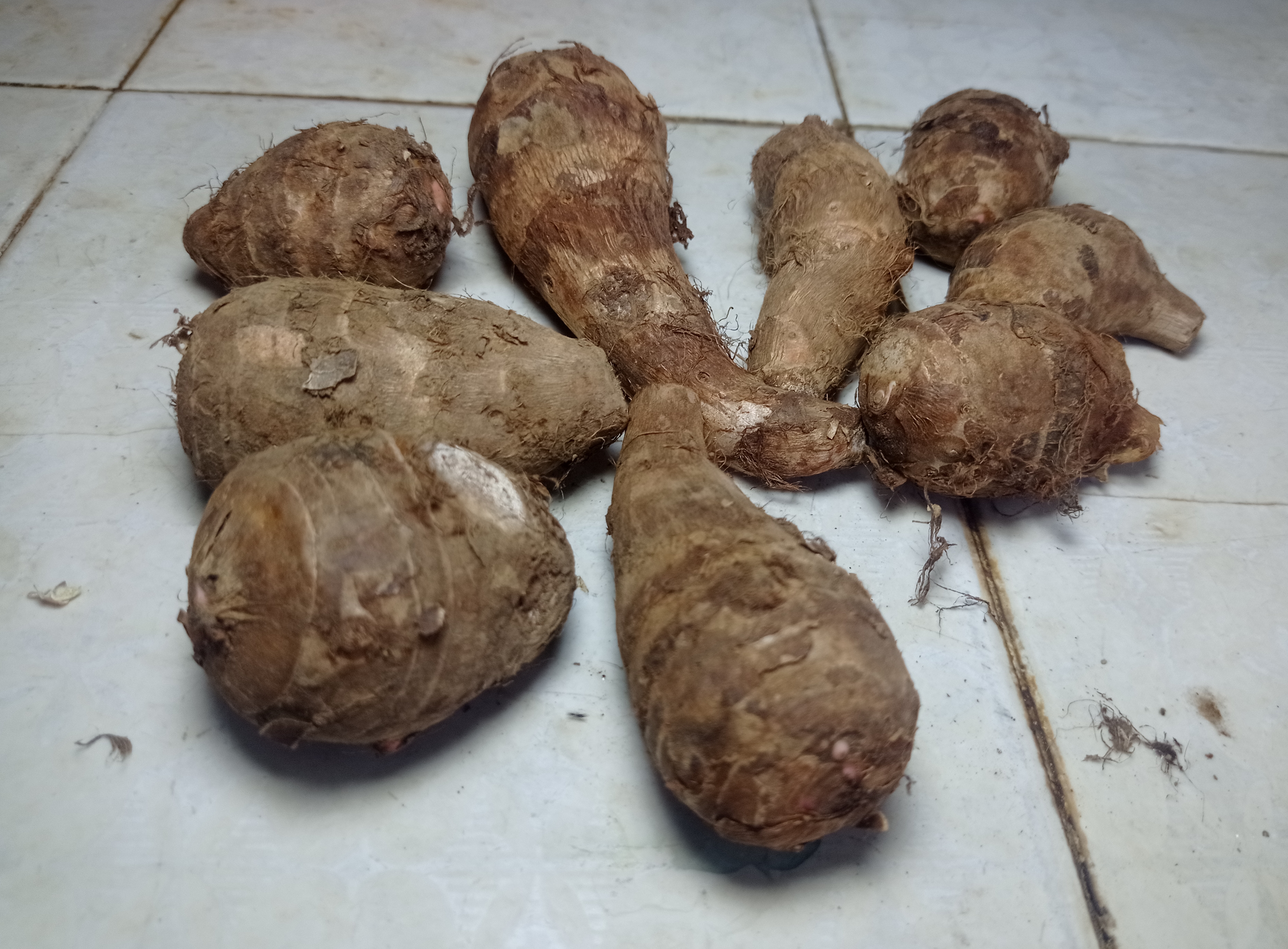
Colocasia is one of the large-leafed tropicals that share the common name Elephant Ear, a nickname it holds alongside Alocasia. One species, taro, is also grown as a food crop for its starchy corms, which show up in stores as pale purple-white chips. Grown outdoors or as a container plant, it rewards moderate care with genuinely spectacular foliage.
Source: Epic Gardening
A Tropical Homeland
Colocasia traces back to Africa, Southeastern Asia, and India, where it has long served both decorative and culinary roles and even featured in traditional health remedies. Colocasia esculenta, the species known as taro, has been widely hybridized from its eastern Asian origins into countless sizes and colors. The purple-leaved 'Black Magic' is a later, deliberately bred ornamental cultivar of that same species, so it has no wild native range of its own, though it can naturalize where it escapes cultivation.
Source: Epic Gardening
Light, Water, and Feeding
Colocasia does best in dappled or bright indirect light, with darker-leaved varieties tolerating more sun than bright green ones, and afternoon shade helpful in hot climates. As a wetland plant it wants consistently moist, rich, loose soil with a pH around 5.5 to 6.5; it can even take swampy conditions, and established plants become somewhat more drought-tolerant as their own leaves shade the soil. It is a heavy feeder that benefits from soil enriched before planting and regular fertilizing, with a balanced feed applied roughly weekly to every other week, plus warmth and humidity above 50 percent for best growth.
Source: Epic Gardening
Three Ways to Multiply
Colocasia propagates readily by three methods: dividing the main corm into pieces each bearing a developing eye, separating the offsets a mature plant produces freely around its base, or cutting a portion of corm attached to above-ground growth for regrowth the following spring. Corm division is the slowest with the lowest success rate, while separating offsets is straightforward once a healthy plant is producing suckers. However it is propagated, corms should stay dry before planting, since soaking invites fungal rot.
Source: Epic Gardening
Shield Leaves, Downward Ears
The shield-shaped leaves give Colocasia its Elephant Ear name, and in some varieties they stretch up to 60 inches long, in shades running from green to near-black purple. The telling distinction from cousin Alocasia is direction: Colocasia leaves hang and point toward the ground rather than skyward. All Colocasia do flower, with an aroid-type spathe and spadix similar to a peace lily, though the blooms are often overshadowed by the foliage and sometimes removed so the plant channels energy into leaf growth instead.
Source: Epic Gardening
Common Foliage Feeders
Colocasia can attract armyworms, aphids, whiteflies, thrips, eight-spotted flea beetles, and hawk moth larvae, most of which chew leaves or suck sap and leave behind sticky honeydew that invites sooty mold. Small infestations are often best handled by hand-removal, with neem oil, insecticidal soaps, or horticultural oils as organic follow-ups, and BT as an option against caterpillar pests like armyworms and hawk moth larvae. Once a plant is mature, its sheer size usually limits how much damage these pests can do.
Source: Epic Gardening
Wilting, Blight, and Mosaic
Underwatering is the main culprit behind wilting and browning leaves, since these wetland plants crave abundant moisture and root rot is rarely the issue. Taro leaf blight, caused by the fungus Phytophthora colocasiae, shows up as small watersoaked lesions that expand rapidly and can kill a large share of roots and leaves if untreated, calling for a copper-based fungicide and prompt removal of affected foliage. Dasheen mosaic disease, an aphid-transmitted virus, causes vein discoloration in C. esculenta with no cure beyond removing infected plants and controlling aphids.
Source: Epic Gardening
Pruning and Overwintering
Regular pruning keeps Colocasia healthy and tidy: damaged or drooping leaves should be trimmed close to the base with a clean blade to prevent fungal or bacterial trouble. After the first frost kills the foliage, cut all leaves down to about six inches from the base rather than letting them thaw into a soft, rot-prone mess, and clear away dried remnants before spring. Corms multiply on their own each year, so unwanted offshoots should be removed from the main root if you want to keep the planting contained; where winters drop below zone 8, digging up corms to store indoors, or moving whole potted plants inside, lets the same plant return the following spring.
Source: Epic Gardening
Care recipe
The species record — the baseline every cultivar inherits unless it says otherwise.
Care notes are early — not yet verified
- Light
- ai:claude-opus-4-8
- Water
- ai:claude-opus-4-8 (range 3-7d)
- Humidity
- ai:claude-opus-4-8
- Soil
- ai:claude-fable-5
- Care
- ai:claude-fable-5
Bright, indirect
≈ every 7 days
High
18–30 °C
Rich, moisture-retentive soil that stays consistently damp
Division of corms or tubers
Regular balanced feed through the growing season
Fast
Rarely flowers indoors; grown for its large dramatic leaves
Toxic to cats & dogs & humans
Araceae family — contains insoluble calcium oxalate crystals that irritate mouth and digestive tract if chewed. This is where toxicity lives: every cultivar of this species inherits it and none can override it.
Reference images
Every image credited. Licenses link to their deeds.
PrimarySources: ai:claude-opus-4-8 · ai:claude-opus-4-8 (range 3-7d) · ai:claude-fable-5 · ai:claude-opus-4-8 (family inference)
Kept true by its growers
Every fact here carries its source. Grow Cocoyam yourself? What you’ve observed — how it drinks, how it holds its color, a name that’s off — and a clear photo of your plant are exactly what keep this page honest. Contributions are reviewed before anything changes.
Sign in to add what you know →