Species · genus Citrus · Rutaceae
Japanese Bitter Orange
Citrus trifoliata L.
Also known as: Hardy Orange · Trifoliate Orange · Chinese Bitter Orange · Trifoliate-Leaved Orange
Cultivars of C. trifoliata
The named forms growers keep — each with its own page, each honest about how much we know.
No named cultivars catalogued under C. trifoliata yet. When growers document a stable, named form, it earns its own page here.
Guide
The species-level account. Cultivar pages build on this and say where they differ.
A Thorny Citrus Relative
Citrus trifoliata, also known as Japanese bitter orange or hardy orange, is a bushy, deciduous shrub or small tree related to true citrus. It carries stiff, formidable thorns along its green branches, fragrant orange-blossom-like white flowers, and small sour oranges that follow in autumn.
Source: RHS
Native To China
This species comes from central and southern China, and is also known under the older synonym Poncirus trifoliata. Its genus name is thought to derive from the French word poncire, referring to a kind of citron, while the species name simply nods to its three-lobed leaves.
Source: Missouri Botanical Garden
Sun, Water, Feed
Grown under glass or in a container, this plant wants full light with some shade from the hottest sun, and a peat-free, loam-based compost with added grit. Water freely and mist daily while it is in active growth through spring and summer, feeding year-round with a citrus fertiliser, then easing off and watering sparingly once winter sets in.
Source: RHS
By Seed Or Cutting
Propagate by sowing seed in containers in a cold frame come autumn, or take semi-ripe cuttings with bottom heat during summer.
Source: RHS
Thorns, Flowers, and Fruit
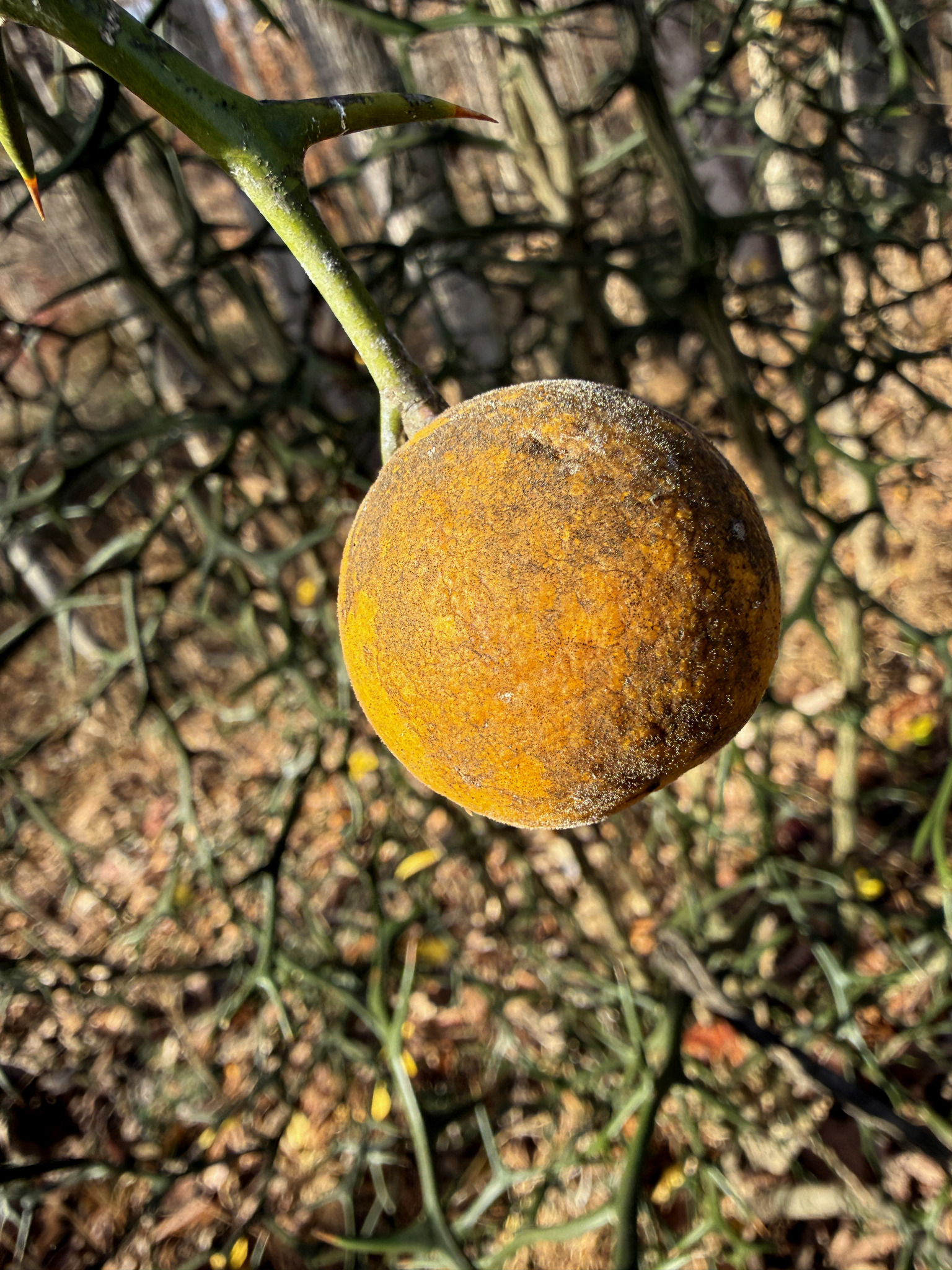
The plant is well-branched and armed with vicious spines, with trifoliate leaves that emerge yellowish-green, deepen to glossy dark green through summer, and turn yellow in autumn. In spring it bears fragrant white flowers of four to seven petals, followed by small downy oranges that ripen yellow and often persist into winter, giving the bare, thorny stems real seasonal interest.
Source: Missouri Botanical Garden
Largely Untroubled
This is a plant that tends to be left alone by both pests and disease, generally described as pest-free and disease-free.
Source: RHS
Light Pruning, Handle Carefully
It falls into the lighter pruning group for trees and shrubs, or in the case of the Flying Dragon form, can simply be clipped to shape. The thorns are genuinely vicious, so any pruning or fruit handling calls for care, and gloves are worth wearing since the fruit can irritate skin exposed to sunlight afterward.
Source: Missouri Botanical Garden
Care recipe
The species record — the baseline every cultivar inherits unless it says otherwise.
Care notes are early — not yet verified
- Light
- ai:claude-opus-4-8
- Water
- ai:claude-opus-4-8 (range 7-14d)
- Humidity
- ai:claude-opus-4-8
- Soil
- ai:claude-fable-5
- Care
- ai:claude-fable-5
Direct sun
≈ every 14 days
Medium
5–28 °C
Well-draining loamy mix; tolerates poorer soil than most citrus
Seed or cuttings; commonly used as rootstock
Light citrus feed a few times through the growing season
Slow
White spring blossoms; the hardiest, most cold-tolerant citrus
Toxic to cats & dogs
Citrus — essential oils + psoralens; vomiting, diarrhoea, photosensitivity, dermatitis. This is where toxicity lives: every cultivar of this species inherits it and none can override it.
Reference images
Every image credited. Licenses link to their deeds.
PrimarySources: ai:claude-opus-4-8 · ai:claude-opus-4-8 (range 7-14d) · ai:claude-fable-5 · ASPCA
Kept true by its growers
Every fact here carries its source. Grow Japanese Bitter Orange yourself? What you’ve observed — how it drinks, how it holds its color, a name that’s off — and a clear photo of your plant are exactly what keep this page honest. Contributions are reviewed before anything changes.
Sign in to add what you know →