Species · genus Chlorophytum · Asparagaceae
Pongol Sword
Chlorophytum laxum R.Br.
Cultivars of C. laxum
The named forms growers keep — each with its own page, each honest about how much we know.
No named cultivars catalogued under C. laxum yet. When growers document a stable, named form, it earns its own page here.
Guide
The species-level account. Cultivar pages build on this and say where they differ.
A Slender Spider Cousin
Chlorophytum laxum is an evergreen, rhizomatous perennial in the Asparagaceae family, related to the familiar spider plant. It carries narrow, lance-shaped leaves and slender arching stems that lift up loose sprays of small, starry white flowers.
Source: RHS
A Wide Native Range
This species was first described by Robert Brown in 1810, and it is no narrow endemic. Its native range stretches from northeast tropical Africa and the Arabian Peninsula through India to western Malesia and northern Australia, where it grows chiefly in seasonally dry tropical settings.
Source: Kew
Foliage, Flowers, and a Variegated Form
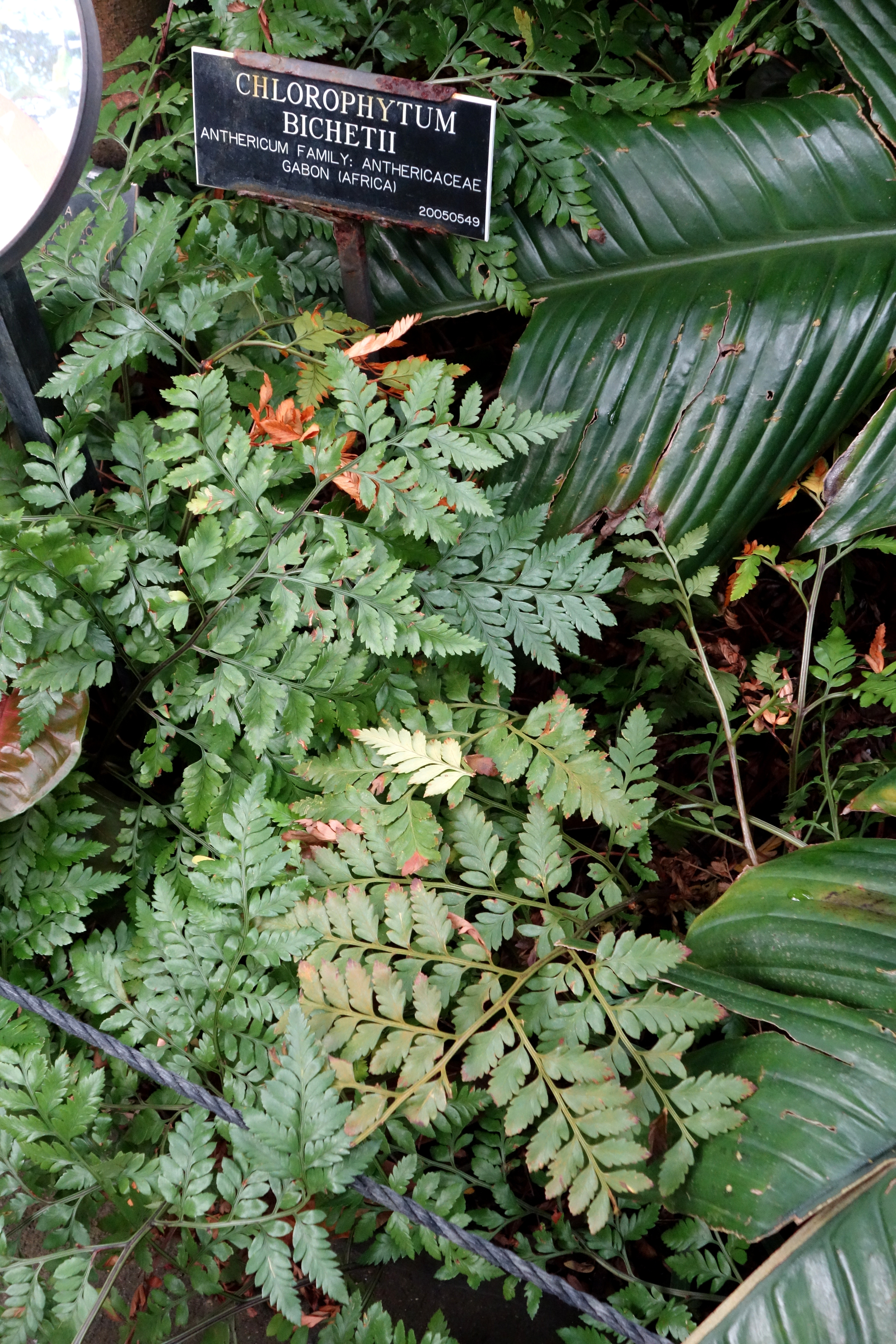
The genus habit shows in this plant plainly: linear to lance-shaped leaves on a rhizomatous base, with wiry arching stems bearing loose racemes or panicles of small white flowers. A named selection, Chlorophytum laxum 'Bichetii', also sold as 'Variegatum', brings striped foliage to the same basic form.
Source: RHS
Care recipe
The species record — the baseline every cultivar inherits unless it says otherwise.
Care notes are early — not yet verified
- Light
- ai:claude-opus-4-8
- Water
- ai:claude-opus-4-8 (range 7-14d)
- Humidity
- ai:claude-opus-4-8
- Soil
- ai:claude-fable-5
- Care
- ai:claude-fable-5
Bright, indirect
≈ every 14 days
Medium
15–27 °C
Light, well-draining potting mix
Division of clumps at repotting
Diluted liquid feed monthly in the growing season
Moderate
Occasional small white flowers indoors
Non-toxic to cats & dogs
Spider plant (Chlorophytum comosum) — ASPCA non-toxic; the genus carries no toxic principle. This is where toxicity lives: every cultivar of this species inherits it and none can override it.
Reference images
Every image credited. Licenses link to their deeds.
PrimarySources: ai:claude-opus-4-8 · ai:claude-opus-4-8 (range 7-14d) · ai:claude-fable-5 · ASPCA
Kept true by its growers
Every fact here carries its source. Grow Pongol Sword yourself? What you’ve observed — how it drinks, how it holds its color, a name that’s off — and a clear photo of your plant are exactly what keep this page honest. Contributions are reviewed before anything changes.
Sign in to add what you know →