Species · genus Chamaerops · Arecaceae
European Fan Palm
Chamaerops humilis L.
Also known as: Dwarf Fan Palm · Mediterranean Fan Palm · Mediterranean Fan-fern · Dwarf Palm · Hair Palm
Cultivars of C. humilis
The named forms growers keep — each with its own page, each honest about how much we know.
No named cultivars catalogued under C. humilis yet. When growers document a stable, named form, it earns its own page here.
Guide
The species-level account. Cultivar pages build on this and say where they differ.
The dwarf fan palm
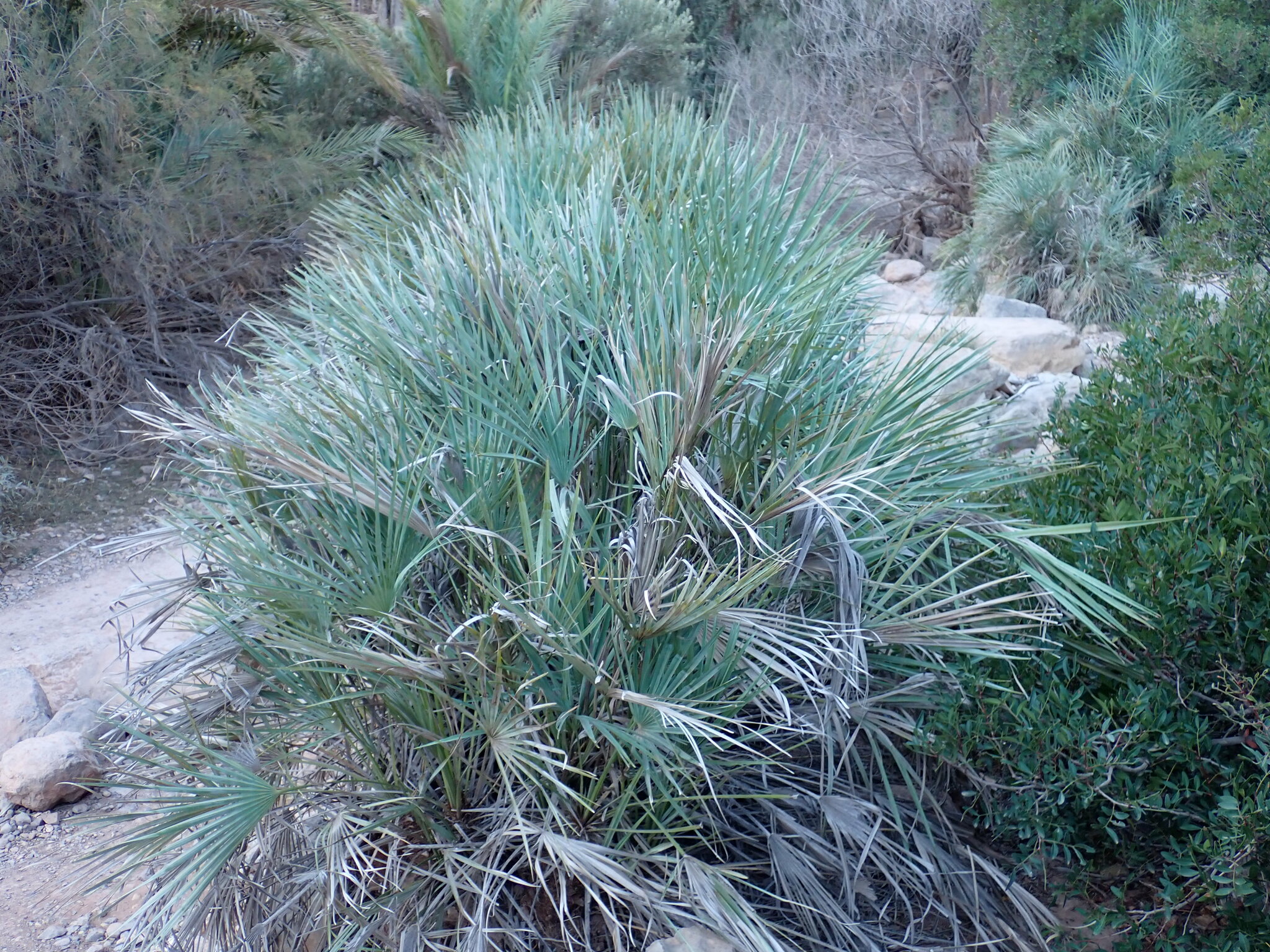
Chamaerops humilis, known as the dwarf fan palm or European fan palm, is a bushy evergreen palm that forms a rounded mass of stiff, fan-shaped leaves. It is often stemless or clumps into several short trunks, making it as much a shrub as a classic tree-form palm.
Source: RHS
Europe's only native palm
This species hails from the western and central Mediterranean, growing wild on rocky hills and mountains from Morocco, Algeria and Tunisia across to Spain, Portugal, France and Italy. It holds the distinction of being the only palm native to Europe, and the northernmost palm occurring naturally anywhere in the world.
Source: Missouri Botanical Garden
Bright light, steady moisture
Grown under glass or as a houseplant, it wants a peat-free, loam-based compost and bright, indirect light. Water moderately through the growing season and feed monthly with a balanced fertiliser, then let the compost run drier in winter.
Source: RHS
Seed or suckers
Propagation is done by seed or by taking suckers from the base of the plant. Seed raising is the more common route, since dividing clumps or removing suckers can be a fiddly business.
Source: Missouri Botanical Garden
Fan-shaped, fibrous, spiny
The leaves are large, triangular and fan-shaped, cut into narrow, finger-like segments and carried on a long, spiny leaf stalk, in colour ranging from light blue-green to silver-green. On mature plants small yellow flowers appear low among the leaf axils, followed by dark yellow, orange or brown date-like fruit, and older trunks wear a dark mat of old fibres and leaf bases.
Source: Missouri Botanical Garden
Mites, scale, thrips
Keep an eye out for glasshouse red spider mite, thrips and scale insects, which are the pests this palm is most prone to. Mealybugs are also worth watching for.
Source: RHS
Little pruning needed
This palm asks for no routine pruning. It is only rarely troubled by disease, with honey fungus an occasional risk.
Source: RHS
Care recipe
The species record — the baseline every cultivar inherits unless it says otherwise.
Care notes are early — not yet verified
- Light
- ai:claude-opus-4-8
- Water
- ai:claude-opus-4-8 (range 10-18d)
- Humidity
- ai:claude-opus-4-8
- Soil
- ai:claude-fable-5
- Care
- ai:claude-fable-5
Direct sun
≈ every 18 days
Low — average room
7–29 °C
Gritty, fast-draining cactus or palm mix
Division of offshoots or fresh seed
Balanced feed monthly in spring and summer
Slow
Rarely flowers indoors
Not yet documented
This is where toxicity lives — every cultivar of this species inherits it and none can override it.
Reference images
Every image credited. Licenses link to their deeds.
Sources: ai:claude-opus-4-8 · ai:claude-opus-4-8 (range 10-18d) · ai:claude-fable-5
Kept true by its growers
Every fact here carries its source. Grow European Fan Palm yourself? What you’ve observed — how it drinks, how it holds its color, a name that’s off — and a clear photo of your plant are exactly what keep this page honest. Contributions are reviewed before anything changes.
Sign in to add what you know →