Species · genus Chamaedorea · Arecaceae
Bamboo Palm
Chamaedorea seifrizii Burret
Also known as: Seifriz's Chamaedorea · Reed Palm
Cultivars of C. seifrizii
The named forms growers keep — each with its own page, each honest about how much we know.
No named cultivars catalogued under C. seifrizii yet. When growers document a stable, named form, it earns its own page here.
Guide
The species-level account. Cultivar pages build on this and say where they differ.
A Clumping Bamboo Palm
Chamaedorea seifrizii, known as the bamboo palm, is an evergreen palm forming dense clumps of slender, upright stems. It belongs to the Arecaceae family and is grown both as a garden shrub in warm climates and as a container plant elsewhere.
Source: Missouri Botanical Garden
Rainforest Understorey Native
This palm comes from the rainforest understorey of southeastern Mexico, Belize, Guatemala, and Honduras, with naturalized populations in Florida. The species was first described by Burret in 1938, and its epithet honours William Seifriz, an American scientist who worked in plant physiology and cell biology. The genus name itself derives from Greek words meaning "on the ground" and "gift," a nod to how easily the fruit can be reached without climbing.
Source: Kew
Bright Shade, Steady Moisture
Grow this palm in partial shade, sheltered from strong or direct afternoon sun, in a well-drained, evenly moist soil. Water freely through the growing season and apply a balanced liquid feed monthly, then cut back to sparing winter watering. It tolerates a range of conditions, including drier soils and shadier spots, though it has little tolerance for salt spray.
Source: RHS
Grown From Seed
Propagation is by seed, sown at a temperature of no less than 25°C.
Source: RHS
Bamboo-Like Clustered Stems
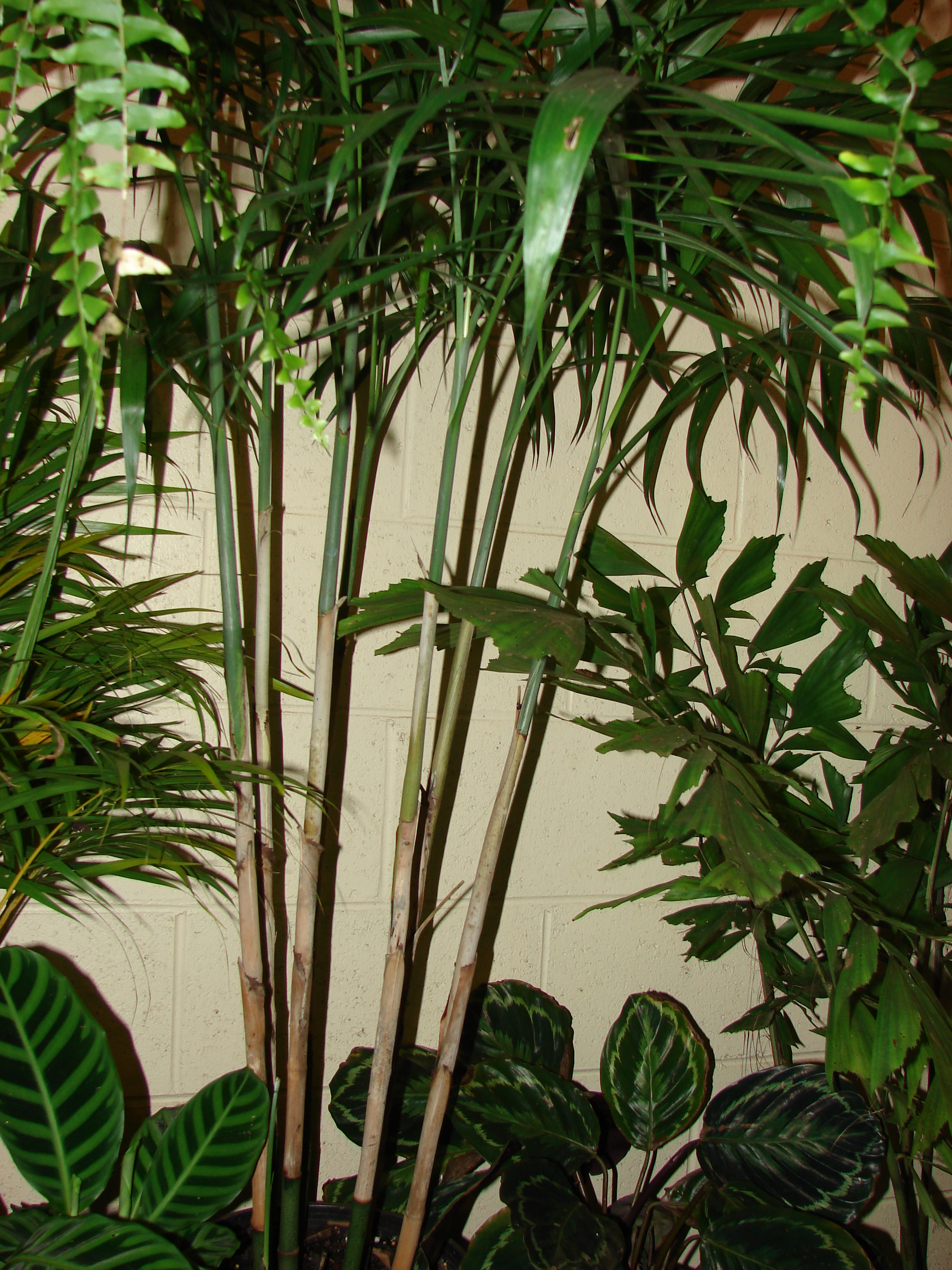
The slender, upright to leaning stems carry distinct nodes that give the plant its bamboo-like look, though the two are unrelated. Each stem is topped with pinnate fronds a foot and a half to two feet long, made up of narrow leaflets. Mature plants send up branched flower clusters of small yellow blooms, with male and female flowers on separate inflorescences, and the female ones ripen from green to a bright orange before the fruit itself darkens to black.
Source: Missouri Botanical Garden
Watch for Sap Feeders
Indoors especially, keep an eye out for mealybugs, scale, and spider mites, which the RHS also lists alongside thrips as the palm's common troublemakers.
Source: Missouri Botanical Garden
Rot Risks in Wet Soil
This palm can be susceptible to gliocladium stem blight, root rot, and stem rot, problems generally tied to soil that stays too wet. Choosing a well-draining mix and avoiding waterlogging helps keep these at bay.
Source: Missouri Botanical Garden
Little Pruning Needed
No pruning is required for this palm. Grown under glass, it takes a decade or two to reach full maturity, and it does best in a peat-free, loam-based compost.
Source: RHS
Care recipe
The species record — the baseline every cultivar inherits unless it says otherwise.
Care notes are early — not yet verified
- Light
- ai:claude-opus-4-8
- Water
- ai:claude-opus-4-8 (range 7-12d)
- Humidity
- ai:claude-opus-4-8
- Soil
- ai:claude-fable-5
- Care
- ai:claude-fable-5
Bright, indirect
≈ every 12 days
Medium
16–29 °C
Peat-based mix that stays lightly moist yet drains
From seed or division of its bamboo-like clumps
Dilute balanced feed monthly in the growing season
Moderate
Small yellow flowers appear on mature clumps
Non-toxic to cats & dogs
Parlor palm (Chamaedorea elegans) — ASPCA non-toxic; palms carry no toxic principle. This is where toxicity lives: every cultivar of this species inherits it and none can override it.
Reference images
Every image credited. Licenses link to their deeds.
Sources: ai:claude-opus-4-8 · ai:claude-opus-4-8 (range 7-12d) · ai:claude-fable-5 · ASPCA
Kept true by its growers
Every fact here carries its source. Grow Bamboo Palm yourself? What you’ve observed — how it drinks, how it holds its color, a name that’s off — and a clear photo of your plant are exactly what keep this page honest. Contributions are reviewed before anything changes.
Sign in to add what you know →