Species · genus Chamaecereus · Cactaceae
Peanut Cactus
Lobivia silvestrii (Speg.) G.D.Rowley
Also known as: Chamaecereus
Cultivars of L. silvestrii
The named forms growers keep — each with its own page, each honest about how much we know.
No named cultivars catalogued under L. silvestrii yet. When growers document a stable, named form, it earns its own page here.
Guide
The species-level account. Cultivar pages build on this and say where they differ.
The Peanut Cactus
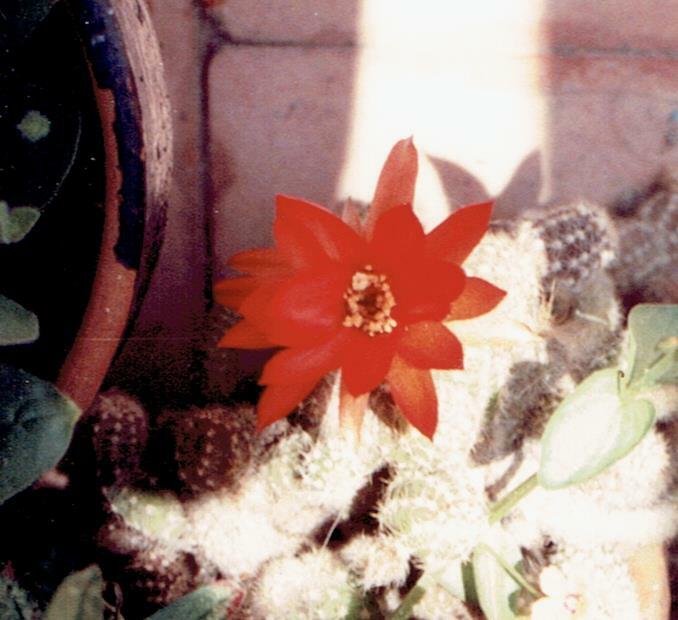
This is the peanut cactus, a small, mat-forming member of the cactus family known botanically as Echinopsis chamaecereus, though it has traveled under names like Chamaecereus silvestrii and Lobivia silvestrii along the way. It carries slender, sprawling, ribbed stems and, in summer, funnel-shaped vermilion-red flowers.
Source: RHS
From Argentine Hillsides
The species comes from Argentina, where it roams dry, rocky hillsides rather than any lush jungle. There it grows low and spreading, slowly widening into a clump as its stems fall over and root themselves into the ground.
Source: Epic Gardening
Sun, Then Rest
This cactus wants full sun and a well-drained, gritty, loam-based mix, kept in a sheltered spot given its modest cold tolerance. Water moderately while it is in active growth, then cut back to little or nothing while it rests, and feed with a balanced liquid fertiliser two or three times over the growing season.
Source: RHS
Seed or Offsets
Propagation is straightforward by seed or by offsets taken from the parent plant.
Source: RHS
Trailing, Peanut-Like Stems
The stems stay short and low, adorned with fine white spines that are gentler than those of many cacti, though still capable of catching skin. It grows as an evergreen trailer rather than an upright column, and left to itself it leans and rambles with age. Flower colour varies by variety, from the species' red-orange to pink, yellow, and orange in various cultivars, with one form even carrying yellow stems.
Source: Epic Gardening
Mealybugs and Mites
Mealybugs, white and powdery, tend to build up when the plant sits in shade or damp soil, and spider mites can also take hold. Both are sap-suckers, and a plain water spray is often enough to knock them back once spotted.
Source: Epic Gardening
Root Rot from Wet Feet
The most common trouble is root rot, particularly indoors, and it traces back to poor drainage or overly frequent watering rather than any inherent fragility. Good light, free-draining soil, and letting the dirt dry fully between waterings prevent most of it; if rot does appear, hold off watering, cut away mushy tissue, and take cuttings from any remaining healthy stems as insurance.
Source: Epic Gardening
Little Pruning Needed
This plant asks for no routine pruning, though light trimming can shape it toward a more compact habit or let it ramble longer, depending on preference.
Source: RHS
Care recipe
The species record — the baseline every cultivar inherits unless it says otherwise.
Care notes are early — not yet verified
- Light
- ai:claude-opus-4-8
- Water
- ai:claude-opus-4-8 (range 10-21d)
- Humidity
- ai:claude-opus-4-8
- Soil
- ai:claude-fable-5
- Care
- ai:claude-fable-5
Direct sun
≈ every 21 days
Low — average room
8–29 °C
Gritty, fast-draining cactus mix
Offsets separated and rooted after callusing
Dilute low-nitrogen cactus feed in spring and summer
Moderate
Large orange-red blooms readily in spring
Not yet documented
This is where toxicity lives — every cultivar of this species inherits it and none can override it.
Reference images
Every image credited. Licenses link to their deeds.
Sources: ai:claude-opus-4-8 · ai:claude-opus-4-8 (range 10-21d) · ai:claude-fable-5
Kept true by its growers
Every fact here carries its source. Grow Peanut Cactus yourself? What you’ve observed — how it drinks, how it holds its color, a name that’s off — and a clear photo of your plant are exactly what keep this page honest. Contributions are reviewed before anything changes.
Sign in to add what you know →