Species · genus Ceropegia · Apocynaceae
Zulu Giant
Stapelia gigantea N.E.Br.
Also known as: Giant Stapelia · Giant Toadflower · Giant Toadplant · Carrion Flower · Carrion Plant
Cultivars of S. gigantea
The named forms growers keep — each with its own page, each honest about how much we know.
No named cultivars catalogued under S. gigantea yet. When growers document a stable, named form, it earns its own page here.
Guide
The species-level account. Cultivar pages build on this and say where they differ.
A Giant Among Stapelias
Stapelia gigantea, known as giant stapelia, is a clump-forming succulent perennial prized for flowers far larger than its low stature would suggest. It stays modest in height, generally under half a metre, but produces starry blooms that can reach 35cm across.
Source: RHS
From Southern Africa
This species ranges naturally from South Africa up to Tanzania. It belongs to the genus Stapelia, a group of succulents native to that same broad African range, known for erect, angled, toothed stems and showy star-shaped flowers.
Source: RHS
Sun, Grit, Shelter
Give it full sun, ideally a south- or east-facing spot, with shelter from harsh exposure. Under glass, pot it in equal parts peat-free loam-based compost and grit, topped with a grit dressing, and offer full light but shade it from the hottest sun. Where grown outdoors it needs gritty, sharply drained soil in full sun and a frost-free position, as it is only hardy enough to sit outside over summer.
Source: RHS
Seed or Sections
Giant stapelia can be raised from seed, or propagated more directly by separating off rooted sections of the clump.
Source: RHS
Fleshy Stems, Foul Flowers
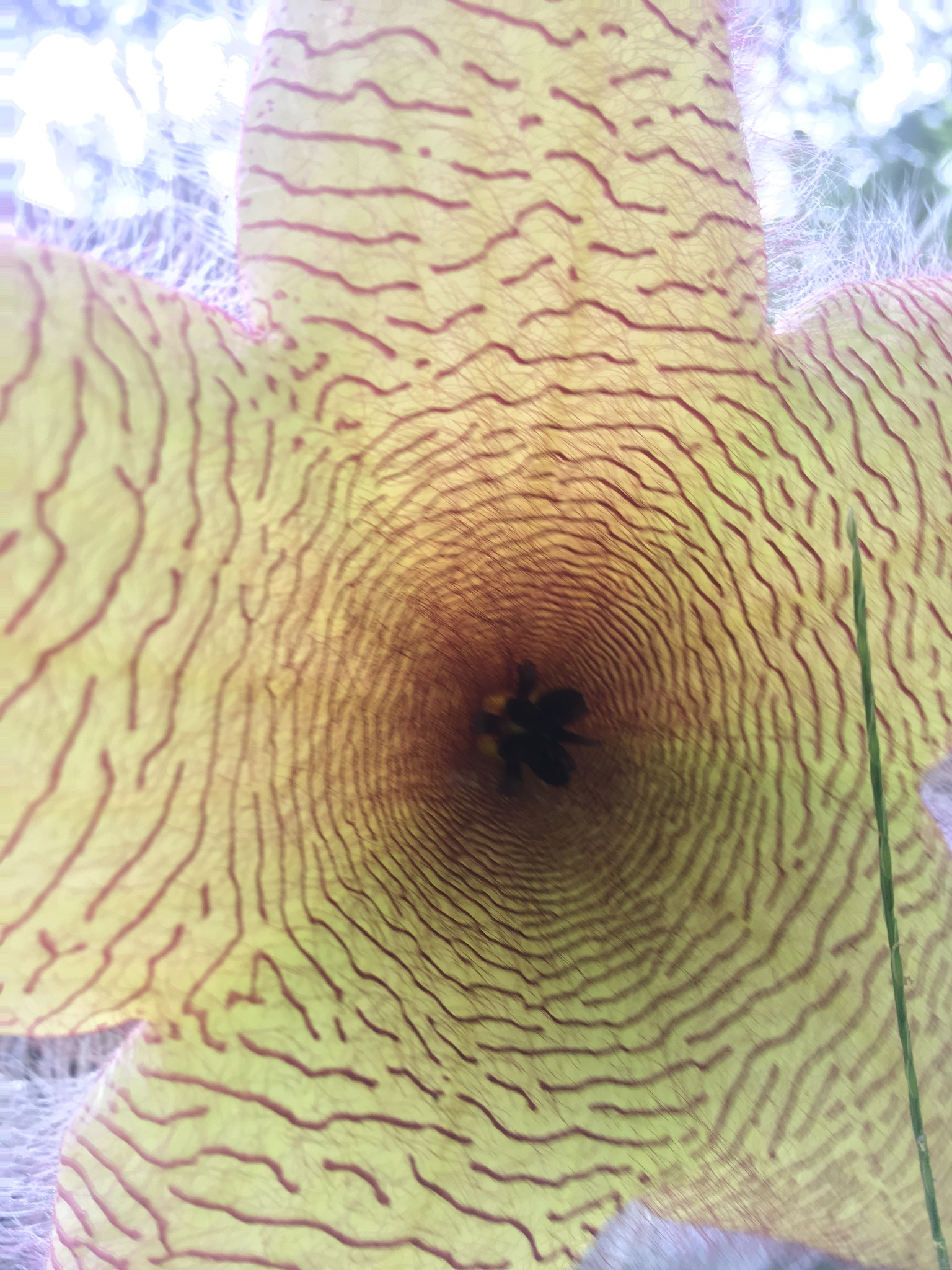
The stems are fleshy, erect, and four-angled, reaching up to about 20cm. Its real distinction is the flower: a buff-yellow, star-shaped bloom lined with dark red, up to 35cm across, and carrying a scent politely described as foul rather than sweet. Despite that smell, the flower's scale and pattern have earned this plant an Award of Garden Merit.
Source: RHS
Watch for Mealybugs
Mealybugs are the pest most likely to trouble this plant, so it is worth checking stems for their telltale waxy clusters.
Source: RHS
Black Root Rot Risk
The main disease concern is black root rot, a reminder that sharp drainage and a gritty mix matter more than generous watering for this succulent.
Source: RHS
Little Pruning Needed
No pruning is required for giant stapelia. Beyond siting it well and keeping the mix gritty, it asks little in the way of routine upkeep.
Source: RHS
Care recipe
The species record — the baseline every cultivar inherits unless it says otherwise.
Care notes are early — not yet verified
- Light
- ai:claude-opus-4-8
- Water
- ai:claude-opus-4-8 (range 14-28d)
- Humidity
- ai:claude-opus-4-8
- Soil
- ai:claude-fable-5
- Care
- ai:claude-fable-5
Bright, indirect
≈ every 28 days
Low — average room
10–29 °C
Very gritty, sharp-draining cactus and succulent mix
Detach and root the clustering stems
Light feed once or twice in the growing season
Moderate
Huge star-shaped hairy flowers with a strong carrion odor
Not yet documented
This is where toxicity lives — every cultivar of this species inherits it and none can override it.
Reference images
Every image credited. Licenses link to their deeds.
PrimarySources: ai:claude-opus-4-8 · ai:claude-opus-4-8 (range 14-28d) · ai:claude-fable-5
Kept true by its growers
Every fact here carries its source. Grow Zulu Giant yourself? What you’ve observed — how it drinks, how it holds its color, a name that’s off — and a clear photo of your plant are exactly what keep this page honest. Contributions are reviewed before anything changes.
Sign in to add what you know →