Species · genus Cereus · Cactaceae
Apple Cactus
Cereus repandus (L.) Mill.
Also known as: Candelabra Cactus · Giant Club Cactus · Hedge Cactus · Peruvian Apple Cactus · Sweetpotato Cactus
Cultivars of C. repandus
The named forms growers keep — each with its own page, each honest about how much we know.
No named cultivars catalogued under C. repandus yet. When growers document a stable, named form, it earns its own page here.
Guide
The species-level account. Cultivar pages build on this and say where they differ.
A Towering Columnar Cactus
Cereus peruvianus, now more properly called Cereus repandus, is a tall, thorny, columnar cactus grown both as an ornamental and for its edible fruit. It suits gardeners who want a striking, low-fuss desert plant that doubles as a snack producer, and it can even be kept indoors, though it grows far slower there.
Source: Epic Gardening
Roots in Northern South America
This species is native to the southern Caribbean and the stretch from Venezuela into Colombia, including Aruba and the Windward Islands, where it grows as a succulent tree in seasonally dry tropical country. People there have long put it to use as animal fodder, medicine, fuel, and food.
Source: Kew
Sun, Sparse Water, Sandy Soil
Give this cactus as much sun as you can, full sun outdoors for eight or more hours, or a south-facing window indoors, since a lean toward the light means it wants more of it. Water more generously through spring and summer growth, then taper off in fall and winter, always letting the soil dry out almost completely between waterings, and expect it to sit comfortably at 30 to 50 percent humidity. It wants a well-draining, sandy cactus mix at a pH of 5 to 7, and a slow-release granular fertilizer once a month during the growing season is enough, since cacti otherwise store what they need in their tissue.
Source: Epic Gardening
Cuttings Beat Seeds
Seeds germinate readily but take a slow route to a mature plant, so stem cuttings are the quicker path. Let a cut section, or a pup taken from the base, callus over for a week or two before setting it into a standard rooting mix or a bed beside the parent plant.
Source: Epic Gardening
Height, Ribs, and One-Night Blooms
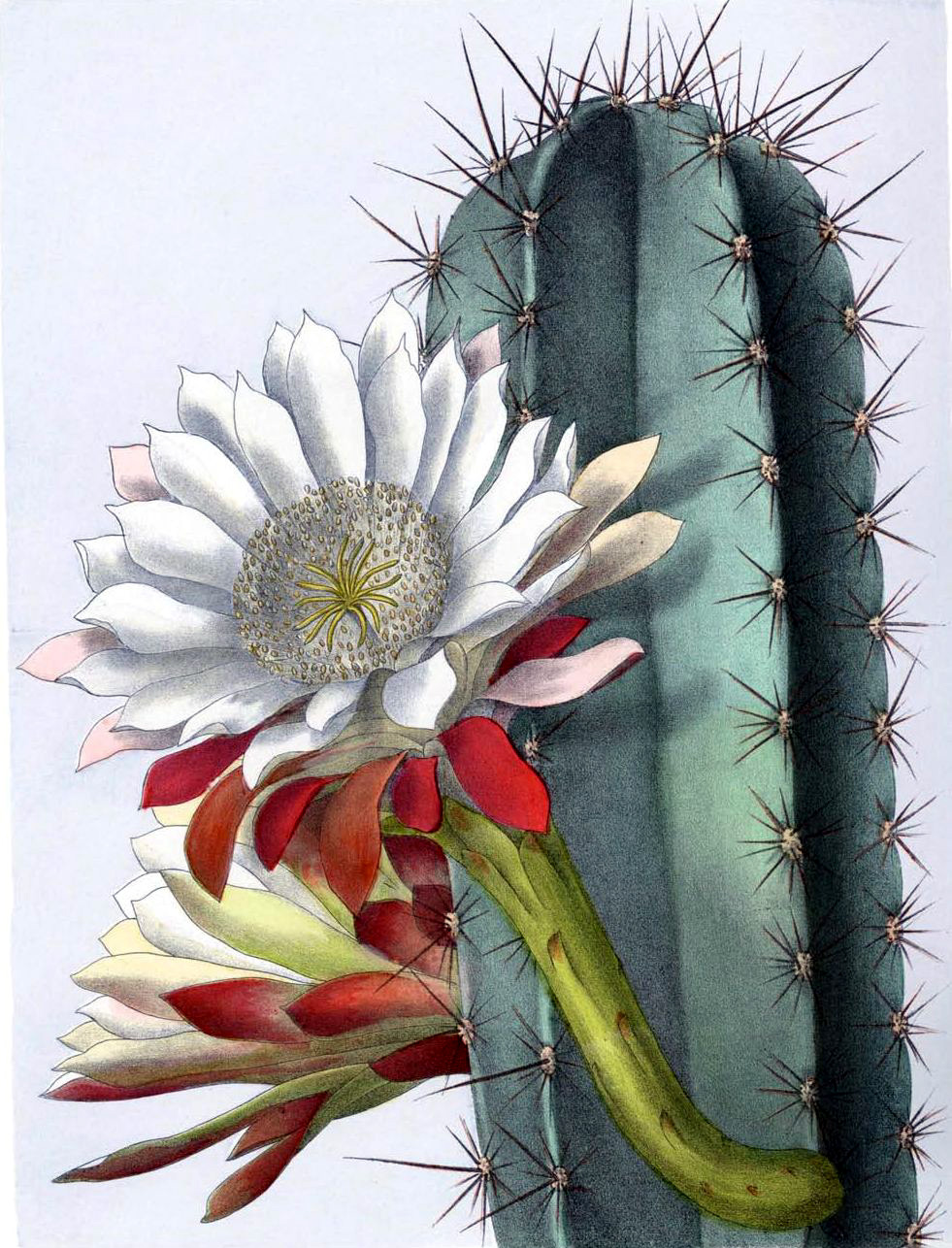
Its grayish-green to bluish stems are genuinely epic in scale, reaching over 30 feet in the wild and, with cultivation and support, more than 110 feet, making it among the tallest cacti anywhere. The cylindrical stems carry pronounced ribs 4 to 8 inches across, and once a year it opens large cream to white flowers that last for a single night before closing for good. What follows are thornless fruits, the Peruvian apples, ranging from violet-red to yellow with a crunchy white interior.
Source: Epic Gardening
Mealybugs and Slow-Moving Grazers
Snails, slugs, and mealybugs are the usual pest suspects on this cactus. Mealybugs can be managed with organic insecticides or simply wiped away with a cotton swab dipped in rubbing alcohol.
Source: Epic Gardening
Overwatering Is the Main Risk
Most trouble traces back to overwatering, whether from watering too often or from soil that holds too much moisture. Working perlite, extra cactus mix, or sand into the potting mix improves drainage and heads this off. Left unchecked, overwatering or poorly drained soil leads to root rot, seen as a brown, mushy base; the fix is to cut above the damage, let the remaining cactus callus for a couple of weeks, then replant it in sun and well-draining soil.
Source: Epic Gardening
Autumn Pruning, Careful Tools
Prune in autumn once the plant stops pushing new branches or grows so overgrown and knobby that reaching the fruit becomes difficult. Skip pruning shears in favor of a pruning saw to get through the tough stem ribs, and wear gloves given the spines. Repotting becomes more frequent if you fertilize during the growing season, since that extra feeding speeds growth, and it's worth working fresh fertilizer into the mix at repotting time.
Source: Epic Gardening
Care recipe
The species record — the baseline every cultivar inherits unless it says otherwise.
Care notes are early — not yet verified
- Light
- ai:claude-opus-4-8
- Water
- ai:claude-opus-4-8 (range 14-30d)
- Humidity
- ai:claude-opus-4-8
- Soil
- ai:claude-fable-5
- Care
- ai:claude-fable-5
Direct sun
≈ every 30 days
Low — average room
10–32 °C
Gritty, fast-draining cactus and succulent mix
Stem cuttings callused then rooted in dry mix
Dilute cactus feed once or twice in summer
Moderate
Large night-blooming white flowers on mature plants
Not yet documented
This is where toxicity lives — every cultivar of this species inherits it and none can override it.
Reference images
Every image credited. Licenses link to their deeds.
PrimarySources: ai:claude-opus-4-8 · ai:claude-opus-4-8 (range 14-30d) · ai:claude-fable-5
Kept true by its growers
Every fact here carries its source. Grow Apple Cactus yourself? What you’ve observed — how it drinks, how it holds its color, a name that’s off — and a clear photo of your plant are exactly what keep this page honest. Contributions are reviewed before anything changes.
Sign in to add what you know →