Species · genus Cereus · Cactaceae
Queen Of The Night
Cereus jamacaru DC.
Also known as: Peruvian Apple Cactus · Pitaya
Cultivars of C. jamacaru
The named forms growers keep — each with its own page, each honest about how much we know.
No named cultivars catalogued under C. jamacaru yet. When growers document a stable, named form, it earns its own page here.
Guide
The species-level account. Cultivar pages build on this and say where they differ.
A Brazilian Column Cactus
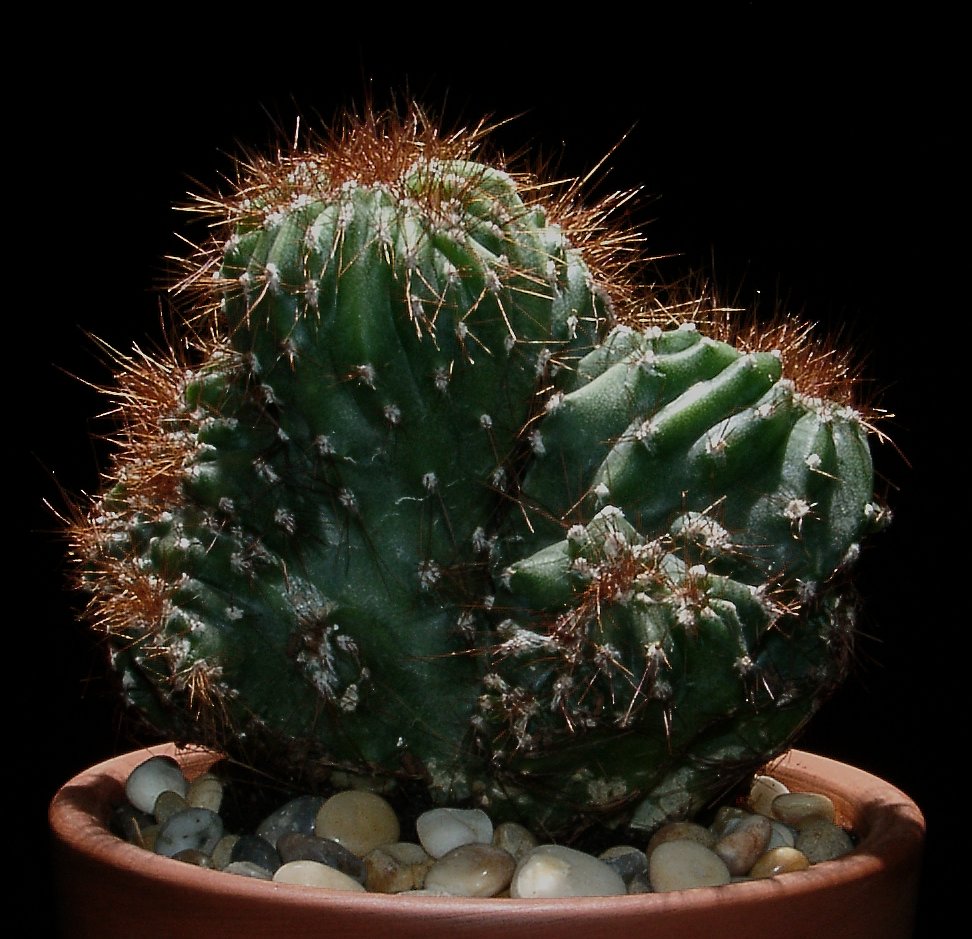
Cereus jamacaru is a large, columnar succulent tree in the cactus family. It carries ribbed, spiny stems and belongs to a genus of some thirty-three large South American cacti known for their big, funnel-shaped, mostly night-opening flowers.
Source: RHS
Home in Dry Brazil
This species is native to central and eastern Brazil, where it grows as a succulent tree across the seasonally dry tropical biome. It has since become established beyond its homeland, appearing as an introduced plant in parts of southern Africa including the Cape provinces, Eswatini, and KwaZulu-Natal.
Source: Kew
Dry Spells, Bright Light
This cactus wants sandy, sharply draining soil and a rhythm of thorough watering followed by a full dry-out, echoing its desert origins; self-watering devices are best avoided since the roots prefer to sit dry for stretches. It does best in heat with some partial shade rather than all-day direct sun, since strong exposure can damage and redden the stems. A cactus-formulated fertilizer applied roughly every ten days during the growing season helps it along and can support flowering once the plant is mature.
Source: Epic Gardening
Rooting a Cut Section
Propagation is done by taking a cutting, or leaf, from a mature plant and setting it into sandy soil, where it will root over time. Cuttings should be taken only from plants a few years old, and never in large amounts, since removing too much at once can stress the plant and disrupt its blooming cycle. New growth can take a couple of months to become noticeable after planting.
Source: Epic Gardening
Night Bloom, Odd Habit
Its most striking trait is the fragrant, night-opening flower, one of the largest and most showy of any cactus, with petals roughly six to eight inches long and a pale center of white and yellow parts. The bloom opens after dark, is fully open by midnight, and wilts as the sun rises, closed entirely by midday. The plant itself grows into a gangly, unmistakable form of long vine-like shoots and thick stems, reaching up to ten feet, and can even withstand some saltwater exposure.
Source: Epic Gardening
Reading Brown or Reddened Stems
A leaf or stem that turns brown and splits usually signals either too much water or too much sun, sometimes both at once, as when heavy rain is followed by strong sun and effectively steams the tissue. Reddening of the stems is likewise a sign of excess direct sunlight. If the plant fails to grow or flower after four or five years, it is worth reviewing sun exposure, watering, fertilizer, and soil conditions.
Source: Epic Gardening
Room to Grow
As this cactus matures it benefits from being moved into larger pots over time, since a cramped container keeps it small and slows flowering. It naturally puts out long vine-like shoots that can be trained onto a trellis for support, though once wrapped it will need to stay that way. Trimming otherwise is unnecessary and best limited to taking small cuttings, since heavy pruning can shock the plant.
Source: Epic Gardening
Care recipe
The species record — the baseline every cultivar inherits unless it says otherwise.
Care notes are early — not yet verified
- Light
- ai:claude-opus-4-8
- Water
- ai:claude-opus-4-8 (range 14-30d)
- Humidity
- ai:claude-opus-4-8
- Soil
- ai:claude-fable-5
- Care
- ai:claude-fable-5
Direct sun
≈ every 30 days
Low — average room
10–32 °C
Gritty, fast-draining cactus and succulent mix
Stem cuttings callused then rooted in dry mix
Dilute cactus feed once or twice in summer
Moderate
Large night-blooming white flowers on mature plants
Not yet documented
This is where toxicity lives — every cultivar of this species inherits it and none can override it.
Reference images
Every image credited. Licenses link to their deeds.
PrimarySources: ai:claude-opus-4-8 · ai:claude-opus-4-8 (range 14-30d) · ai:claude-fable-5
Kept true by its growers
Every fact here carries its source. Grow Queen Of The Night yourself? What you’ve observed — how it drinks, how it holds its color, a name that’s off — and a clear photo of your plant are exactly what keep this page honest. Contributions are reviewed before anything changes.
Sign in to add what you know →