Species · genus Cattleya · Orchidaceae
Christmas Orchid
Cattleya trianae Linden & Rchb.f.
Also known as: Winter Cattleya
Cultivars of C. trianae
The named forms growers keep — each with its own page, each honest about how much we know.
No named cultivars catalogued under C. trianae yet. When growers document a stable, named form, it earns its own page here.
Guide
The species-level account. Cultivar pages build on this and say where they differ.
The Christmas Orchid
Cattleya trianae is a large, evergreen epiphytic orchid, prized for its big, fragrant blooms carried atop upright, club-shaped pseudobulbs. It holds the distinction of being the most awarded orchid species on record, and it serves as the national flower of Colombia.
Source: RHS
A Colombian Native
This species comes from Colombia, where it grows as an epiphyte. Its long horticultural pedigree and sheer number of awards have made it something of a benchmark among cattleyas, and its cultural weight is reflected in its status as Colombia's national flower.
Source: RHS
Light, Water, Rest
Grow this orchid in an open, coarse bark-based mix with perlite and coconut chips added, and give it bright light while shading it from hot midday sun. Aim for a winter minimum of 15°C and a summer ceiling near 28°C, watering and feeding regularly through the growing season while making sure water always drains freely away. Provide humidity through regular misting, then ease off on both water and feed over winter, keeping the plant bright and sunny. Like many orchids, it flowers best when the roots are a little snug in their pot.
Source: RHS
Dividing Established Clumps
Propagation is by division, undertaken once a mature plant has outgrown its container. Each division needs at least three older pseudobulbs, carrying enough stored energy and water to support new growth and settle in after the disturbance of repotting.
Source: RHS
Pseudobulbs and Grand Flowers
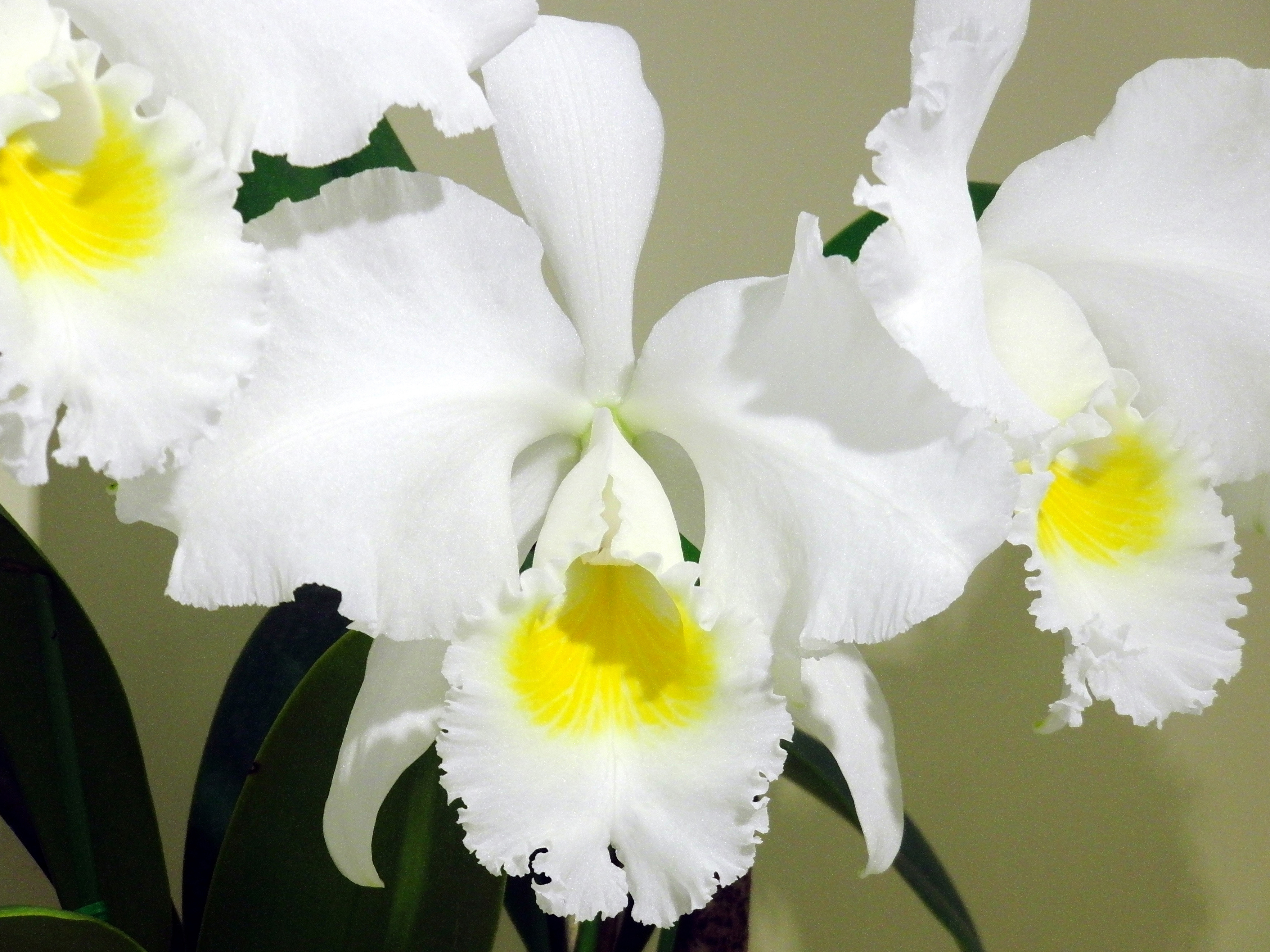
Each upright, club-shaped pseudobulb rises from a short creeping rhizome and carries a single firm, leathery leaf up to 30cm long. Flowering stems emerge from the young mature growth in winter and early spring, their buds wrapped in thin pale green sheaths before opening into fragrant flowers up to 20cm across. Colour in the species ranges widely, from pure white through pale pink and lilac to dark magenta, typically with a darker lip and a yellow throat; named forms narrow that range, such as the pure white, yellow-centred 'Queen Elizabeth'.
Source: RHS
Watch for Sap Feeders
Glasshouse red spider mite, scale insects, and mealybugs are the pests most likely to trouble this orchid. Thrips are a separate concern, as they tend to mark the flowers rather than the foliage.
Source: RHS
Rot from Stale Air
This orchid is generally free of disease, but poor air movement can invite bacterial or fungal rot. Keeping tools clean and hygiene good also helps prevent virus diseases from spreading between plants.
Source: RHS
Repotting on Its Own Terms
No pruning is needed for this species. Repot only when the plant has outgrown its container or the mix begins to break down, roughly every two to three years, and time the disturbance to when new growth appears in spring.
Source: RHS
Care recipe
The species record — the baseline every cultivar inherits unless it says otherwise.
Care notes are early — not yet verified
- Light
- ai:claude-opus-4-8
- Water
- ai:claude-opus-4-8 (range 7-12d)
- Humidity
- ai:claude-opus-4-8
- Soil
- ai:claude-fable-5
- Care
- ai:claude-fable-5
Bright, indirect
≈ every 12 days
High
15–29 °C
Coarse, fast-draining orchid bark mix
Division of mature pseudobulb clumps
Dilute orchid feed every 1–2 weeks while in growth
Slow
Large fragrant blooms once a year with a cool, dry rest
Not yet documented
This is where toxicity lives — every cultivar of this species inherits it and none can override it.
Reference images
Every image credited. Licenses link to their deeds.
PrimarySources: ai:claude-opus-4-8 · ai:claude-opus-4-8 (range 7-12d) · ai:claude-fable-5
Kept true by its growers
Every fact here carries its source. Grow Christmas Orchid yourself? What you’ve observed — how it drinks, how it holds its color, a name that’s off — and a clear photo of your plant are exactly what keep this page honest. Contributions are reviewed before anything changes.
Sign in to add what you know →