Species · genus Caryota · Arecaceae
Jaggery Palm
Caryota urens L.
Also known as: Fishtail Palm · Solitary Fishtail Palm · Toddy Palm · Wine Palm · Kitul-tree
Cultivars of C. urens
The named forms growers keep — each with its own page, each honest about how much we know.
No named cultivars catalogued under C. urens yet. When growers document a stable, named form, it earns its own page here.
Guide
The species-level account. Cultivar pages build on this and say where they differ.
The Jaggery Palm
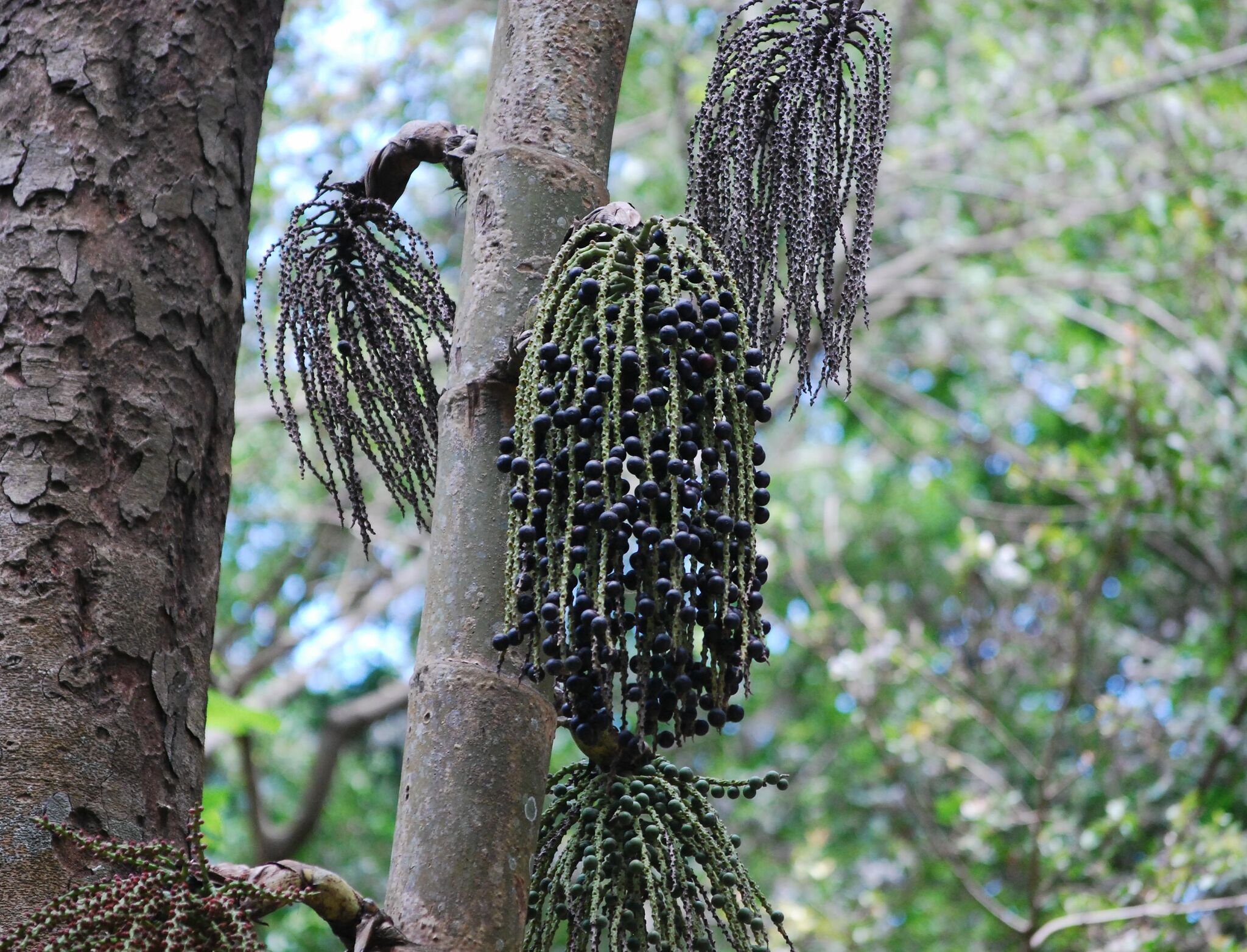
Caryota urens is a tree palm in the family Arecaceae, known in cultivation as the jaggery palm and by a long list of common names including sago palm, sugar palm, toddy palm, wine palm, and kitul tree. It is grown both for its striking foliage and for its long history of economic and social use.
Source: RHS
A Wide Native Range
This palm is native to a broad swathe of Asia, spanning South India, Sri Lanka, and Bangladesh through Southeast Asia to South Bhutan, southern China, and west and central Java. It has also been introduced beyond this range, into places such as the Andaman Islands, Nepal, Cuba, and several Caribbean islands. In its native habitat it grows chiefly within the wet tropical biome, and it carries a long record of use as animal food, a poison, a medicine, a fuel source, and a food plant.
Source: Kew
Bipinnate Leaves and Panicles
The genus Caryota is distinguished among palms by its twice-divided, or bipinnate, leaves, borne in a crown at the top of a solitary or clustered stem, an arrangement often likened to a fishtail. In summer the plant produces small cream flowers gathered into large panicles.
Source: RHS
Care recipe
The species record — the baseline every cultivar inherits unless it says otherwise.
Care notes are early — not yet verified
- Light
- ai:claude-opus-4-8
- Water
- ai:claude-opus-4-8 (range 7-12d)
- Humidity
- ai:claude-opus-4-8
- Soil
- ai:claude-fable-5
- Care
- ai:claude-fable-5
Bright, indirect
≈ every 12 days
Medium
16–29 °C
Rich, well-draining mix kept evenly moist
Grown from fresh seed; single-trunked, no suckers
Balanced feed monthly in the growing season
Moderate
Does not flower indoors
Toxic to cats & dogs & humans
Caryota fruit and tissues contain irritant calcium oxalate crystals (raphides), characteristic of this palm. This is where toxicity lives: every cultivar of this species inherits it and none can override it.
Reference images
Every image credited. Licenses link to their deeds.
PrimarySources: ai:claude-opus-4-8 · ai:claude-opus-4-8 (range 7-12d) · ai:claude-fable-5 · ai:claude-opus-4-8 (family inference)
Kept true by its growers
Every fact here carries its source. Grow Jaggery Palm yourself? What you’ve observed — how it drinks, how it holds its color, a name that’s off — and a clear photo of your plant are exactly what keep this page honest. Contributions are reviewed before anything changes.
Sign in to add what you know →