Species · genus Caryota · Arecaceae
Burmese Fishtail Palm
Caryota mitis Lour.
Also known as: Clustered Fishtail Palm · Clustering Fishtail Palm · Tufted Fishtail Palm
Cultivars of C. mitis
The named forms growers keep — each with its own page, each honest about how much we know.
No named cultivars catalogued under C. mitis yet. When growers document a stable, named form, it earns its own page here.
Guide
The species-level account. Cultivar pages build on this and say where they differ.
A clustering fishtail palm
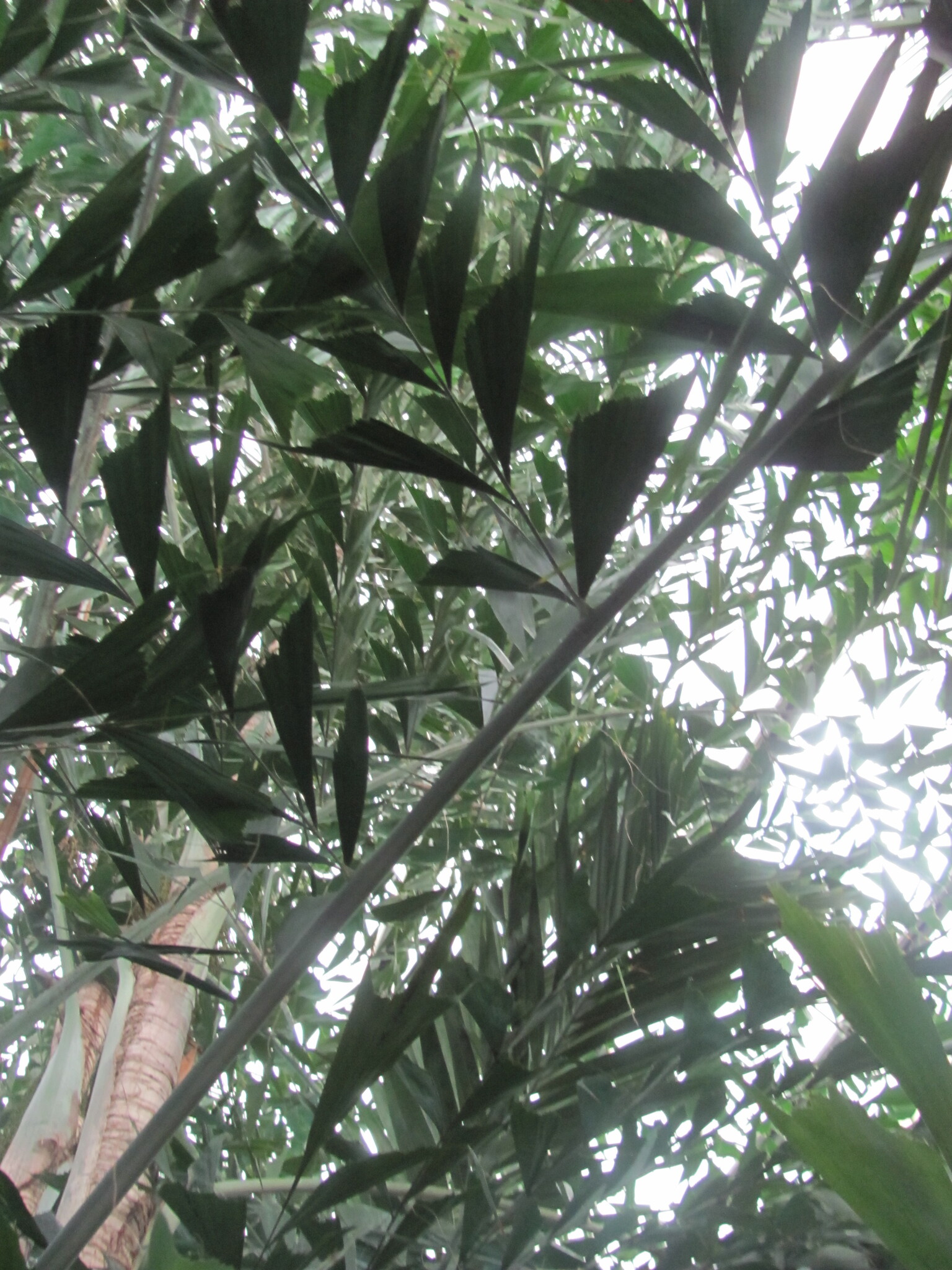
Caryota mitis, the Burmese fishtail palm, is an evergreen palm that forms clumps of stems rather than growing as a single trunk. Its leaves are made up of triangular, ragged-edged leaflets that give the whole plant a torn, fishtail look, and in summer it carries panicles of creamy-white flowers.
Source: RHS
From south China to Malesia
This palm is native across a wide stretch of Asia, from south-central and southeast China down through Indo-China and into Malesia, including places such as Borneo, Sumatra, Java, the Philippines and the Malay Peninsula. It grows there as a tree of the wet tropical biome, and beyond its native range it has also become established in parts of India, the Caribbean and the Comoros. People in its native region have long put it to use, drawing on it as a source of food, fuel and medicine, and even as a poison.
Source: Kew
Warmth, light, and moisture
Under glass this palm wants a peat-free, loam-based compost, bright but filtered light, and air with plenty of humidity around it. Water it moderately while it is actively growing and feed monthly with a balanced liquid fertiliser, then let it rest with only sparing water through winter. It prefers a moist but well-drained soil and can take full sun, though it needs a sheltered spot and protection from cold, tolerating only the mildest of UK winter conditions outdoors in summer at best.
Source: RHS
Grown from seed
Propagation is by seed, sown in spring at a temperature of around 27°C.
Source: RHS
Clumped stems, torn leaflets
The habit is clump-forming, with clustered stems rather than a solitary trunk, each capped by leaves that can reach up to four metres long. Those leaves are twice-divided and made up of triangular leaflets with a ragged, fishtail-like edge, and in summer the plant sends up panicles of small, creamy-white flowers.
Source: RHS
Scale and spider mite
This palm may be troubled by scale insects and by glasshouse red spider mite, so it is worth watching leaves and stems for these early on. Otherwise it is generally free of disease.
Source: RHS
Little pruning, slow maturity
No pruning is required for this palm. It is a slow, long-lived grower, taking anywhere from twenty to fifty years to reach its full size, so its shape changes gradually rather than something to be managed year to year.
Source: RHS
Care recipe
The species record — the baseline every cultivar inherits unless it says otherwise.
Care notes are early — not yet verified
- Light
- ai:claude-opus-4-8
- Water
- ai:claude-opus-4-8 (range 7-12d)
- Humidity
- ai:claude-opus-4-8
- Soil
- ai:claude-fable-5
- Care
- ai:claude-fable-5
Bright, indirect
≈ every 12 days
High
16–29 °C
Rich, well-draining mix kept lightly moist
From seed or division of its clustering suckers
Balanced feed monthly in the growing season
Moderate
Does not flower indoors
Toxic to cats & dogs & humans
Caryota species bear needle-like calcium oxalate raphides in the fruit and tissues, which are irritating to skin and mucous membranes. This is where toxicity lives: every cultivar of this species inherits it and none can override it.
Reference images
Every image credited. Licenses link to their deeds.
Sources: ai:claude-opus-4-8 · ai:claude-opus-4-8 (range 7-12d) · ai:claude-fable-5 · ai:claude-opus-4-8 (family inference)
Kept true by its growers
Every fact here carries its source. Grow Burmese Fishtail Palm yourself? What you’ve observed — how it drinks, how it holds its color, a name that’s off — and a clear photo of your plant are exactly what keep this page honest. Contributions are reviewed before anything changes.
Sign in to add what you know →