Species · genus Caryota · Arecaceae
Fishtail Palm
Caryota maxima Blume
Also known as: Giant Fishtail Palm · Mountain Fishtail Palm
Cultivars of C. maxima
The named forms growers keep — each with its own page, each honest about how much we know.
No named cultivars catalogued under C. maxima yet. When growers document a stable, named form, it earns its own page here.
Guide
The species-level account. Cultivar pages build on this and say where they differ.
A Towering Fishtail Palm
Caryota maxima is a large evergreen palm in the family Arecaceae, now treated by Kew as part of Caryota urens rather than a distinct species. The RHS still lists it under its own name, describing it as one of the caryota palms grown for its bold foliage.
Source: RHS
A Name With History
This palm was first described by Blume in 1838, and its synonym Caryota aequatoralis reflects a long history of botanical reclassification. Kew's Plants of the World Online now folds this name into Caryota urens, while several regional floras, including those of Vietnam, Thailand, China, and India, have continued to recognise it as Caryota maxima in its own right. The wider genus Caryota is native across tropical and subtropical Asia, stretching from the Andaman Islands and India through Southeast Asia to New Guinea and as far as Vanuatu, and it has also become introduced in places such as Cuba, Nepal, and Puerto Rico.
Source: Kew
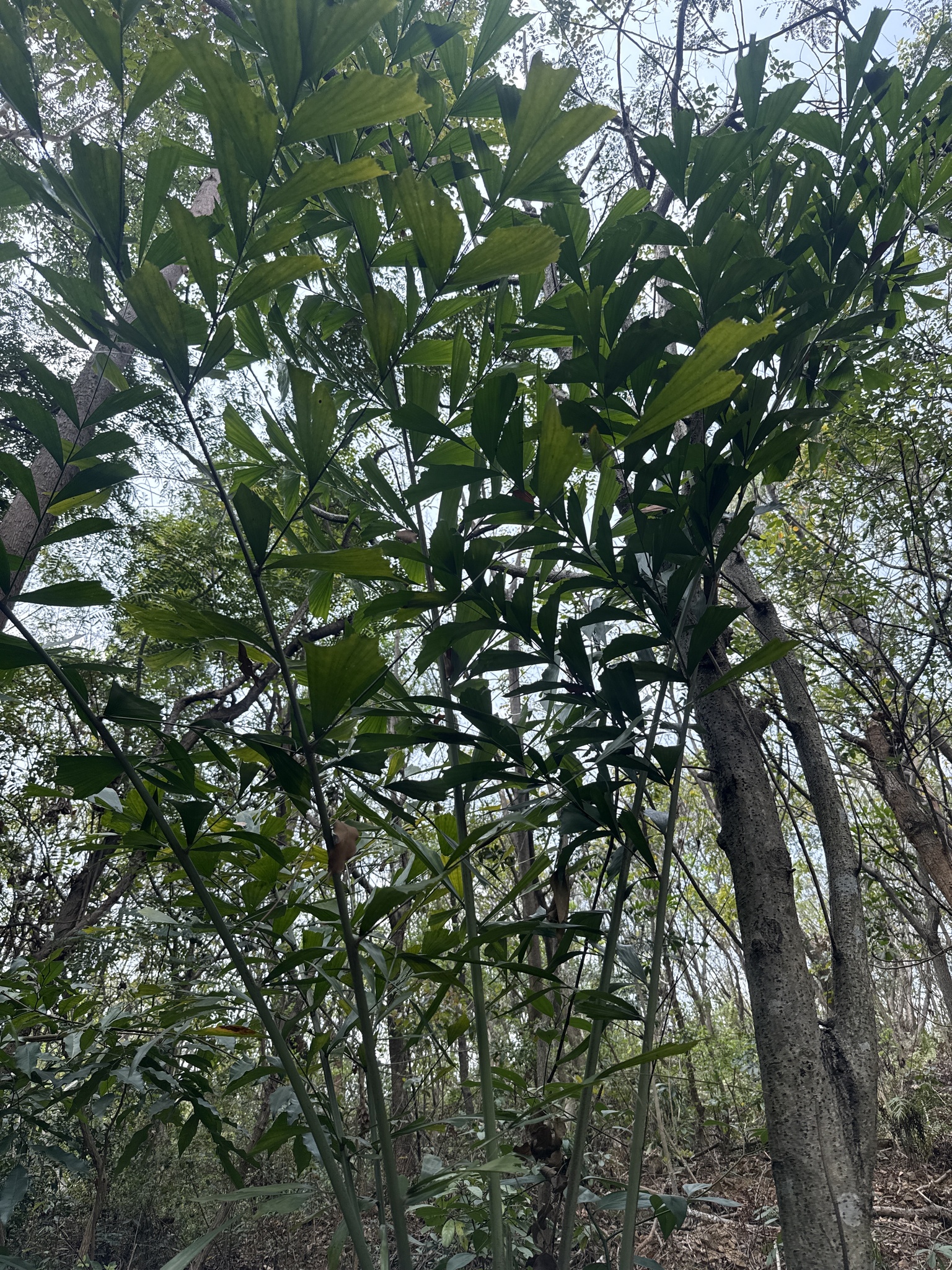
Fishtail Foliage and Flower Spikes
Like others in its genus, this is an evergreen palm with a solitary or clustering stem, topped by large, twice-divided leaves that give the fishtail palms their common name. In summer it produces small cream flowers gathered into large, hanging panicles.
Source: RHS
Care recipe
The species record — the baseline every cultivar inherits unless it says otherwise.
Care notes are early — not yet verified
- Light
- ai:claude-opus-4-8
- Water
- ai:claude-opus-4-8 (range 7-12d)
- Humidity
- ai:claude-opus-4-8
- Soil
- ai:claude-fable-5
- Care
- ai:claude-fable-5
Bright, indirect
≈ every 12 days
High
16–29 °C
Rich, moisture-retentive but well-draining mix
Grown from fresh seed; does not sucker
Balanced feed monthly in the growing season
Moderate
Does not flower indoors; a once-in-a-lifetime bloomer outdoors
Not yet documented
This is where toxicity lives — every cultivar of this species inherits it and none can override it.
Reference images
Every image credited. Licenses link to their deeds.
Sources: ai:claude-opus-4-8 · ai:claude-opus-4-8 (range 7-12d) · ai:claude-fable-5
Kept true by its growers
Every fact here carries its source. Grow Fishtail Palm yourself? What you’ve observed — how it drinks, how it holds its color, a name that’s off — and a clear photo of your plant are exactly what keep this page honest. Contributions are reviewed before anything changes.
Sign in to add what you know →