Species · genus Calathea · Marantaceae
Cuban Cigar Plant
Calathea lutea (Aubl.) E.Mey. ex Schult.
Also known as: Pampano
Cultivars of C. lutea
The named forms growers keep — each with its own page, each honest about how much we know.
No named cultivars catalogued under C. lutea yet. When growers document a stable, named form, it earns its own page here.
Guide
The species-level account. Cultivar pages build on this and say where they differ.
A Tropical Foliage Favorite
Calathea is a common name covering some sixty species of patterned-leaf tropicals in the family Marantaceae, many of which have since been reclassified into the genus Goeppertia. Grown chiefly for their bold leaf markings rather than flowers, they are popular houseplants that tolerate lower light than many other foliage plants.
Source: Epic Gardening
A Tropical American Native
One well-known member of the group, Calathea lutea, is native across a wide swath from southern Mexico through Central America, the Caribbean, and into South America, where it grows in wet tropical forest. It has a long history of practical use, including as a wrapping material for tamales in Guatemala, and has been recorded for food, medicine, and other social and environmental uses in its native range.
Source: Kew
Warmth, Moisture, Gentle Light
Calatheas want bright, indirect light for at least eight hours a day, with most varieties wilting or browning at the edges under direct sun, though growth slows in low light. They prefer temperatures of 75°F or warmer, entering dormancy below 65°F and struggling below 60°F, and are sensitive to cold drafts and sudden shifts. Water with room-temperature filtered or distilled water when the top inch or two of soil dries out, keeping the mix evenly moist but never soggy, in a rich, loamy, well-draining medium, and feed lightly with a diluted kelp fertilizer once a month during spring through fall.
Source: Epic Gardening
Division, Not Cuttings
Calatheas do not propagate reliably from cuttings, and most will not flower or set seed indoors, so division at repotting time is the method to rely on. After dampening fresh potting mix, gently unpot the plant, brush away excess soil, and look at the joints where roots meet stems to separate small stem-and-root sections with a few leaves attached. Repot each division at its original depth and top off with soil.
Source: Epic Gardening
Patterned Leaves, Many Forms
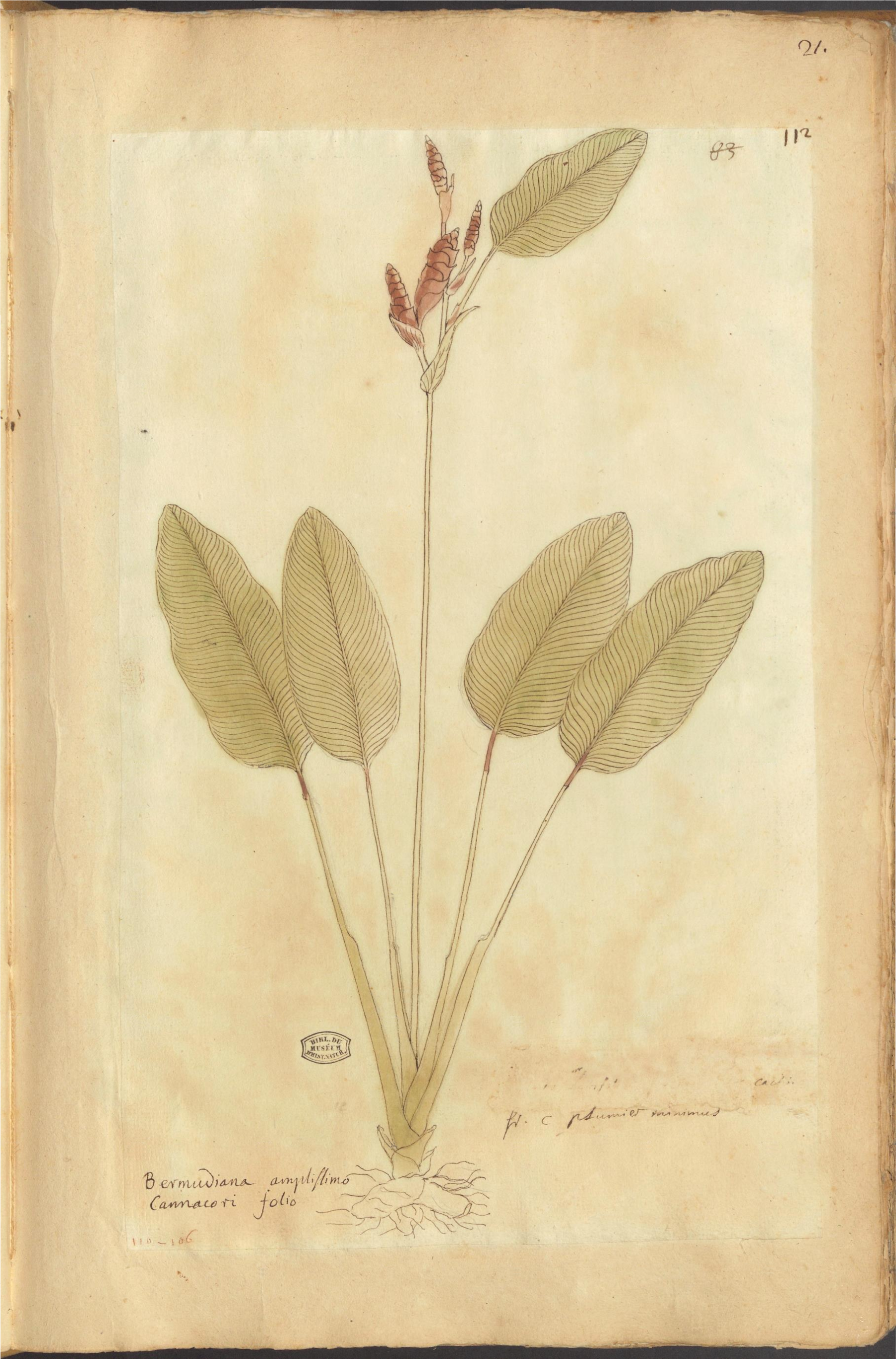
Calathea types vary enormously in leaf shape and pattern, from the rounded leaves of Calathea orbifolia to the peacock-tail markings of the peacock plant and the maroon undersides of the rattlesnake plant. Calathea lutea itself stands apart with huge, paddle-shaped leaves that can reach a meter long, a waxy protective coating on their undersides, and cigar-like reddish-brown flower bracts. Leaves on most calatheas fold and reopen daily, a rhythm tied to light and humidity rather than a sign of distress on its own.
Source: Epic Gardening
Watch for Mites and Mealybugs
Spider mites are the most common visitor, recognizable by fine webbing on the leaves, and are treatable with neem oil or an insecticidal soap. Aphids show up similarly and respond to the same treatments. Mealybugs and scale appear as cottony white masses or greasy brown bumps and can be dabbed off with alcohol before spraying, while fungus gnat larvae feeding on roots are best addressed with beneficial nematodes.
Source: Epic Gardening
Curling, Yellowing, and Rot
Leaves that curl or roll are usually a sign of insufficient humidity, and raising it toward 50% or higher with a pebble tray or humidifier, plus an occasional light mist of distilled water, tends to resolve it. Yellowing and wilting often point to overwatering or an imbalance in fertilizing, so tracking a watering and feeding schedule helps pin down the cause. Prolonged wet conditions can lead to root rot, in which case watering should stop and any rotted tissue should be removed to see if the plant recovers.
Source: Epic Gardening
Light Pruning as Needed
Pruning calathea is mostly a matter of tidiness rather than necessity. Older leaves that yellow or brown at the edges can be trimmed with clean, sterile shears close to the soil line, leaving central leaves alone, and a browned tip can simply be snipped off rather than removing the whole leaf. Spent flower stalks are best cut away once faded so the plant redirects energy into new growth.
Source: Epic Gardening
Care recipe
The species record — the baseline every cultivar inherits unless it says otherwise.
Care notes are early — not yet verified
- Light
- ai:claude-opus-4-8
- Water
- ai:claude-opus-4-8 (range 5-10d)
- Humidity
- ai:claude-opus-4-8
- Soil
- ai:claude-fable-5
- Care
- ai:claude-fable-5
Bright, indirect
≈ every 10 days
High
16–27 °C
Rich, moisture-retentive mix with coir and perlite
Divide the rhizome clump
Balanced feed monthly through spring and summer
Fast
Can throw yellow bracts, but grown mainly for bold foliage
Non-toxic to cats & dogs
Calathea (Marantaceae) — ASPCA non-toxic (Calathea insignis); the prayer-plant family carries no toxic principle. This is where toxicity lives: every cultivar of this species inherits it and none can override it.
Reference images
Every image credited. Licenses link to their deeds.
Sources: ai:claude-opus-4-8 · ai:claude-opus-4-8 (range 5-10d) · ai:claude-fable-5 · ASPCA
Kept true by its growers
Every fact here carries its source. Grow Cuban Cigar Plant yourself? What you’ve observed — how it drinks, how it holds its color, a name that’s off — and a clear photo of your plant are exactly what keep this page honest. Contributions are reviewed before anything changes.
Sign in to add what you know →