Species · genus Bisnaga · Cactaceae
Barrel Cactus
Ferocactus histrix (DC.) G.E.Linds.
Also known as: Candy Barrel Cactus · Electrode Cactus · Biznaga · Biznaga de Dulce · Mexican Fire Barrel
Cultivars of F. histrix
The named forms growers keep — each with its own page, each honest about how much we know.
No named cultivars catalogued under F. histrix yet. When growers document a stable, named form, it earns its own page here.
Guide
The species-level account. Cultivar pages build on this and say where they differ.
A Ribbed Barrel Cactus
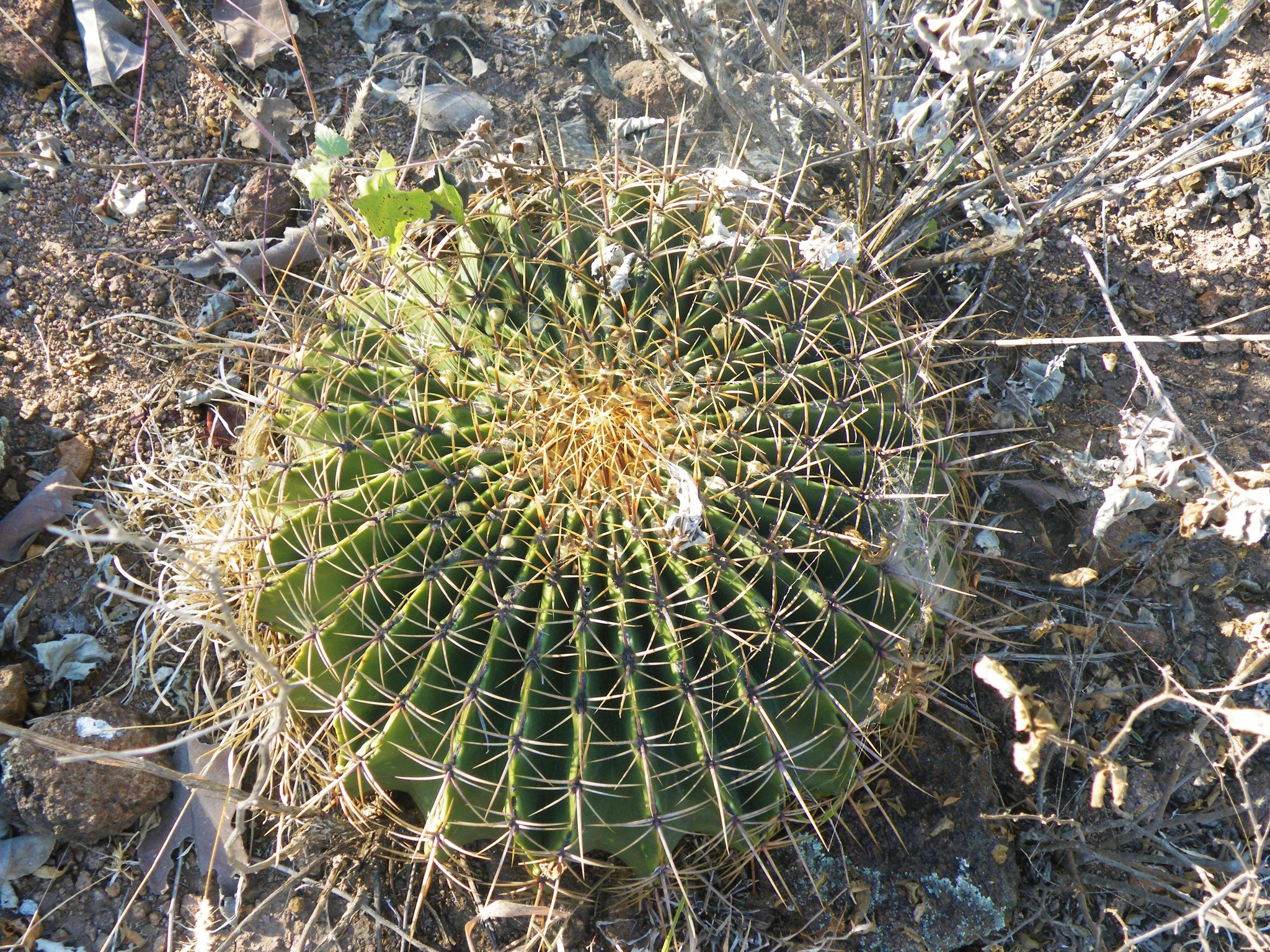
Ferocactus histrix belongs to the barrel cactus group within Cactaceae, spherical to columnar cacti with strongly ribbed bodies and spiny areoles. It is one of the species gardeners and collectors know simply as a barrel cactus, grown for its architectural spines and season of funnel-shaped summer flowers.
Source: RHS
Native to Mexico
This species comes from Mexico, where it is recorded across the central, northeastern, southwestern and Gulf regions of the country. It grows as a succulent subshrub, at home in desert and dry shrubland settings.
Source: Kew
Sun, Grit, Restraint
Grow this barrel cactus in peat-free cactus compost with extra sharp sand or grit for drainage, and give it bright light and good ventilation. It can spend summer outdoors on a sheltered, sunny patio, but it dislikes overly wet compost and a humid atmosphere, particularly while resting over winter.
Source: RHS
Rounded, Then Columnar
Young plants of the barrel cactus type are rounded, gradually becoming more column-shaped as they age. The body is deeply ribbed, carrying prominent, often curving spines in buff, red, orange or brown, and rounded flowers in red, yellow or orange appear near the crown in summer. Plants usually stand as single specimens, though they can sometimes form clumps.
Source: RHS
Ants at the Spines
In the wild, ferocactus produce nectar at the base of their spines, which draws ants that in turn help fend off insect attack on the plant.
Source: RHS
Care recipe
The species record — the baseline every cultivar inherits unless it says otherwise.
Care notes are early — not yet verified
- Light
- ai:claude-opus-4-8
- Water
- ai:claude-opus-4-8 (range 21-45d)
- Humidity
- ai:claude-opus-4-8
- Soil
- ai:claude-fable-5
- Care
- ai:claude-fable-5
Direct sun
≈ every 45 days
Low — average room
8–32 °C
Gritty, fast-draining cactus mix with extra pumice
From seed; occasional offsets
Dilute cactus feed once or twice in spring and summer
Slow
Ring of small yellow flowers on mature barrels in bright light
Not yet documented
This is where toxicity lives — every cultivar of this species inherits it and none can override it.
Reference images
Every image credited. Licenses link to their deeds.
Sources: ai:claude-opus-4-8 · ai:claude-opus-4-8 (range 21-45d) · ai:claude-fable-5
Kept true by its growers
Every fact here carries its source. Grow Barrel Cactus yourself? What you’ve observed — how it drinks, how it holds its color, a name that’s off — and a clear photo of your plant are exactly what keep this page honest. Contributions are reviewed before anything changes.
Sign in to add what you know →