Species · genus Begonia · Begoniaceae
Iron Cross Begonia
Begonia masoniana Irmsch.
Cultivars of B. masoniana
The named forms growers keep — each with its own page, each honest about how much we know.
No named cultivars catalogued under B. masoniana yet. When growers document a stable, named form, it earns its own page here.
Guide
The species-level account. Cultivar pages build on this and say where they differ.
An Iron Cross Begonia
Begonia masoniana, better known as the Iron Cross begonia, is a rhizomatous evergreen perennial grown chiefly for its foliage rather than its modest flowers. It is one of the begonias offered as a houseplant, prized for the dark marking that gives it its common name.
Source: RHS
Native Range
This species comes from China and Vietnam. It belongs to the rhizomatous group of begonias, alongside the hybrids of Begonia rex, which grow from a creeping rootstock rather than a fibrous or tuberous one.
Source: RHS
Shade, Humidity, Restraint
Give this begonia partial shade and well-drained soil, whether chalk, loam or sand. Through summer keep it shaded, watered freely, and in a humid atmosphere, but take care not to wet the leaves or crown. In winter, ease off watering and let the compost surface dry between waterings, holding a minimum temperature of 13°C, and feed from May to September with a high nitrogen fertiliser at the rate the packaging suggests.
Source: RHS
Leaf, Seed, or Rhizome
Iron Cross begonia can be raised from seed, from leaf cuttings, or by division of the rhizome itself. For leaf cuttings, a newly matured leaf is cut through its major veins at intervals, pinned face-up onto cutting compost, and kept warm and humid until plantlets form at the cuts. Rhizome divisions are best made in spring, with each piece carrying at least one growing point.
Source: RHS
That Cross-Shaped Marking
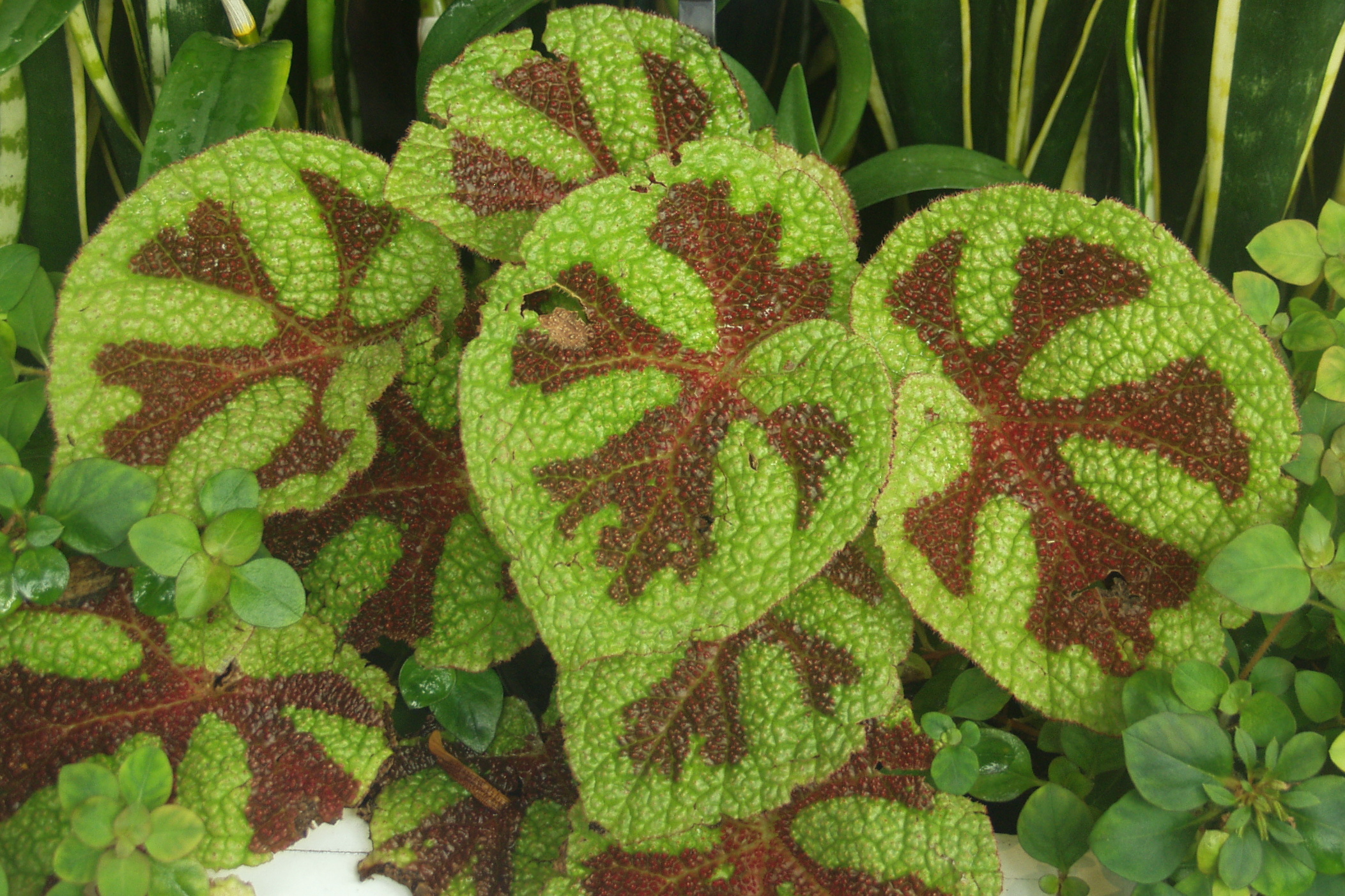
The plant forms a clump to about 45cm, with large, rough-textured, ovate green leaves. What sets it apart is the dark brown, cross-like zone marked across the centre of each leaf, accompanied in season by small, unremarkable greenish-white flowers held in erect clusters.
Source: RHS
Watch For These Visitors
This begonia may be troubled by caterpillars, mealybugs, mites, glasshouse thrips, vine weevil, and aphids. It can also fall to grey mould, powdery mildew, stem rot, and rhizome rot, so good ventilation and careful watering matter as much as pest vigilance.
Source: RHS
Little Pruning Needed
No pruning is required for this species. It is slow to reach maturity, generally taking five to ten years, and stays within a modest spread and height of 0.1 to 0.5 metres throughout.
Source: RHS
Care recipe
The species record — the baseline every cultivar inherits unless it says otherwise.
Care notes are early — not yet verified
- Light
- ai:claude-opus-4-8
- Water
- ai:claude-opus-4-8 (range 7-12d)
- Humidity
- ai:claude-opus-4-8
- Soil
- ai:claude-fable-5
- Care
- ai:claude-fable-5
Bright, indirect
≈ every 12 days
High
16–26 °C
Loose, well-draining mix rich in coir or peat with perlite
Leaf or rhizome cuttings in humid, moist medium
Dilute balanced feed monthly through spring and summer
Slow
Grown for its puckered leaves; flowers are small and secondary
Toxic to cats & dogs
Soluble calcium oxalates — mouth irritation, vomiting; tubers most toxic. This is where toxicity lives: every cultivar of this species inherits it and none can override it.
Reference images
Every image credited. Licenses link to their deeds.
PrimarySources: ai:claude-opus-4-8 · ai:claude-opus-4-8 (range 7-12d) · ai:claude-fable-5 · ASPCA
Kept true by its growers
Every fact here carries its source. Grow Iron Cross Begonia yourself? What you’ve observed — how it drinks, how it holds its color, a name that’s off — and a clear photo of your plant are exactly what keep this page honest. Contributions are reviewed before anything changes.
Sign in to add what you know →