Species · genus Begonia · Begoniaceae
Star Begonia
Begonia heracleifolia Cham. & Schltdl.
Also known as: Star-leaf Begonia · Starleaf Begonia
Cultivars of B. heracleifolia
The named forms growers keep — each with its own page, each honest about how much we know.
No named cultivars catalogued under B. heracleifolia yet. When growers document a stable, named form, it earns its own page here.
Guide
The species-level account. Cultivar pages build on this and say where they differ.
The Star Begonia
Begonia heracleifolia, known as the star begonia or star leaf begonia, is a rhizomatous begonia grown for its patterned foliage. It is at home in a conservatory, greenhouse, or as a houseplant, forming a low, mat-forming clump rather than a tall specimen.
Source: RHS
Mexican to Honduran Roots
This species is native to a stretch running from Mexico down through Belize, Guatemala, El Salvador, and into Honduras, and it has also found its way into parts of the Caribbean. In the wild it behaves as an epiphyte, settling into the seasonally dry tropical forests of that region. People there have put it to use as a medicine and a food as well as an ornamental.
Source: Kew
Light, Soil, and Rest
Give this begonia partial shade at a north, west, or east aspect, in a sheltered spot, and it settles well. It prefers a loamy soil kept moist but well-drained, with a neutral pH. After flowering it may go dormant, and at that point watering should be cut back and the plant kept on the dry side until new growth returns.
Source: RHS
By Seed or Division
The star begonia can be raised from seed, or increased by division carried out in spring.
Source: RHS
Star-Patterned Leaves
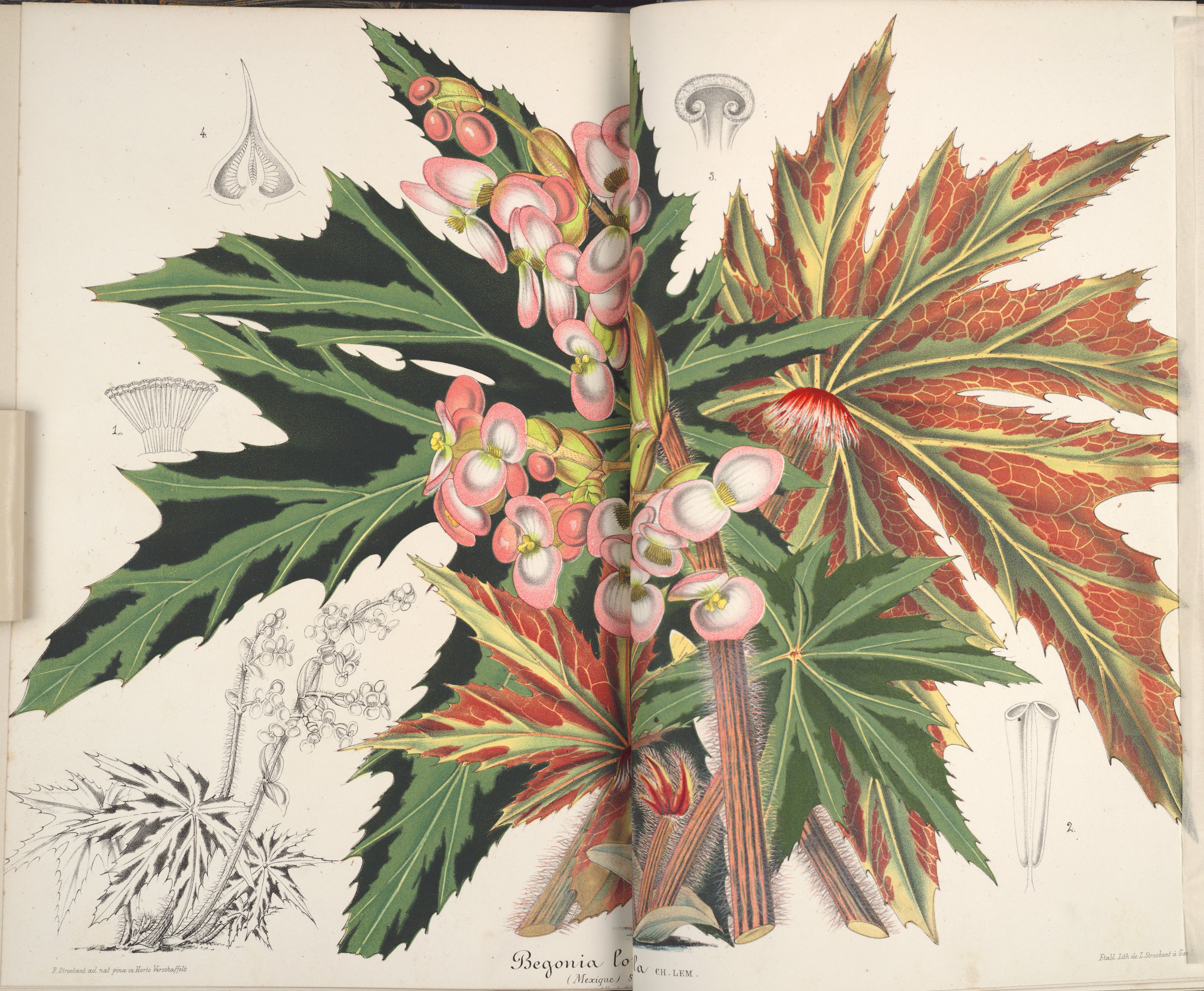
The palmate leaves give the plant its common name, marked with white principal veins, a green inner zone, and a darker outline that reads like a star from above. Turn a leaf over and the underside is burgundy, while the leaf stems themselves carry red spots. When it flowers, pale pink or white blooms rise in upright clusters above the foliage.
Source: RHS
Watch For These Visitors
Caterpillars, mealybugs, mites, glasshouse thrips, vine weevil, and aphids may all take an interest in this begonia, so it is worth checking leaves and stems regularly for early signs of them.
Source: RHS
Rot and Mildew Risks
Grey mould and powdery mildew can trouble this species, along with stem rot and rhizome rot, most of which point back to conditions that are too wet or too still. Keeping the soil moist but genuinely well-drained, and easing off water during its post-flowering dormancy, helps keep these at bay.
Source: RHS
Simple Tidying
Maintenance mostly comes down to removing dead or damaged leaves and spent flower spikes as they appear, keeping the clump looking fresh.
Source: RHS
Care recipe
The species record — the baseline every cultivar inherits unless it says otherwise.
Care notes are early — not yet verified
- Light
- ai:claude-opus-4-8
- Water
- ai:claude-opus-4-8 (range 7-12d)
- Humidity
- ai:claude-opus-4-8
- Soil
- ai:claude-fable-5
- Care
- ai:claude-fable-5
Bright, indirect
≈ every 12 days
High
15–27 °C
Light, airy rhizomatous-begonia mix
Leaf or rhizome cuttings
Dilute balanced feed monthly in growth
Moderate
Clusters of pale pink flowers in winter to spring
Toxic to cats & dogs
Soluble calcium oxalates — mouth irritation, vomiting; tubers most toxic. This is where toxicity lives: every cultivar of this species inherits it and none can override it.
Reference images
Every image credited. Licenses link to their deeds.
Sources: ai:claude-opus-4-8 · ai:claude-opus-4-8 (range 7-12d) · ai:claude-fable-5 · ASPCA
Kept true by its growers
Every fact here carries its source. Grow Star Begonia yourself? What you’ve observed — how it drinks, how it holds its color, a name that’s off — and a clear photo of your plant are exactly what keep this page honest. Contributions are reviewed before anything changes.
Sign in to add what you know →