Species · genus Begonia · Begoniaceae
Hardy Begonia
Begonia grandis Dryand.
Cultivars of B. grandis
The named forms growers keep — each with its own page, each honest about how much we know.
No named cultivars catalogued under B. grandis yet. When growers document a stable, named form, it earns its own page here.
Guide
The species-level account. Cultivar pages build on this and say where they differ.
A Tuberous, Shade-Loving Begonia
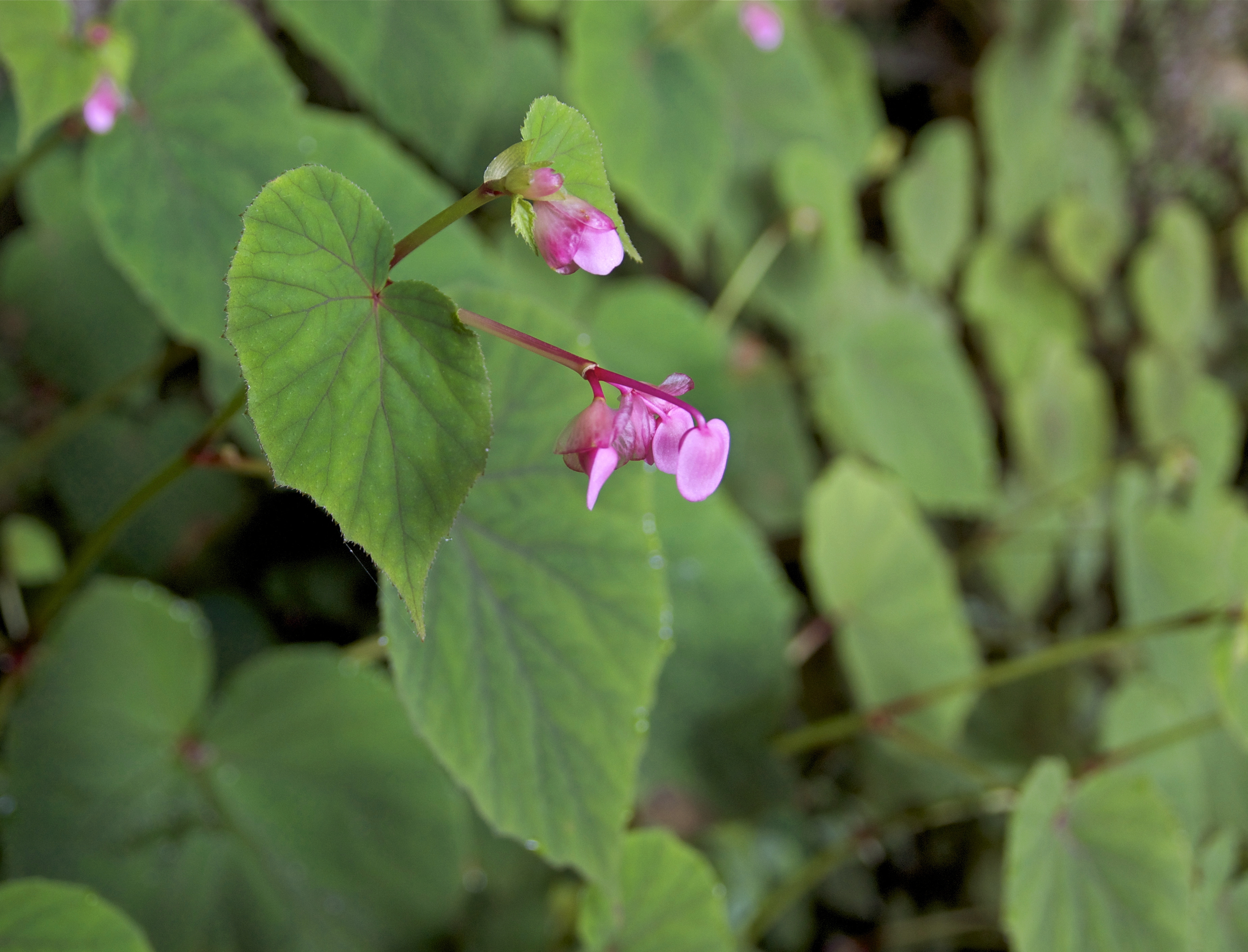
Begonia grandis subsp. evansiana, sometimes called hardy begonia or beefsteak plant, is a tuberous herbaceous perennial reaching about 50cm. It carries asymmetric, notched olive-green leaves and nodding clusters of slightly fragrant pale pink or white flowers on reddish stems through summer.
Source: RHS
Native To East Asia
This subspecies belongs to the genus Begonia, native to East Asia. It has been recognised with the RHS Award of Garden Merit, and is also known under the synonyms Begonia discolor, Begonia evansiana and Begonia evansii.
Source: RHS
Shade, Moisture, Shelter
This begonia does best in fertile, humus-rich, well-drained neutral to acid soil, set in dappled or afternoon shade with an east, west or north aspect and a sheltered position. It will not tolerate waterlogging, and in colder regions it may need winter protection and can be slow to get going in spring. When grown as a garden hardy begonia, plant tubers 5-7.5cm deep in reasonably fertile, well-drained soil; in mild areas they can stay in the ground year-round against a warm south-facing wall with a protective mulch, otherwise start tubers indoors at 10°C and dry them off for storage once the leaves yellow in autumn.
Source: RHS
Cuttings, Seed, Or Bulblets
Propagate by basal softwood cuttings taken in spring, or by seed. This begonia will also often self-seed, dropping tiny bulblets from its stems in late summer.
Source: RHS
Notched Leaves, Nodding Flowers
The leaves are asymmetric and notched, growing to about 10cm long, olive-green above and pale green or sometimes reddish beneath. Its flowers are slightly fragrant, pale pink or white, 2-3cm across, held in nodding clusters on long reddish stems. Unlike many begonias grown as tender bedding, this one is a hardy tuberous perennial with a bushy, deciduous habit.
Source: RHS
A Watchlist Of Visitors
Keep an eye out for caterpillars, mealy bugs, mites, glasshouse thrips, vine weevil and aphids, any of which may trouble this begonia.
Source: RHS
Rot And Mould Risks
This begonia may be susceptible to grey mould (botrytis), powdery mildews and stem rot. More broadly, begonia tubers can rot in over-wet conditions, so well-drained compost and pots raised on feet help guard against waterlogging, and stored tubers should be checked regularly for rot as well.
Source: RHS
No Pruning Needed
No pruning is required for this plant. It takes roughly two to five years to reach maturity, and where winters are harsh the tubers benefit from being lifted, dried, and stored once the foliage yellows in autumn.
Source: RHS
Care recipe
The species record — the baseline every cultivar inherits unless it says otherwise.
Care notes are early — not yet verified
- Light
- ai:claude-opus-4-8
- Water
- ai:claude-opus-4-8 (range 5-10d)
- Humidity
- ai:claude-opus-4-8
- Soil
- ai:claude-fable-5
- Care
- ai:claude-fable-5
Bright, indirect
≈ every 10 days
Medium
5–27 °C
Rich, well-draining loamy mix
Bulbils, tubers, or division
Balanced feed monthly during the growing season
Moderate
Pink flowers in late summer and autumn
Toxic to cats & dogs
Soluble calcium oxalates — mouth irritation, vomiting; tubers most toxic. This is where toxicity lives: every cultivar of this species inherits it and none can override it.
Reference images
Every image credited. Licenses link to their deeds.
PrimarySources: ai:claude-opus-4-8 · ai:claude-opus-4-8 (range 5-10d) · ai:claude-fable-5 · ASPCA
Kept true by its growers
Every fact here carries its source. Grow Hardy Begonia yourself? What you’ve observed — how it drinks, how it holds its color, a name that’s off — and a clear photo of your plant are exactly what keep this page honest. Contributions are reviewed before anything changes.
Sign in to add what you know →