Species · genus Beaucarnea · Asparagaceae
Bottle-palm
Beaucarnea recurvata (K.Koch & Fintelm.) Lem.
Also known as: Elephant-foot-tree · Ponytail · Stripy Ponytail · Elephant's-foot · Ponytail Palm
Cultivars of B. recurvata
The named forms growers keep — each with its own page, each honest about how much we know.
No named cultivars catalogued under B. recurvata yet. When growers document a stable, named form, it earns its own page here.
Guide
The species-level account. Cultivar pages build on this and say where they differ.
A Fairytale Impostor
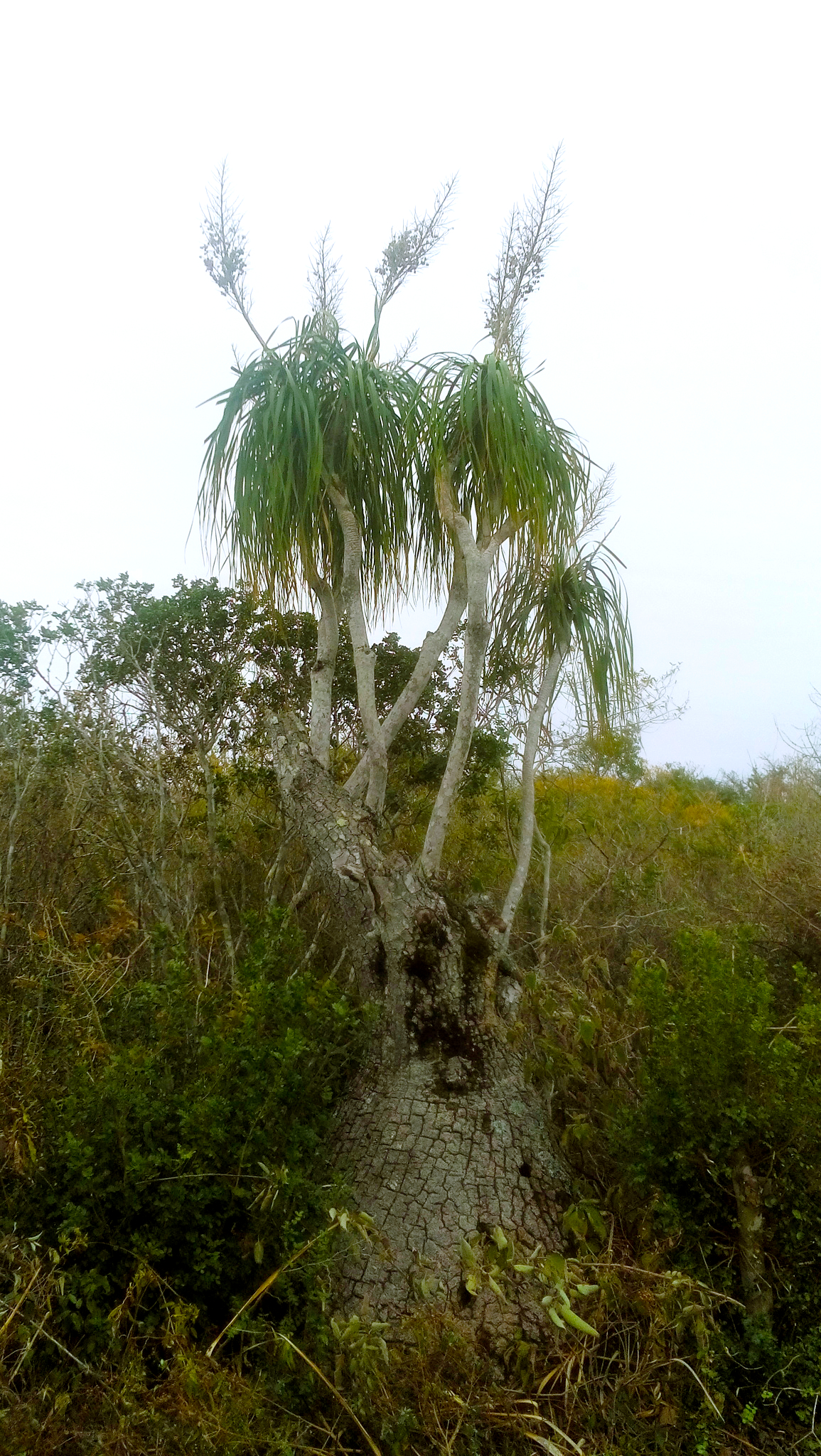
The ponytail palm looks every bit the desert palm, with a swollen trunk base and a fountain of strappy leaves cascading from the top, but it is not a true palm at all. It belongs to the asparagus family rather than Arecaceae, and it is also known as elephant's foot for the shape and color of its base. In the home it stays modest in size, generally reaching only a few feet tall.
Source: Epic Gardening
From Veracruz's Dry Slopes
Beaucarnea recurvata comes from the state of Veracruz on Mexico's eastern coast, where it grows on steep, rocky, nutrient-poor slopes at moderate elevation through a long dry season of seven to eight months. In the wild it is critically endangered, threatened by habitat loss and illegal harvesting, and its slow growth and unpredictable flowering leave natural populations struggling to recover. Some specimens in Mexico are estimated to be around 350 years old, and plants may take twenty years or more before they are mature enough to flower.
Source: Epic Gardening
Bright Light, Dry Feet
This is a desert dweller at heart, so give it bright light, ideally six to eight hours a day, while shielding it from harsh afternoon sun that can scorch the leaves. Let the soil dry out most of the way down the pot between waterings, roughly once every two weeks in spring and summer and stretching to about once every three weeks in winter, always checking the soil first. After watering, tip out any water that collects in the saucer within about ten minutes so the roots aren't left sitting wet. Feed during the growing season with a time-release houseplant fertilizer, following the package rate, and keep the plant in warm, stable conditions above roughly 60°F.
Source: Costa Farms
Pups and Patience
Ponytail palms occasionally send up offsets, or pups, at the base of the stem, though this is uncommon. Once a pup reaches about four inches, it can be cut away with a clean, sharp tool, left to callous over for a few days, then dipped in water and rooting hormone before going into fresh, well-draining soil in bright light. Growing from seed is also possible but is a slower, less reliable route, with germination taking around two weeks and seedlings needing time to size up before potting on.
Source: Epic Gardening
Caudex and Cascade
The plant's defining trait is its caudex, a swollen, woody base that functions as part rootstock and part water reservoir, letting the plant endure long dry spells much like a succulent. From the top of this single stem, long, thin, recurving leaves spill outward, which is where both the ponytail name and the species epithet recurvata come from. Given a large enough container and enough years, the trunk and crown can grow substantially, though flowering essentially never happens indoors.
Source: Epic Gardening
Occasional Hangers-On
This species is not especially prone to trouble, but scale, mealybugs, and spider mites can turn up from time to time. Most infestations are manageable once spotted early.
Source: Epic Gardening
Reading the Leaves
Brown leaves usually point to too much humidity or water, while a mushy, rotting trunk is a clear sign of overwatering. Light yellow leaves can mean either insufficient sun or excess water, burnt or blackened patches suggest too much direct sunlight, and curling leaves often trace back to overfertilizing or underwatering. Stalled growth is typically a nutrient shortfall rather than anything more serious, and simple brown leaf tips can just be snipped off with clean scissors.
Source: Epic Gardening
Light-Touch Upkeep
This plant asks for very little beyond an occasional trim to remove damaged or dying foliage and any pups meant for propagation. Its root system stays relatively small, reflecting how much the bulbous base stores on its own, so repotting is only needed every couple of years or so. The cue to repot is roots crowding or emerging from the drainage holes, at which point a pot no more than two inches wider in diameter, filled with a well-draining desert-plant or succulent mix, is enough.
Source: Costa Farms
Care recipe
The species record — the baseline every cultivar inherits unless it says otherwise.
Care notes are early — not yet verified
- Light
- ai:claude-opus-4-8
- Water
- ai:claude-opus-4-8 (range 14-28d)
- Humidity
- ai:claude-opus-4-8
- Soil
- ai:claude-fable-5
- Care
- ai:claude-fable-5
Direct sun
≈ every 28 days
Low — average room
10–30 °C
Well-draining sandy succulent mix
Grown from seed or offsets from the base
Balanced liquid feed monthly in spring and summer
Slow
Rarely flowers indoors
Not yet documented
This is where toxicity lives — every cultivar of this species inherits it and none can override it.
Reference images
Every image credited. Licenses link to their deeds.
PrimarySources: ai:claude-opus-4-8 · ai:claude-opus-4-8 (range 14-28d) · ai:claude-fable-5
Kept true by its growers
Every fact here carries its source. Grow Bottle-palm yourself? What you’ve observed — how it drinks, how it holds its color, a name that’s off — and a clear photo of your plant are exactly what keep this page honest. Contributions are reviewed before anything changes.
Sign in to add what you know →