Species · genus Astrophytum · Cactaceae
Sand Dollar Cactus
Astrophytum asterias (Zucc.) Lem.
Also known as: Seaurchin Starcactus · Star Cactus · Sea-urchin Cactus · Silver-dollar Cactus · Star Peyote
Cultivars of A. asterias
The named forms growers keep — each with its own page, each honest about how much we know.
No named cultivars catalogued under A. asterias yet. When growers document a stable, named form, it earns its own page here.
Guide
The species-level account. Cultivar pages build on this and say where they differ.
A Spineless Star Cactus
Astrophytum asterias 'Superkabuto' is a spineless, star-shaped cactus grown for its dense white speckling and tufted areoles. It stays low and single-stemmed, forming a barrel rather than climbing or branching, and produces large summer flowers.
Source: RHS
Sun, Grit, Restraint
Give this cactus full sun, ideally a south- or west-facing spot under glass, in a peat-free, loam-based compost with extra grit for drainage. Water moderately while it is in growth and withhold water entirely once it goes dormant, feeding with a balanced liquid fertiliser two or three times over the growing season.
Source: RHS
Grown From Seed
This Astrophytum is propagated by seed.
Source: RHS
Spotted Barrel, Golden Bloom
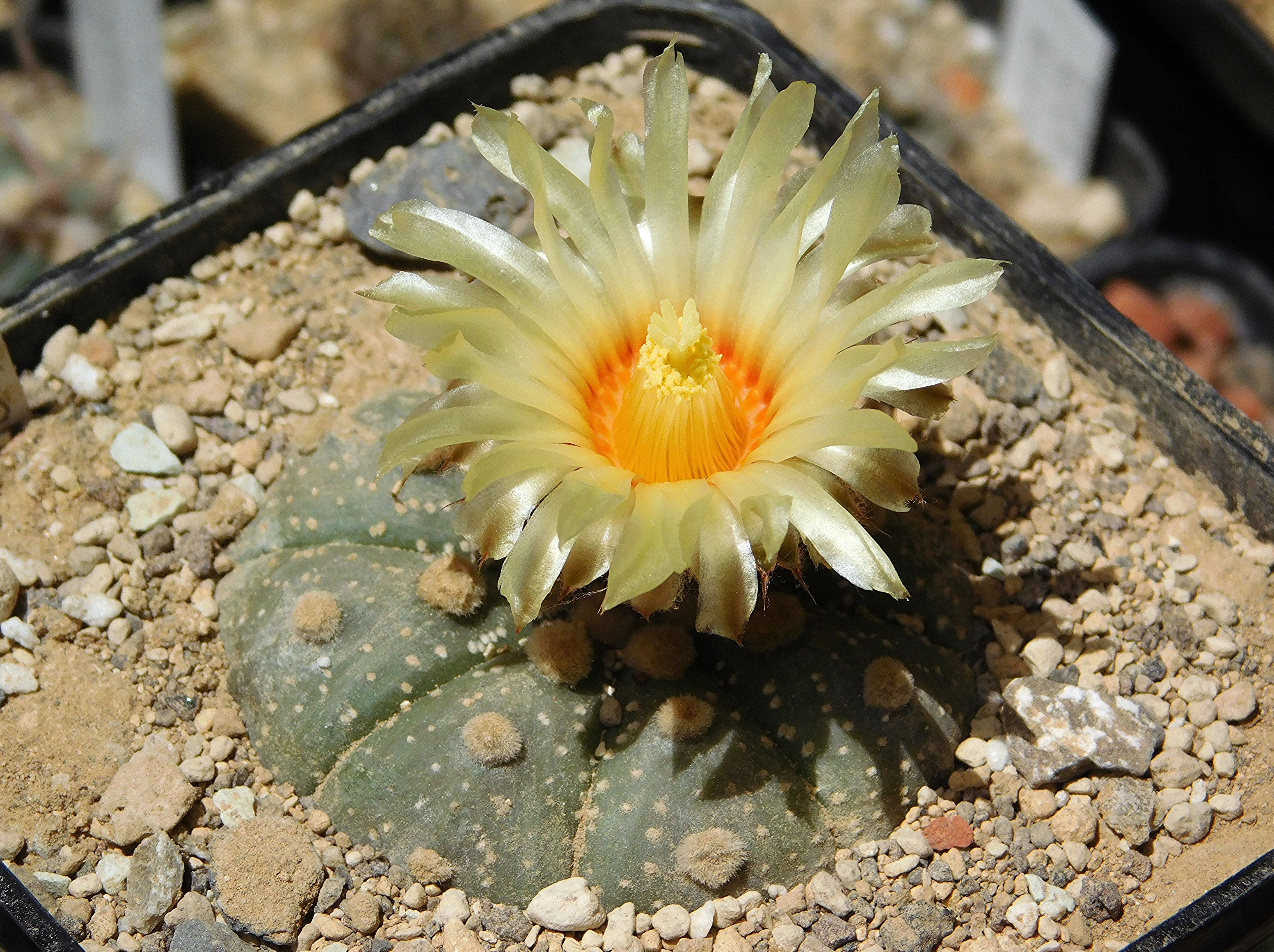
The stem is barrel-shaped, spineless, and slow to reach even its modest maximum height, covered all over in white spots and tufted hairs rather than the ribs' more usual armament. In summer it opens large yellow flowers with orange throats, a striking contrast against the pale, dotted body.
Source: RHS
Watch For Mealybugs
Mealybugs are the pest most likely to trouble this cactus, so it is worth checking areoles and crevices where they tend to settle in.
Source: RHS
Root Rot Risk
The main disease risk noted for this plant is root rot, which tracks back to the overwatering that a dormant, drought-tolerant cactus like this cannot tolerate.
Source: RHS
Little Intervention Needed
No pruning is required for this plant, which suits its low-maintenance reputation as a houseplant, patio pot, or conservatory subject.
Source: RHS
Care recipe
The species record — the baseline every cultivar inherits unless it says otherwise.
Care notes are early — not yet verified
- Light
- ai:claude-opus-4-8
- Water
- ai:claude-opus-4-8 (range 14-30d)
- Humidity
- ai:claude-opus-4-8
- Soil
- ai:claude-fable-5
- Care
- ai:claude-fable-5
Direct sun
≈ every 30 days
Low — average room
10–30 °C
Gritty, fast-draining cactus mix with extra pumice
Seed; grafting
Dilute low-nitrogen cactus feed occasionally in summer
Slow
Yellow flowers with red centers in spring and summer with bright light
Not yet documented
This is where toxicity lives — every cultivar of this species inherits it and none can override it.
Reference images
Every image credited. Licenses link to their deeds.
Sources: ai:claude-opus-4-8 · ai:claude-opus-4-8 (range 14-30d) · ai:claude-fable-5
Kept true by its growers
Every fact here carries its source. Grow Sand Dollar Cactus yourself? What you’ve observed — how it drinks, how it holds its color, a name that’s off — and a clear photo of your plant are exactly what keep this page honest. Contributions are reviewed before anything changes.
Sign in to add what you know →