Species · genus Asplenium · Aspleniaceae
Bird's-nest Fern
Asplenium nidus L.
Also known as: Hawai'I Birdnest Fern · Nest Fern
Cultivars of A. nidus
The named forms growers keep — each with its own page, each honest about how much we know.
No named cultivars catalogued under A. nidus yet. When growers document a stable, named form, it earns its own page here.
Guide
The species-level account. Cultivar pages build on this and say where they differ.
A Rosette of the Rainforest
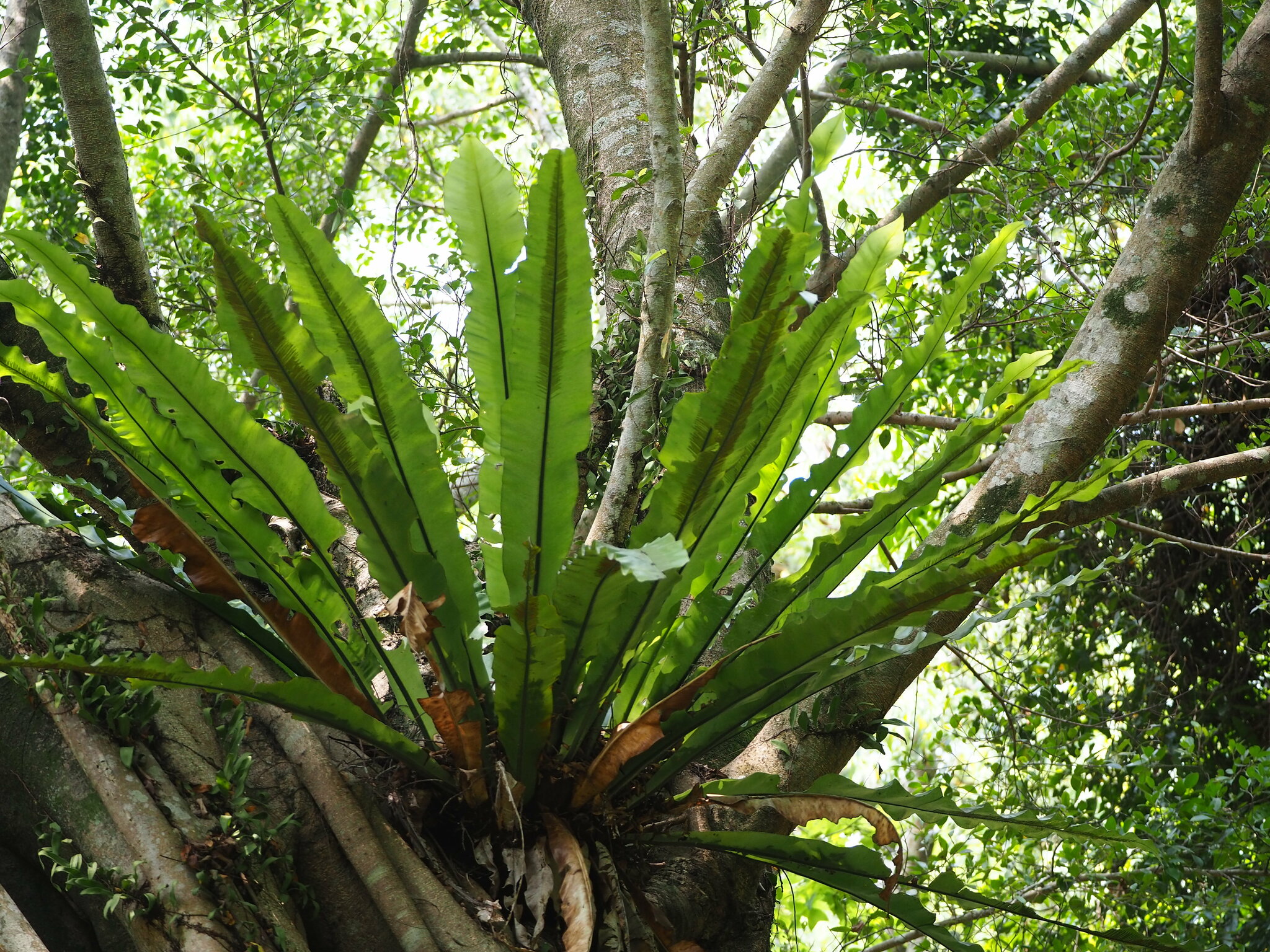
The bird's nest fern is a leathery-leaved epiphyte that forms a tight rosette of glossy fronds around a central nest-like crown. Several Asplenium species share the common name, and all are grown as houseplants for that same lush, upright form. It is a plant suited to those building a humid, tropical corner of the home.
Source: Epic Gardening
Old World Rainforest Roots
Asplenium nidus hails from the tropical Old World, ranging from Polynesia and Hawaii west through Southeast Asia, Australia, and Madagascar. In its native habitat it typically grows as an epiphyte on rainforest trees, its bowl-shaped rosette catching falling leaves and water. The genus name Asplenium comes from Greek for 'without a spleen,' a nod to old herbal beliefs, while nidus simply means nest, describing the form the fronds make.
Source: Missouri Botanical Garden
Light, Water, and Air
Grow it in bright indirect light indoors, away from direct sun, using a free-draining peat-free mix with added grit, kept moist but never soggy. It appreciates occasional misting for moderate humidity and a half-strength liquid feed monthly between May and August. Outside of that feeding window it needs little supplemental nutrition, and it tolerates brief lapses in watering better than most ferns.
Source: RHS
Division or Spores
This fern can be propagated by division of the rosette, or by sowing spores as soon as they are ripe at around 21°C. Spore propagation asks for patience and steady warmth rather than speed.
Source: RHS
Glossy Fronds, Nest-Like Crown
This is a slow-growing epiphytic fern whose upright, glossy bright green fronds can reach up to 1.5 metres long outdoors, flat with a wavy edge and pointed, curled tips. The fronds arch upward and outward from a central rosette, giving the whole plant its nest-like silhouette. Indoors the display is more modest, but the same architectural form holds.
Source: RHS
Scale and Slugs to Watch
Keep an eye out for slugs and scale insects, which are the most common pests on this fern, along with mealybugs and leaf nematodes. Chemical insecticides can damage the fronds, so insecticidal soaps are the safer choice when treatment is needed.
Source: Missouri Botanical Garden
Drafts and Bacterial Trouble
Cold drafts are a common cause of browning at the frond edges, so keep this fern away from chilly windows or doorways. Bacterial leaf diseases can also appear, alongside the pest pressures already noted.
Source: Missouri Botanical Garden
Light Pruning Only
Little routine maintenance is needed beyond removing dead or damaged fronds as they appear. The plant otherwise holds its own shape and size without regular cutting back.
Source: RHS
Care recipe
The species record — the baseline every cultivar inherits unless it says otherwise.
Care notes are early — not yet verified
- Light
- ai:claude-opus-4-8
- Water
- ai:claude-opus-4-8 (range 5-10d)
- Humidity
- ai:claude-opus-4-8
- Soil
- ai:claude-fable-5
- Care
- ai:claude-fable-5
Bright, indirect
≈ every 10 days
High
15–27 °C
Loose, peaty, moisture-retentive mix with good drainage
Spores; division of the crown
Weak balanced feed monthly in spring and summer
Moderate
Never flowers — a fern, reproduces by spores
Not yet documented
This is where toxicity lives — every cultivar of this species inherits it and none can override it.
Reference images
Every image credited. Licenses link to their deeds.
PrimarySources: ai:claude-opus-4-8 · ai:claude-opus-4-8 (range 5-10d) · ai:claude-fable-5
Kept true by its growers
Every fact here carries its source. Grow Bird's-nest Fern yourself? What you’ve observed — how it drinks, how it holds its color, a name that’s off — and a clear photo of your plant are exactly what keep this page honest. Contributions are reviewed before anything changes.
Sign in to add what you know →