Species · genus Asplenium · Aspleniaceae
Bird's Nest Fern
Asplenium australasicum (J.Sm.) Hook.
Also known as: Crow's-nest Fern
Cultivars of A. australasicum
The named forms growers keep — each with its own page, each honest about how much we know.
No named cultivars catalogued under A. australasicum yet. When growers document a stable, named form, it earns its own page here.
Guide
The species-level account. Cultivar pages build on this and say where they differ.
A Leathery Rainforest Rosette
The bird's nest fern is a tropical fern grown for its glossy, leathery fronds that unfurl from a central rosette. It is a familiar houseplant across the United States and Europe, prized for the lush, jungle presence it brings indoors as much as outdoors.
Source: Epic Gardening
Several Species, One Look
What gardeners call bird's nest fern actually covers several Asplenium species with distinct home ranges. Asplenium antiquum comes from temperate eastern Asia, growing on tree trunks and cliffs, while Asplenium australasicum hails from New South Wales and Queensland in Australia. Asplenium nidus is native to eastern tropical Africa, northern Australia, and tropical Asia, and Asplenium serratum is a Caribbean, Brazilian, and Florida native now considered endangered in the wild there.
Source: Epic Gardening
Shade, Moisture, Light Feeding
This fern prefers indirect light or shade, since its waxy leaves scorch in direct sun and pale or crinkle excessively when they get too much of it. It wants soil, or a mount, that stays moist without ever turning soggy, so watering is best done around the base rather than overhead, paired with regular misting or a pebble humidity tray to keep the air around it damp. Feed sparingly, only two or three times a year in spring and summer, with a balanced liquid fertilizer diluted to half strength or less, since this plant tolerates neglect on the feeding front far better than excess.
Source: Epic Gardening
Best Left to Spores
Unlike most ferns, this one is genuinely difficult for a home grower to propagate, and commercial growers rely on tissue culture rather than division. The home route is spore propagation: trim a frond bearing fuzzy brown spore lines, let the spores collect in a paper bag, then scatter them over sphagnum peat moss kept constantly moist and warm, between 70 and 80 degrees, under plastic. Germination typically begins in two to three weeks, with the covering removable around four to six weeks in.
Source: Epic Gardening
Rosettes, Ribs, and Ripples
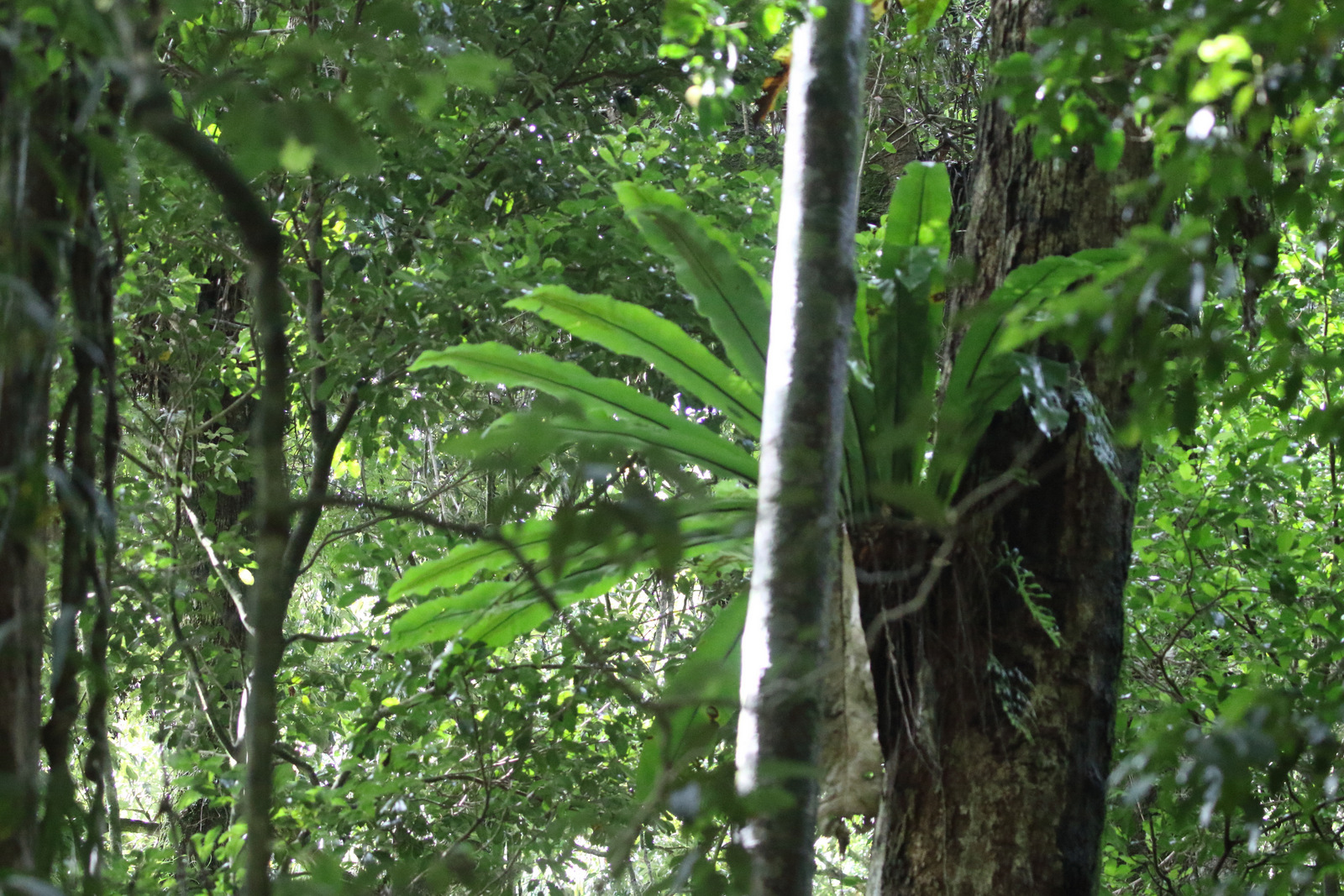
The plant's leaves rise blade-like from a tight central root mass, often with a firm midrib and crinkled or rippled edges. In Asplenium australasicum the rib juts out beneath wide yellowish-green leaves almost like a boat's keel, and the fronds visibly uncoil as they reach toward light. Most forms grow to roughly two to three feet tall and wide, and many live naturally as epiphytes or lithophytes rather than rooted in ordinary soil.
Source: Epic Gardening
Watch the Undersides
Foliar nematodes can mimic bacterial blight at first, showing water-soaked translucent spots that turn brown to black rather than reddish-purple, and badly affected plants often need to be destroyed along with sterilizing the soil. Cutworm-type caterpillars chew at frond edges and respond to Bacillus thuringiensis, while fungus gnat larvae attack roots and lower growth, with adults leaving fine webbing behind. Mealybugs and scale both stunt growth and are treatable with insecticidal soap, and slugs leave obvious feeding damage that is best managed by hand-picking and bait around the base.
Source: Epic Gardening
Overfeeding and Overhead Water
Most trouble with this fern traces back to overfertilizing or watering it the wrong way. Too much fertilizer, especially in a peat-heavy mix, browns or yellows leaf edges and can distort leaf shape. Watering from overhead lets water pool at the plant's center and invites bacterial blight, recognizable by water-soaked spots that enlarge and turn reddish-purple along the edges; damaged leaves should be trimmed at the base promptly, since bactericides rarely reverse the spread. Leaves that go very flat signal too little light, while excessive crinkling signals too much.
Source: Epic Gardening
Light Touch, Occasional Repot
This fern largely keeps its own shape and rarely needs pruning beyond removing outer or unsightly leaves down at the base. Because its root mass stays fairly compact, repotting is only needed every two to three years, or once the plant grows top-heavy and unstable on its current mount or pot, at which point it wants a larger base and careful, gentle handling of its roots.
Source: Epic Gardening
Care recipe
The species record — the baseline every cultivar inherits unless it says otherwise.
Care notes are early — not yet verified
- Light
- ai:claude-opus-4-8
- Water
- ai:claude-opus-4-8 (range 5-10d)
- Humidity
- ai:claude-opus-4-8
- Soil
- ai:claude-fable-5
- Care
- ai:claude-fable-5
Bright, indirect
≈ every 10 days
High
15–27 °C
Loose, humus-rich mix with excellent drainage
Spores; division
Diluted balanced feed monthly in the growing season
Slow
Never flowers — a fern, reproduces by spores
Not yet documented
This is where toxicity lives — every cultivar of this species inherits it and none can override it.
Reference images
Every image credited. Licenses link to their deeds.
PrimarySources: ai:claude-opus-4-8 · ai:claude-opus-4-8 (range 5-10d) · ai:claude-fable-5
Kept true by its growers
Every fact here carries its source. Grow Bird's Nest Fern yourself? What you’ve observed — how it drinks, how it holds its color, a name that’s off — and a clear photo of your plant are exactly what keep this page honest. Contributions are reviewed before anything changes.
Sign in to add what you know →