Species · genus Asplenium · Aspleniaceae
Bird’s-nest Fern
Asplenium antiquum Makino
Also known as: Japanese Bird's-nest Fern
Cultivars of A. antiquum
The named forms growers keep — each with its own page, each honest about how much we know.
No named cultivars catalogued under A. antiquum yet. When growers document a stable, named form, it earns its own page here.
Guide
The species-level account. Cultivar pages build on this and say where they differ.
A Taiwanese nest of fronds
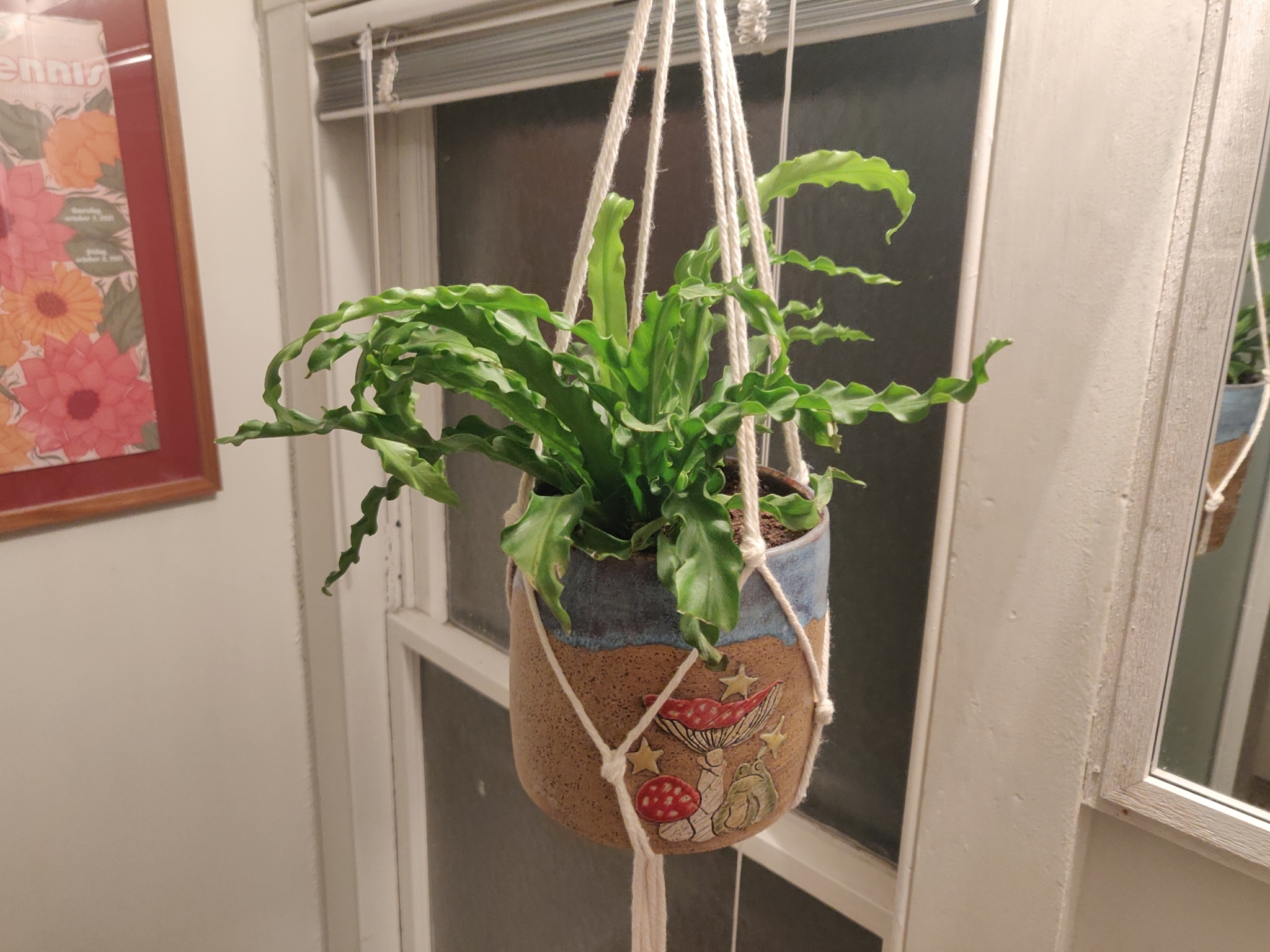
Asplenium antiquum, the bird's nest fern, is a tender evergreen fern that forms a rosette or 'nest' of upright fronds. It reaches roughly 60-90cm tall and is grown mainly as a houseplant or conservatory subject.
Source: RHS
Native range
This species belongs to the fern family Aspleniaceae and its natural range is Taiwan. It is not native to Britain or Ireland, which is why in the UK it is grown under glass or indoors rather than outdoors.
Source: RHS
Light, water and feeding rhythm
Grow it indoors in bright indirect light, in partial shade, with a west- or east-facing aspect and a sheltered position. Pot it in a mix of three parts peat-free multipurpose compost to one part peat-free John Innes No.3 with added horticultural grit, keep the compost moist but not soggy, and mist the fronds occasionally for moderate humidity. Feed with a half-strength general liquid fertiliser once a month between May and August.
Source: RHS
Division or spores
This fern can be propagated by division, or by sowing spores as soon as they are ripe at 21°C.
Source: RHS
Glossy, wavy-edged fronds
The fronds are long, flat, glossy and fresh green, with a wavy edge and pointed tips, and as they mature they develop a distinctive brown midrib. The plant is clump forming and evergreen, holding its rosette shape year round. The cultivar 'Osaka' shows the same nest habit but with fronds that arch and have edges that are more strongly ruffled and wavy.
Source: RHS
Watch for scale
The main pest to watch for is scale insects, which can settle on the fronds. Otherwise the plant is generally disease-free.
Source: RHS
Little pruning needed
This fern needs no routine pruning, though on the 'Osaka' cultivar dead or damaged fronds can be removed as necessary. It is slow to reach full size, taking around five to ten years to reach its ultimate height and spread of 0.5-1 metres.
Source: RHS
Care recipe
The species record — the baseline every cultivar inherits unless it says otherwise.
Care notes are early — not yet verified
- Light
- ai:claude-opus-4-8
- Water
- ai:claude-opus-4-8 (range 5-10d)
- Humidity
- ai:claude-opus-4-8
- Soil
- ai:claude-fable-5
- Care
- ai:claude-fable-5
Bright, indirect
≈ every 10 days
High
15–27 °C
Rich, loose, moisture-retentive mix with good drainage
Spores; division of clumps
Diluted balanced feed monthly in spring and summer
Slow
Never flowers — a fern, reproduces by spores
Not yet documented
This is where toxicity lives — every cultivar of this species inherits it and none can override it.
Reference images
Every image credited. Licenses link to their deeds.
Sources: ai:claude-opus-4-8 · ai:claude-opus-4-8 (range 5-10d) · ai:claude-fable-5
Kept true by its growers
Every fact here carries its source. Grow Bird’s-nest Fern yourself? What you’ve observed — how it drinks, how it holds its color, a name that’s off — and a clear photo of your plant are exactly what keep this page honest. Contributions are reviewed before anything changes.
Sign in to add what you know →