Species · genus Asparagus · Asparagaceae
Common Asparagus Fern
Asparagus setaceus (Kunth) Jessop
Also known as: Asparagus Fern · Lace Fern · Bridal Fern · Wedding Fern · = Asparagus Setaceus (Kunth) Jessop
Cultivars of A. setaceus
The named forms growers keep — each with its own page, each honest about how much we know.
No named cultivars catalogued under A. setaceus yet. When growers document a stable, named form, it earns its own page here.
Guide
The species-level account. Cultivar pages build on this and say where they differ.
Not really a fern
Asparagus setaceus goes by the common name asparagus fern, but it belongs to the Asparagaceae family and is a closer cousin to edible asparagus than to any true fern. The feathery, needle-fine foliage earns it the fern comparison, and it has proven far more forgiving indoors than many fine-leaved ferns it gets mistaken for.
Source: Epic Gardening
Southern African beginnings
This plant hails from Southern Africa, where it grows in warm, humid, often coastal conditions, sheltered by taller trees and shrubs. It does not tolerate cold well, which is why it is mostly kept as a houseplant or greenhouse subject outside its native range. In some regions with similar climates it has become invasive, spreading readily by seed and disrupting local plant communities, so it is best kept contained rather than planted out.
Source: Epic Gardening
Light, water, and a mild diet
Give this plant bright, indirect light, an east-facing window suits it well, with tolerance for some gentle morning sun but not the harsh exposure of midday. Water regularly enough to keep soil lightly moist in spring and summer, letting the top inch or two dry between waterings, then ease off as growth slows in autumn and winter. It is not a heavy feeder, but an occasional balanced liquid fertilizer during the growing season supports fuller growth, paused once temperatures drop. Moderate warmth, roughly 65 to 75°F by day, and humidity near 50 percent keep the fine foliage from browning.
Source: Epic Gardening
Division over seed
Division is the quickest and most reliable way to multiply this plant: lift it from its pot, expose the tuberous roots, and split them into two or three sections, each with healthy roots and foliage attached, before repotting into fresh soil. Growing from seed is possible, using the ripe berries once the flesh is removed, but it is a much slower route requiring patience. The RHS notes seed can also be sown in autumn or early spring at around 16°C, with division best done in early spring.
Source: Epic Gardening
Feathery fronds and hidden thorns
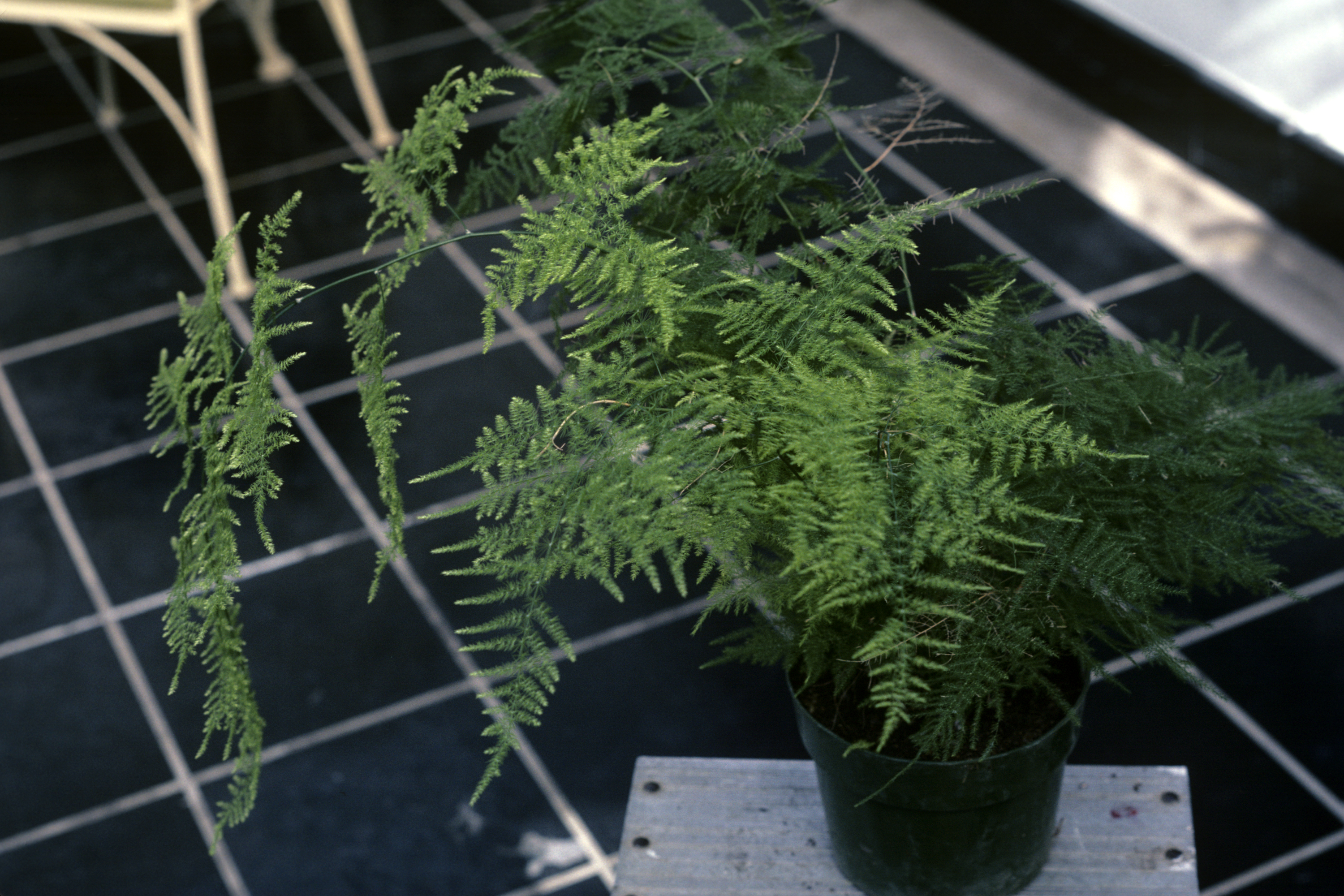
The plant's defining trait is its soft, lacy foliage, technically not leaves but flattened stem structures that read as a green mist along arching stems. Look closer at those stems and you'll find small thorns, an unexpected contrast to the delicate appearance above. Given the right conditions it produces small flowers followed by berries, red according to some accounts, deep purple by others, which are best kept away from pets and children. Below ground it relies on tuberous roots rather than the shallow, thirsty systems of true ferns, which is what gives it its notable drought tolerance.
Source: Epic Gardening
Watch for a few visitors
This plant is generally trouble-free, but mealybugs and spider mites do turn up occasionally, so it is worth checking the foliage when you prune or repot. The RHS also flags asparagus beetle, slugs, and snails as possible visitors when grown as an outdoor or conservatory specimen.
Source: Epic Gardening
Reading the foliage
Yellowing leaves usually point to overwatering or poor drainage rather than underwatering, since this plant tolerates dry spells far better than soggy roots. Brown tips tend to trace back to low humidity or overfeeding, while pale, faded foliage suggests too much direct sun. Leggy stems with sparse foliage are a sign of insufficient light, remedied by moving to a brighter indirect spot and pruning back to encourage bushier regrowth.
Source: Epic Gardening
Trim, repot, refresh
Snip off yellowed or browned foliage as it appears, both for appearance and to redirect the plant's energy into new growth. If it grows dense or overgrown, cutting it back lightens the look and can invigorate an older specimen. Repot roughly every couple of years into a pot one size up, refreshing the soil and dividing crowded tuberous roots as needed. The RHS adds that for the cultivar 'Pyramidalis', pinching back stem tips helps keep shape and density, and the plant can be cut back hard to soil level to regenerate entirely.
Source: Epic Gardening
Care recipe
The species record — the baseline every cultivar inherits unless it says otherwise.
Care notes are early — not yet verified
- Light
- ai:claude-opus-4-8
- Water
- ai:claude-opus-4-8 (range 7-12d)
- Humidity
- ai:claude-opus-4-8
- Soil
- ai:claude-fable-5
- Care
- ai:claude-fable-5
Bright, indirect
≈ every 12 days
Medium
13–24 °C
Light, well-draining peat-based mix
Division of tubers, or seed
Diluted balanced feed monthly in spring and summer
Moderate
Rarely flowers indoors
Toxic to cats & dogs
Asparagus/lace fern — sapogenins; vomiting, abdominal pain. This is where toxicity lives: every cultivar of this species inherits it and none can override it.
Reference images
Every image credited. Licenses link to their deeds.
PrimarySources: ai:claude-opus-4-8 · ai:claude-opus-4-8 (range 7-12d) · ai:claude-fable-5 · ASPCA
Kept true by its growers
Every fact here carries its source. Grow Common Asparagus Fern yourself? What you’ve observed — how it drinks, how it holds its color, a name that’s off — and a clear photo of your plant are exactly what keep this page honest. Contributions are reviewed before anything changes.
Sign in to add what you know →